
14 min readBy Joshua Leleux
Table of Contents
- Does Window Film Increase Resale Value
- Home Window Tinting Pros and Cons
- Energy Efficiency and Utility Bill Impact
- Residential Window Tinting Cost and ROI Scenarios
- Best Window Film for Home Windows and Compatibility
- UV Protection, Fading Prevention, and Interior Comfort
- Privacy, Security, and Curb Appeal Benefits
- Is Home Window Tinting Worth the Investment
- Frequently Asked Questions
Last Updated: October 6, 2026
Does Window Film Increase Resale Value
Window tinting can enhance your home's appeal and functionality, but does window tinting increase home value in a way that appraisers and buyers actually recognize? It depends on your approach and your market.
At LeWolf Window Tint & Film Solutions, we've worked with homeowners who ask this exact question. Window film adds real benefits, energy efficiency, UV protection, comfort, and security, but resale value gains aren't automatic. They depend on film quality, installation, local buyer expectations, and how you market the upgrade.
What Real Estate Agents and Appraisers Actually Consider
Real estate professionals evaluate home improvements through one lens: will this feature appeal to the next buyer, and does it justify the cost?
Window film sits in a gray zone. Unlike kitchen renovations or roof replacements, window tinting isn't a standard line item on appraisal forms.
What matters to appraisers:
- Film quality and professional installation
- Compatibility with existing windows
- Warranty and durability claims
- Energy performance documentation
Real estate agents report that energy-conscious buyers, particularly in hot climates or markets with high cooling costs, view window film favorably as a signal of maintenance for comfort and efficiency. Agents in cooler regions see less interest, since heating costs dominate there.
The key insight: window film rarely adds dollar-for-dollar value. It positions your home as well-maintained and energy-efficient, making it more competitive in a crowded market.
Buyer Perception and Market Positioning
Buyer psychology matters more than appraisal formulas. A home advertised with "professional window film for energy savings and UV protection" signals intentional investment in comfort and longevity.
Energy-conscious buyers seek homes with efficiency upgrades, and window film appeals because it's visible, tangible, and addresses real pain points like high cooling bills or fading furniture.
However, some buyers view dark window tint with skepticism. They may worry about:
- Whether the film restricts natural light too much
- Whether it can be removed without damaging windows
- Whether it's hiding something (damage, poor views)
Light-tinted or clear protective films face fewer objections than darker solar-control films. Buyers understand UV protection and glare reduction more readily than energy savings percentages.
Home Window Tinting Pros and Cons
Understanding the full picture helps you decide whether residential window tinting makes financial sense.
The Advantages: Energy Savings, Comfort, and Protection
Professional window film delivers measurable benefits that improve daily living and protect your investment.
Energy efficiency and cooling cost reduction rank as the most tangible advantage. Window film reduces solar heat gain, lowering the workload on your air conditioning during hot months.
UV protection prevents furniture, artwork, flooring, and fabrics from fading.
Glare reduction improves comfort, especially for home offices or rooms with screens, where excessive glare strains eyes and forces constant blind adjustments.
Privacy and security appeal to many homeowners.
Interior comfort improves year-round, since reducing temperature swings near windows creates more consistent comfort throughout rooms.
The Drawbacks: Limitations and Buyer Objections
Window film isn't universally beneficial, so understanding its limitations helps you decide.
Installation cost is the primary barrier. Professional installation requires skilled labor and quality materials. The upfront investment is significant for whole-home coverage.
Reduced natural light is a trade-off with darker solar-control films.
Potential window incompatibility affects older homes.
Removal and replacement add future costs. Quality window film lasts 10-20 years, but removal requires professional care to avoid damaging windows.
Buyer hesitation about dark tint is real in some markets. Energy-conscious buyers appreciate it, but others worry about reduced curb appeal or interior brightness, varying by region and demographics.
Energy Efficiency and Utility Bill Impact
Window film reduces energy consumption, but savings depend on your climate, window orientation, and current cooling costs.
Tinted House Windows: Pros and Cons | Thermal King Windows
Thermal King Windows & Siding
In hot climates with intense sun, homeowners report meaningful cooling cost reductions during peak seasons. South and west-facing windows benefit most from direct solar radiation, while north-facing windows see minimal impact.
The mechanism is straightforward: window film reflects or absorbs solar heat before it enters your home, reducing the cooling load on your air conditioning and lowering energy consumption and utility bills.
Savings aren't universal, though.
To estimate potential savings, consider:
- Your current cooling costs during peak months
- Your window orientation and sun exposure
- Your climate zone and typical summer temperatures
- The film type and solar heat gain coefficient (SHGC)
LeWolf Window Tint & Film Solutions can assess your situation and provide realistic expectations based on your home's orientation and local climate.
Residential Window Tinting Cost and ROI Scenarios
Installation costs and long-term savings vary widely by home size, film type, and labor rates.
Breaking Down Installation Costs and Long-Term Savings
Professional installation pricing depends on total window area, film type (light protective vs. dark solar-control), window accessibility, and regional labor rates.
Typical considerations:
- Light protective films cost less than dark solar-control films
- Larger window areas benefit from economies of scale
- Hard-to-reach windows (high stories, skylights) increase labor costs
- Quality matters, premium films from 3M or similar manufacturers cost more but last longer and perform better
The ROI calculation requires honest assumptions:
- Installation cost (get a quote for your situation)
- Annual cooling cost savings (realistic, not inflated)
- Film lifespan (typically 10-20 years for quality film)
- Maintenance and replacement costs
Realistic ROI Expectations for Different Climates
Hot, sunny climates (Arizona, Southern California, Florida, Texas) show the strongest ROI.
Moderate climates (much of the country) see moderate ROI. Cooling savings exist but are smaller. Payback may take 10-15 years or longer, depending on current cooling costs and installation expenses.
Cool climates (Northern states, Pacific Northwest) show weak ROI on energy grounds alone, since cooling costs are low. However, UV protection and glare reduction still add value for comfort and interior preservation.
The honest assessment: in many markets, window film doesn't pay for itself through energy savings alone. It's a quality-of-life investment that also reduces energy consumption.
Best Window Film for Home Windows and Compatibility
Not all window films perform equally. Quality, durability, and compatibility vary significantly.
Film Types, Durability, and Warranty Considerations
Dyed films are the least expensive option. They absorb solar heat but fade over time, with durability typically 3-5 years. Best for temporary or budget-conscious applications.
Ceramic films are the premium option. They block solar heat through ceramic particles rather than metal, avoiding signal interference, resisting fading, and lasting 15-20 years.
Clear protective films focus on UV protection and security rather than solar control, preserving natural light while blocking UV rays and holding glass together if broken.
Warranty matters. Quality manufacturers back their films with warranties covering discoloration, bubbling, and peeling, reflecting confidence in the product.
Ensuring Compatibility with Your Windows
Window compatibility is critical. Not all windows work well with all films.
Single-pane windows accept any film type without thermal concerns.
Double-pane windows require careful assessment. Some double-pane designs trap heat between panes when film is applied, potentially causing seal failure or glass breakage.
Low-emissivity (Low-E) windows already have reflective coatings. Adding reflective film can compound the reflectivity and create thermal stress.
Window frames and seals must be in good condition.
Before committing, have a professional evaluate your windows. LeWolf Window Tint & Film Solutions assesses compatibility and recommends film types based on your window configuration, orientation, and climate.
UV Protection, Fading Prevention, and Interior Comfort
Window film's UV-blocking capability protects your home's interior and your health.
Quality window film blocks 99% of ultraviolet radiation, preventing fading of furniture, artwork, flooring, and fabrics that would otherwise degrade over years of sun exposure.
UV protection also benefits skin health. Extended indoor sun exposure through windows contributes to skin damage over time. Blocking UV rays reduces this risk for people spending significant time near windows.
Interior comfort improves through reduced temperature fluctuations. Windows are thermal weak points, and areas near them become uncomfortably hot on sunny days.
The combination of UV protection, glare reduction, and temperature moderation creates a comfort improvement many homeowners value immediately, regardless of long-term financial ROI.
Privacy, Security, and Curb Appeal Benefits
Window film addresses multiple quality-of-life concerns beyond energy efficiency.
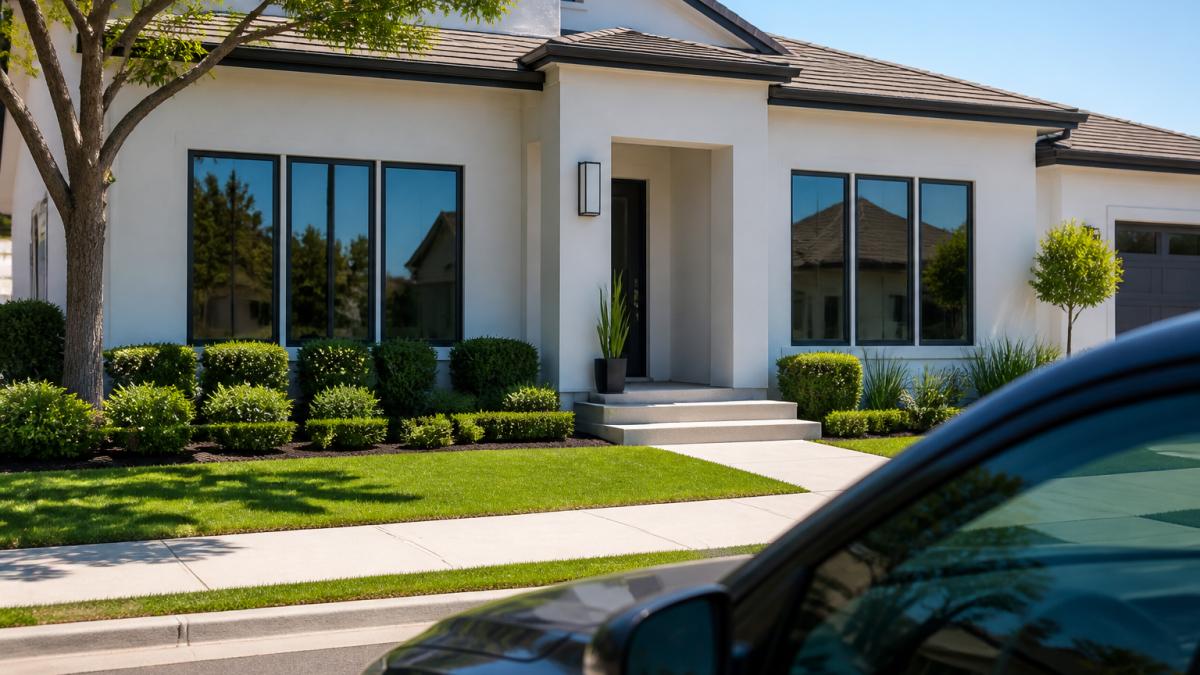
Privacy films range from light frosted finishes to opaque designs, obscuring the interior view from outside while maintaining inward visibility.
Security films hold glass together if broken, reducing injury risk and deterring break-ins. Even tempered glass shatters into small pieces, but security film holds them in place, preventing sharp shards from scattering and making forced entry more difficult.
Curb appeal improves with professional installation. Light-tinted or clear films are virtually invisible, while darker solar-control films create a subtle, intentional look many homeowners find attractive.
The security and privacy benefits appeal to homeowners concerned about safety, while the curb appeal factor varies by film type and preference, some preferring the modern look of tinted windows and others clear films that maintain a traditional appearance.
Is Home Window Tinting Worth the Investment
The answer depends on your priorities, climate, and financial situation.
Window tinting is worth it if you:
- Live in a hot climate with high cooling costs
- Value interior comfort and UV protection
- Have valuable furniture, artwork, or antiques prone to fading
- Want improved privacy or security
- Plan to stay in your home long enough to enjoy the benefits
- Can afford the upfront installation cost without financial strain Prioritizing these functional upgrades ensures that your investment remains focused on tangible home value improvements, much like considering whether asphalt driveway resurfacing is worth it for your property.
Window tinting may not be worth it if you:
- Live in a cool climate where heating dominates
- Plan to sell soon and expect minimal resale value recovery
- Are primarily motivated by financial ROI
- Have older windows that may not be compatible
- Prefer maximum natural light and worry about tint darkness
The honest perspective: Window film improves quality of life and protects your home's interior. Energy savings are a bonus, not the primary benefit. If you value comfort, UV protection, privacy, and interior preservation, the investment makes sense.
Professional installation is essential. Quality film from reputable manufacturers, installed by certified technicians, delivers the performance and durability you're paying for. LeWolf Window Tint & Film Solutions brings 30 years of experience to residential projects, ensuring your installation meets professional standards.
The decision to invest in residential window tinting comes down to balancing upfront costs against the daily comfort, protection, and energy benefits you'll experience.
Frequently Asked Questions
Does window film actually increase resale value?
Window film does not automatically increase home resale value in the way a kitchen renovation might. Appraisers typically view residential window tinting as a maintenance or comfort upgrade rather than a property value enhancer. However, energy-conscious buyers may perceive tinted windows as a positive feature, especially in warm climates. The real value lies in the benefits you enjoy while living in the home, reduced cooling costs, UV protection, and improved comfort, rather than a guaranteed return at sale.
How much does residential window tinting cost, and will I recover the investment?
Residential window tinting cost varies based on window size, film type, and installation complexity. For specific pricing and a customized quote based on your home's dimensions and film selection, visit LeWolf Window Tint & Film Solutions' pricing page. ROI depends on your climate, current energy bills, and how long you plan to stay in the home. In hot climates, homeowners often recover costs through cooling savings within 5-7 years. In moderate climates, payback may take longer, but comfort and UV protection benefits begin immediately.
What are the main downsides of home window tinting?
Common drawbacks include reduced natural light (depending on film darkness), potential installation disruption, and the fact that some buyers may prefer untinted windows. Certain film types can interfere with cell signals or radio reception. Low-quality installations may bubble, peel, or fade over time. Additionally, some HOAs restrict window film, and removal can be labor-intensive if you decide to change it later. Professional installation and quality film minimize these risks, but they're worth considering before committing.
Which window film is best for homes, and how do I know it won't damage my windows?
The best window film for home windows depends on your priorities: solar control films reduce heat and glare, security films strengthen glass, and UV-blocking films protect furnishings. Quality films from established manufacturers are designed to be compatible with standard residential windows. Professional installers verify your window type before application to prevent thermal stress that could cause cracking. Always choose films from reputable manufacturers and have them installed by certified professionals to ensure durability and maintain any existing window warranties.