

12 min readBy Joshua Leleux
Table of Contents
- How Window Tint Prevents Furniture Fading
- Understanding UV Rays and Sun Damage to Your Home
- The Role of Visible Light and Solar Heat in Fading
- UV Protection Window Film Benefits Beyond Fading Prevention
- Does Window Film Stop Fading Completely?
- How to Prevent Sun Damage to Hardwood Floors and Other Surfaces
- Maintenance and Long-Term Effectiveness of Window Tint
- Frequently Asked Questions
Last Updated: September 20, 2026
How Window Tint Prevents Furniture Fading
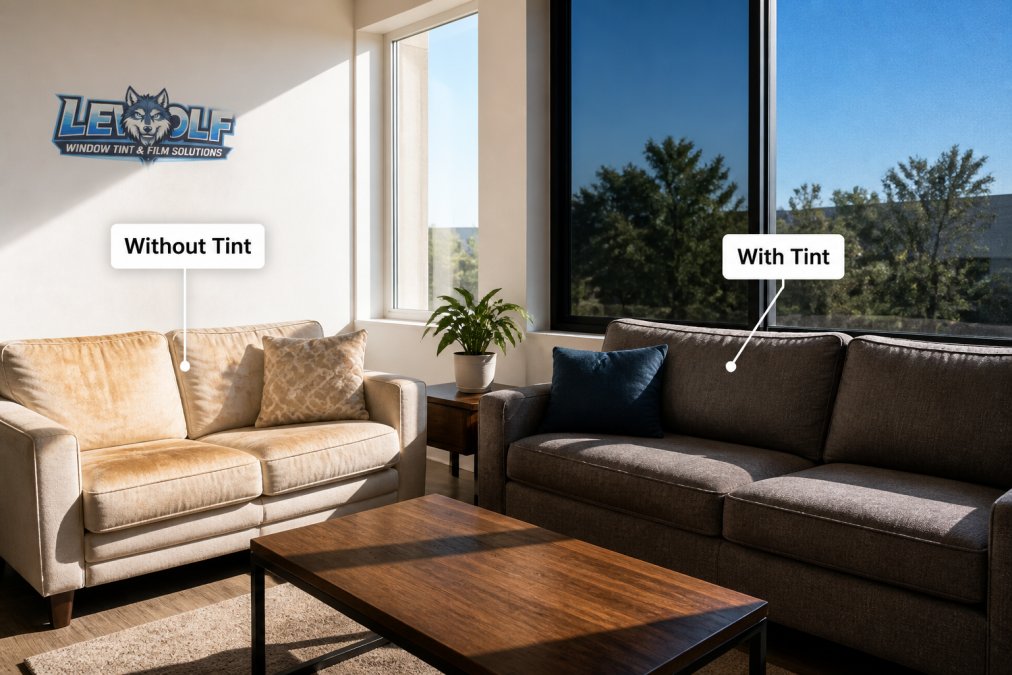
Does window tint prevent furniture fading? The short answer is yes, but the protection isn't absolute. Window tint blocks a significant portion of ultraviolet radiation and solar heat that cause fading, but understanding exactly how much protection you're getting requires looking at the science behind the damage itself.
When sunlight enters your home through untreated glass, it carries ultraviolet rays, visible light, and infrared radiation. All three contribute to photodegradation, the chemical breakdown of dyes, fabrics, and finishes in your furniture, artwork, and flooring. Window tint works by filtering out these damaging wavelengths before they reach your interior. The degree of protection depends on the film's specifications and what you're trying to protect.
Window tint is one layer of a comprehensive protection strategy. It's effective, but it works best when combined with other preventative measures like UV-blocking curtains and strategic furniture placement.
Understanding UV Rays and Sun Damage to Your Home
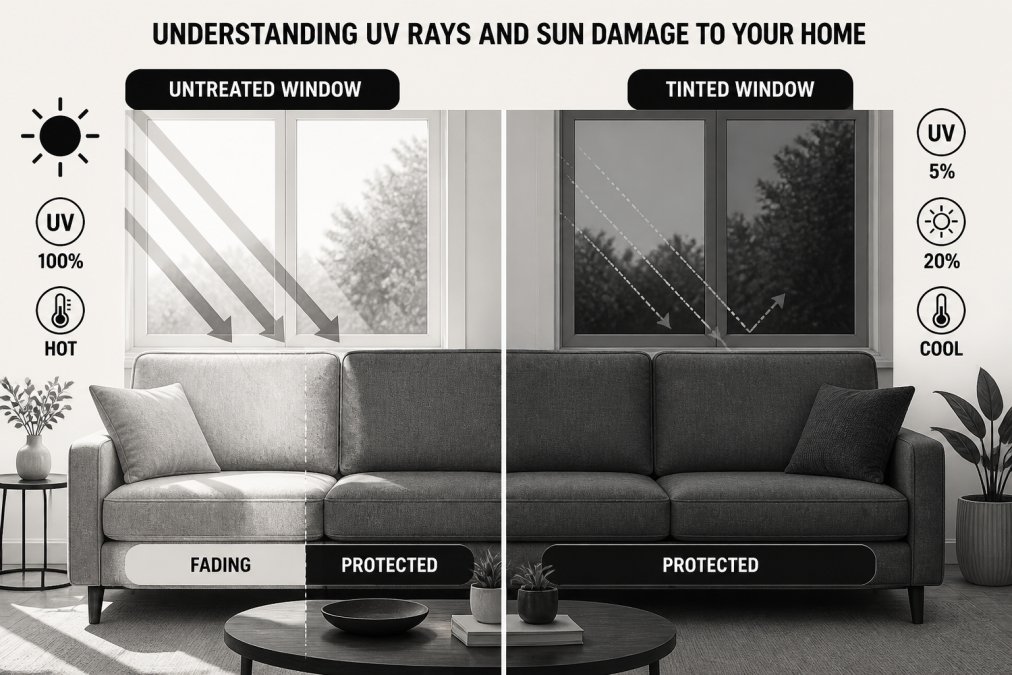
Ultraviolet radiation is the primary culprit behind fading. UV rays sit outside the visible light spectrum, which means you can't see them coming through your windows. They're absorbed by the surface of fabrics, wood finishes, and pigments, breaking down the chemical bonds that hold color in place. Over time, this creates the bleached, washed-out appearance you see on furniture positioned near windows.
The sun emits UVA and UVB radiation (UVC is blocked by the atmosphere). Regular clear glass stops only about 25% of UV rays, which is why a sofa in direct sunlight fades noticeably in 2-3 years, while the same piece in shadow remains vibrant.
Different materials fade at different rates. Hardwood floors show color change within 12-18 months of direct sunlight; natural fabrics like cotton and wool are particularly vulnerable. The fading process is cumulative, happening continuously on sunny days.
The Role of Visible Light and Solar Heat in Fading
While ultraviolet radiation is the primary driver of photodegradation, visible light and infrared radiation play secondary roles that window tint alone cannot fully address.
The Visible Light Spectrum and Fading
Visible light (380-700 nanometers) contributes to fading distinctly from UV. Blue light (420-495 nm) is particularly problematic for certain dyes and pigments, causing photochemical reactions in organic dyes at rates comparable to some UV exposure, especially in silk, wool, and natural cotton.
Window tint cannot eliminate visible light without making interiors uncomfortably dark. A typical UV-protective film blocks 99% of UV rays but allows 50-70% of visible light through. Blue-spectrum fading continues at a slower rate, remaining a concern for light-sensitive materials like watercolor paintings and antique textiles over decades.
Infrared Radiation and Heat Acceleration
Infrared radiation doesn't cause fading directly, but it accelerates the chemical reactions that do. A room at 75°F experiences noticeably faster fading than one at 68°F because heat amplifies damage from UV and visible light.
Quality window film reduces infrared transmission by 40-60%, lowering interior temperatures 5-10°F on the sunny side. This temperature reduction compounds over time, slowing furniture fading significantly.
The Combined Effect: Why Tint Isn't a Magic Bullet
Window tint dramatically slows fading but doesn't stop it. A sofa in direct sunlight through untreated glass fades in 2-3 years; with quality film, it takes 12-15 years. The film extends the timeline by reducing UV, visible light, and heat simultaneously.
For light-sensitive pieces (vintage textiles, fine art, antique wood), window tint alone is insufficient. Combining tint with UV-blocking curtains or cellular shades, closed during peak sun hours (10 a.m.-4 p.m.), provides substantially better protection.
UV Protection Window Film Benefits Beyond Fading Prevention
Does window tint prevent furniture fading? Yes, but that's just one benefit. Quality window film offers several advantages that make the investment worthwhile beyond protecting your furnishings.
Energy Efficiency: Window tint reduces solar heat gain and cooling costs by blocking infrared radiation and stabilizing interior temperatures.
Glare Reduction: Window tint cuts glare significantly, improving screen visibility and reducing eye strain, particularly in home offices.
Privacy and Security: Tinted windows reduce visibility into your home and some films hold glass together if broken, providing security during severe weather or break-ins.
UV Protection for Your Skin: Window film blocks up to 99% of UV rays, protecting your family's skin health (UV Window Film & Tint). The Skin Cancer Foundation recognizes quality window film as part of a comprehensive sun protection strategy.
These secondary benefits often justify the investment in window tint even if furniture fading wasn't a primary concern.
Does Window Film Stop Fading Completely?
No, window film does not stop fading completely. This is an important distinction to understand before installation. Quality window tint reduces fading by blocking 99% of ultraviolet radiation and a substantial portion of visible light and infrared radiation. But it doesn't eliminate fading entirely.
Visible Light Penetration: Even with tint, some visible light passes through, causing slow fading over extended periods, dramatically slower than untreated windows, but not zero.
Installation Quality: Window film effectiveness depends on proper installation. Bubbles, wrinkles, or improper adhesion reduce the film's ability to block UV and heat, which is why certified installers matter.
Film Degradation: Window film typically lasts 10-15 years before becoming less effective. High-quality films maintain protective properties longer than budget options. Regular maintenance and professional inspection extend the film's life.
How to Prevent Sun Damage to Hardwood Floors and Other Surfaces
Window tint is one part of a multi-layered approach to preventing sun damage. Understanding material-specific fading rates and calculating ROI helps you make an informed investment decision.
Material-Specific Fading Vulnerability
Different materials fade at dramatically different rates under identical sunlight exposure. Knowing your furniture's vulnerability helps you prioritize protection:
-
Hardwood Floors: Unfinished hardwood shows color change within 12-18 months of direct sunlight, creating permanent "ghost" patterns. With quality window tint (99% UV blocking), this extends to 8-12 years. A UV-protective floor finish adds another 5-7 years.
-
Upholstered Furniture (Natural Fabrics): Cotton, linen, and wool fade in 18-24 months under direct sunlight; silk in 12-18 months. Window tint extends these timelines 5-7 times, so a wool sofa fading in 2 years might take 10-14 years with tint.
-
Leather: Natural leather shows color shift in 2-3 years of direct exposure; tinted windows slow this to 10-15 years.
-
Artwork and Photographs: Watercolor paintings, prints, and color photographs are extremely light-sensitive. Fading becomes visible in 6-12 months under direct sunlight. Window tint is essential for any room displaying valuable art. Combining tint with UV-blocking glass or acrylic framing reduces fading to a barely perceptible rate over 20+ years.
Cost-Benefit Analysis: Is Window Tint Worth It?
Before committing, calculate whether the cost is justified by what you're protecting:
Example 1: Hardwood Floors A 1,500 sq. ft. home with south-facing windows and medium-grade hardwood flooring. Replacement cost: $8,000-$12,000. Without tint, visible fading occurs in 12-18 months. With tint, fading timeline extends to 8-12 years. ROI: Positive. You've delayed a $10,000 replacement by a decade, and the tint provides additional energy savings.
Example 2: Upholstered Furniture A living room sofa worth $2,500 positioned near a large west-facing window. Without tint, noticeable fading in 2 years. With tint, fading timeline extends to 10-14 years. ROI: Highly positive. You've extended the sofa's acceptable appearance by 8-12 years at a fraction of replacement cost.
Example 3: Artwork A valuable watercolor painting worth $3,000-$5,000 displayed in a room with east-facing windows. Without protection, fading becomes visible in 6-12 months. With window tint plus UV-blocking frame glass, fading is negligible over 20+ years. ROI: Strongly positive for any artwork valued above $1,000.
A Layered Protection Strategy
For maximum effectiveness, combine window tint with these complementary measures:
Layer 1: Window Tint, Install UV-protective window film on windows receiving the most direct sunlight (typically south and west-facing). This is your primary defense, reducing UV exposure by up to 99% and visible light transmission by 40-60%.
Layer 2: Window Coverings, Use UV-blocking curtains, shades, or cellular blinds on windows where you want additional control. Cellular blinds are particularly effective because they trap air, providing insulation and light blocking. Close these during peak sun hours (10 a.m.-4 p.m.) when UV intensity is highest.
Layer 3: Furniture Placement, Rotate furniture periodically to ensure even fading. Keep valuable pieces and artwork away from direct sunlight paths. Use area rugs to protect hardwood floors in high-exposure zones. This costs nothing but requires discipline.
Layer 4: Protective Finishes, For hardwood floors, apply UV-protective polyurethane or water-based finishes designed to resist photodegradation.
The Bottom Line
Maintenance and Long-Term Effectiveness of Window Tint
Window tint effectiveness depends on proper installation and ongoing maintenance. Understanding how to care for your tinted windows ensures they continue protecting your furniture for years.
Frequently Asked Questions
Does window film block 100% of UV rays and prevent all fading?
High-quality window tint blocks 99% of ultraviolet radiation, significantly slowing fading, but cannot stop it entirely. Fading is also caused by visible light and infrared rays, which window film reduces but doesn't eliminate. Even with the best window film protection, long-term sun exposure will eventually cause some color shift. The goal is to extend the lifespan of your furniture and flooring by years or decades, not to achieve permanent immunity from sun damage.
How much does window tint installation cost, and how long does it take?
Installation time and pricing depend on window size, quantity, film type, and your location. For current pricing and a customized estimate for your home, visit the LeWolf Window Tint & Film Solutions pricing page or request a free quote. Our team can schedule installation at times that work best for you, including after-hours if needed.
What's the difference between UV protection and heat rejection in window film?
UV protection blocks ultraviolet radiation, which causes photodegradation and fading of fabrics, wood, and artwork. Heat rejection reduces infrared rays and solar heat gain, lowering cooling costs and interior temperature. Many spectrally selective window films do both simultaneously, providing comprehensive solar control. Some films prioritize one benefit over the other, so your choice depends on whether you're focused on fading prevention, energy savings, or both.
How do I know if your window tint will actually last and not yellow or peel over time?
LeWolf Window Tint & Film Solutions is a 3M authorized dealer and certified installer with 30 years of experience. We use premium films from trusted manufacturers designed for durability and optical clarity. Our installation quality and material selection ensure long film longevity. We back our work with warranties covering installation defects. Ask about our specific warranty terms when you request a quote, and feel free to review our 5.0 Google Reviews from customers who have trusted us with their homes and vehicles.