

15 min readBy Joshua Leleux
Table of Contents
- How Window Film Heat Reduction Works and What to Compare
- Quick Comparison: Best Window Film for Heat Reduction
- Ceramic Window Film for Homes: Maximum Heat Rejection Without the Mirror Look
- Reflective Window Film: High Solar Rejection at a Lower Cost
- Solar Control Window Film: Balancing Heat, Light, and Privacy
- What Heat Reduction Window Film Actually Costs and How Long It Lasts
- How to Choose the Right Film for Your Windows
- Conclusion: Matching Film to Your Climate and Glass
- Frequently Asked Questions
Last Updated: October 7, 2026
How Window Film Heat Reduction Works and What to Compare
The best window film for heat reduction is a professionally installed solar-control film that rejects the most total solar energy while keeping the visible light you want.
Window film heat reduction bonds a thin, treated polyester layer to interior glass so it reflects, absorbs, or blocks solar energy before it becomes heat inside. Every film is judged on three numbers.
TSER, VLT, and Infrared Rejection: The Numbers That Matter
Total Solar Energy Rejected (TSER) is the percentage of all incoming solar energy a film blocks, heat, light, and ultraviolet.
Visible Light Transmission (VLT) is the percentage of daylight that passes through. A film with 70% VLT keeps a room bright; 5% VLT turns it into a cave.
Infrared rejection is the flashy ad number, but infrared is only part of the solar spectrum, a film can claim 99% infrared rejection and still underperform on total heat.
Why Glass Type Changes Everything
Single-pane glass behaves nothing like modern double-pane or low-E glazing. Most solar-control films are safe on single-pane. On dual-pane and low-E, a film that absorbs too much heat raises glass temperature, and that thermal stress cracks panes.
Quick Comparison: Best Window Film for Heat Reduction
Here is how the main film types stack up on the metrics that decide performance.
| Film Type | Typical Look | Heat Rejection | Best For | Trade-Off |
|---|---|---|---|---|
| Ceramic | Clear to lightly tinted | High | Homes wanting heat control without a mirror look | Highest upfront cost |
| Reflective | Silver mirror | High | West- and south-facing glass, budget projects | Reflective appearance, nighttime privacy loss |
| Dyed / tinted | Dark charcoal | Moderate | Glare and daytime privacy | Fades over time, weaker heat rejection |
| Clear solar-control | Nearly invisible | Moderate | Preserving natural light | Less heat rejection than ceramic |
Ceramic Window Film for Homes: Maximum Heat Rejection Without the Mirror Look
Ceramic window film for homes is what we recommend most often for residential heat reduction: strong solar control without the mirrored, commercial look.
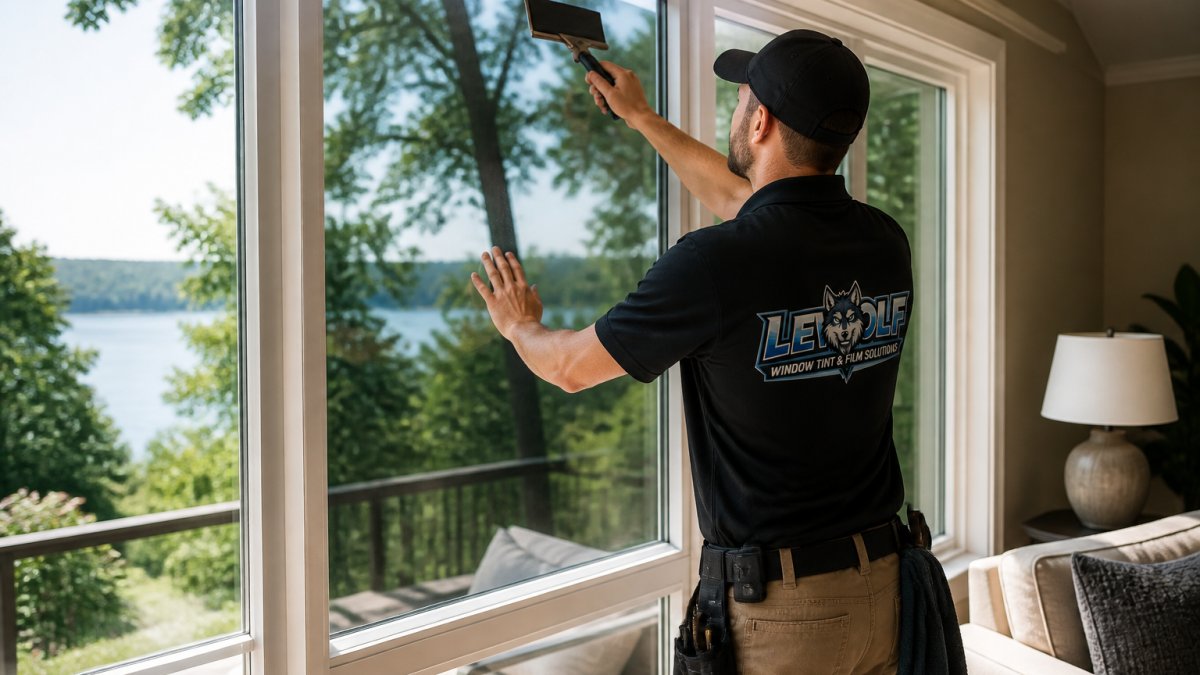
American Window Film's guidance on film for extreme heat climates notes that ceramic film can outperform dyed or basic solar films in extreme heat, and that its performance holds up more consistently over the long term.
The drawback is cost: ceramic sits at the top of the residential price range, so a whole house adds up. For a single hot room or a west-facing wall of glass, it is usually worth it.
Reflective Window Film: High Solar Rejection at a Lower Cost
Reflective window film is the budget route to high heat rejection. Its metallic, mirror-like finish bounces a large share of solar energy back outside before it becomes heat inside.
The performance can be genuinely strong. One solar-reflective product, Silver 15, is listed with a Total Solar Energy Rejected rating of 79% and a thickness of 1.5 mil in WindowFilm.com's heat-reduction film comparison, and the same source notes it costs less than a comparable ceramic option.
The trade-off is appearance and privacy. A reflective film reads as a mirror from outside during the day, loved for daytime privacy, hated for curb appeal. At night the effect reverses: interior lights make the glass see-through from the street.
Solar Control Window Film: Balancing Heat, Light, and Privacy
Solar control window film covers everything from clear ceramic to dark dyed film, balancing three competing goals: cutting heat, keeping light, and adding privacy.
For a living room where you want daylight, a higher-VLT ceramic or clear solar-control film makes sense.
For a business, the priority order usually flips: facility managers care about glare on screens and cooling load first, appearance second.
What Heat Reduction Window Film Actually Costs and How Long It Lasts
If you are comparing the best window film for heat reduction, you need three numbers: material cost, what installation adds, and how many cooling seasons it takes to pay for itself.
Material Cost Versus Installed Cost
Retail film is sold by the roll, and listed prices give you a rough sense of the material only. Buy Decorative Film's heat-control film collection lists a range of $33.99 to $339.99 across its heat-control films, but that spread covers different products, roll widths, and square footages, so it is not a like-for-like comparison.
The number that actually matters is installed cost per square foot, and it breaks down into four buckets:
- Film material, the largest single line item, and the one that swings most between dyed, reflective, and ceramic.
- Surface prep, scraping, cleaning, and removing old film or adhesive residue. Older glass with hard-water deposits or failed film adds labor.
- Labor, measured in square feet and complexity. A single picture window is fast; divided-light panes, arched transoms, or French doors are not.
As a general pattern, dyed and basic solar-control film sits at the low end of the installed range, reflective in the middle, and ceramic at the top.
DIY Versus Professional: What You Are Really Trading
DIY film kits are cheaper on paper, and for one or two small, flat, single-pane windows a careful homeowner can get an acceptable result. The trade-offs show up fast:
- Contamination, a single speck of dust or lint trapped under the film becomes a permanent visible defect. Professional installs use slip solutions, hard squeegees, and controlled environments to avoid this.
- Glass compatibility, the highest-risk DIY mistake is applying a high-absorption film to dual-pane or low-E glass without checking the manufacturer's compatibility list. That is a glass-replacement problem, not a film problem.
- Warranty, most film manufacturers warrant their product only when installed by a certified installer. A DIY install typically voids the film warranty and leaves you holding the risk on the glass.
Homeowners who try DIY on one window often hire a professional for the rest once they see the difference in clarity and edge quality.
Lifespan, Warranty, and What Actually Fails
A quality film installed correctly typically lasts many years, often a decade or more on interior residential glass. The failure modes are predictable:
- Bubbling and peeling, almost always a prep or application problem, not a film problem.
- Fading and color shift, more common with dyed films, which lose heat-rejection performance as the dye degrades.
- Adhesive failure and edge lift, driven by heat cycling, poor edge trimming, and glass that was not fully cleaned.
Warranty terms vary by manufacturer and film line, typically covering the film against bubbling, peeling, and discoloration when installed by a certified installer. Read the exclusions: glass breakage from thermal stress is almost never covered, which is why the compatibility check matters more than the spec sheet.
Payback: When the Film Earns Its Keep
Payback is the part competitors skip, and it is why most people read this page. The math is simple:
- Estimate your summer cooling cost for the rooms you are filming, not the whole house, just the glass you are treating.
- Estimate the share of that cooling load coming through those windows. West- and south-facing glass in a hot climate can carry a large share; a single north-facing window carries very little.
- Apply the film's Total Solar Energy Rejected (TSER) as a rough ceiling on how much of that window-driven load the film can address.
- Divide installed cost by the monthly cooling savings to get a payback period in months.
The pattern: high-TSER film on a large, west-facing, single-pane wall in a hot climate pays back fastest.
Before you compare quotes, ask three questions: what is the installed cost per square foot, what does the warranty cover and who honors it, and what is the realistic payback for my specific windows? A quote that cannot answer all three is a quote you cannot compare.
How to Choose the Right Film for Your Windows
Most guides stop at "check your glass and pick a film," leaving out the two variables that change the answer most: where you live and which way your windows face. Here is a decision sequence that accounts for both, including the winter trade-off almost no one mentions.
Step 1: Identify Your Glass Type
Single-pane, dual-pane, and low-E glass each have different compatibility limits. Single-pane tolerates most solar-control films; dual-pane and low-E are more sensitive because a high-absorption film can raise glass temperature and create thermal stress. Confirm your glazing and check the manufacturer's compatibility list before you buy.
Step 2: Map Your Window Orientation
Orientation determines how much direct sun each window receives, and therefore how much heat-rejection performance is worth paying for:
- West-facing, the hardest afternoon sun, often during peak cooling hours. Highest benefit from high-TSER film.
- South-facing, strong sun most of the day, especially in winter at lower sun angles. High benefit, but see the winter trade-off below.
- East-facing, morning sun, lower cooling-hour overlap in many climates. Moderate benefit.
A whole-house project rarely needs the same film on every wall. Treating only the west and south glass with high-TSER film and using a lighter, cheaper film elsewhere is a common, sensible split.
Step 3: Factor In Your Climate and Season
Heat reduction is not a year-round goal in every climate, in cold-winter regions, south-facing glass delivers free solar gain that offsets heating load, and a film that blocks that gain in January works against you.
- Hot, long summers, push toward the highest TSER you can afford, especially on west and south glass.
- Mild, mixed climates, a moderate-TSER film with higher VLT balances summer cooling against winter daylight and passive gain.
- Cold-winter climates, consider leaving south-facing glass lightly filmed or unfilmed, and concentrate high-TSER film on west and east glass where summer heat gain is the problem and winter gain is minimal.
If you are unsure which side of that line you fall on, compare your summer cooling bill to your winter heating bill, the larger one tells you which season to optimize for.
Step 4: Decide How Much Daylight You Will Trade
Visible Light Transmission (VLT) is the dial you turn last. High VLT preserves brightness and views; low VLT gives more glare control and daytime privacy at the cost of natural light. Match VLT to the room: living rooms and kitchens usually want more light, bedrooms and street-facing offices often want less.
Step 5: Set Your Budget and Priority Order
Finally, rank what you want the film to do, cut heat, cut glare, block UV, add privacy, or protect furnishings from fading. That ranking, plus the glass, orientation, and climate answers above, usually picks the film type for you:
- Heat first, appearance second, ceramic or high-TSER reflective.
- Daytime privacy first, reflective or darker solar-control film.
- Daylight first, clear or high-VLT ceramic.
Run these five steps in order and most wrong options eliminate themselves before you compare products. If you get stuck, that is the conversation we have with clients.
Conclusion: Matching Film to Your Climate and Glass
The best window film for heat reduction fits your specific glass, orientation, and climate, not the one with the biggest number on the box.
If you want the film matched to your windows by people who have done this for 30 years, LeWolf Window Tint & Film Solutions can help. As a 3M Authorized Dealer and 3M Certified installer, we bring precision installation, honest guidance on what your glass can handle, and warranty-backed work to every project.
Frequently Asked Questions
Does heat-resistant window film actually work?
Yes. Window film heat reduction works by reflecting or absorbing solar energy before it passes through the glass. 3M states its films can reduce up to 78% of the sun's heat entering through windows. Consumer Reports has tested tinted films from brands like Gila and Greenfilm for their ability to keep homes cooler. Actual savings depend on your glass type, window orientation, and local climate, so performance varies by installation.
What is the difference between ceramic and reflective window film?
Ceramic window film uses non-metallic nanoparticles to block infrared light and heat without a mirror-like appearance, making it popular for homes where aesthetics matter. Reflective window film uses a metallic coating that bounces solar energy away, often at a lower cost. Silver 15, a reflective film, carries a reported Total Solar Energy Rejected rating of 79%. Ceramic films generally cost more but preserve natural light better and avoid the shiny exterior look.
Can window film reduce heat without making a room dark?
Yes. Clear ceramic films and high-VLT (visible light transmission) options block infrared and UV energy while letting most visible light through. The key metric is VLT: films with VLT above 60% keep rooms bright, while still rejecting significant solar heat. For example, ceramic film can provide high heat rejection without a reflective appearance, according to industry sources. Ask your installer for a film with a high VLT rating if natural light is a priority.
Can window film be installed on any type of glass?
Not always. Glass compatibility matters, especially with double-pane, tempered, or low-E glass. Some films can increase thermal stress and raise glass-breakage risk on certain glazing types. Buy Decorative Film notes that film suitability depends on the type of glass. A professional installer will assess your windows before recommending a film. LeWolf Window Tint & Film Solutions evaluates glass type as part of every residential and commercial quote.
How much does window film heat reduction cost and how long does it last?
Pricing depends on film type, square footage, glass accessibility, and whether you choose DIY installation or professional installation. Buy Decorative Film lists heat-control films ranging from $33.99 to $339.99 for DIY rolls, but professional installation adds labor and warranty coverage. For current pricing on installed film, check LeWolf Window Tint & Film Solutions' pricing page or request a quote.