

12 min readBy Joshua Leleux
Table of Contents
- Window Film for Glare Reduction: What You Need to Know
- How VLT Percentage Affects Glare Reduction
- Top Window Film Options for Glare Control in 2026
- 1. LeWolf Window Tint & Film Solutions, Best Overall Professional Service
- 2. 3M Prestige Series, High Clarity, Maximum Heat Rejection
- 3. Reflect Defense Film, Extreme Glare and Damage Prevention
- 4. 3M Crystalline Automotive Film, Vehicle-Specific Glare Control
- 5. 3M Ceramic IR Automotive Film, Performance and Value
- 6. Home Depot Gila Film, Budget-Friendly DIY Alternative
- DIY vs Professional Window Film Installation
- Window Film for Screen Glare: Protecting Your Digital Workspace
- Key Performance Metrics: Solar Heat Gain, UV Protection, and Optical Clarity
- Maintenance, Longevity, and Legal Considerations
- Choosing the Right Film for Your Needs
- Frequently Asked Questions
Last Updated: September 30, 2026
Window Film for Glare Reduction: What You Need to Know
Window film for glare reduction 2026 now offers sophisticated options that reduce glare while maintaining natural light, protecting UV-sensitive interiors, and improving energy efficiency. LeWolf Window Tint & Film Solutions helps homeowners, business owners, and vehicle operators select the right film for their specific needs.
Most people want glare control without sacrificing the view, appearance, or budget. This guide explains how window film works, which technologies deliver results, and when to choose DIY versus professional installation.
How VLT Percentage Affects Glare Reduction
Visible light transmission (VLT) is the percentage of visible light passing through the film. A 70% VLT film blocks 30% of light; a 50% VLT blocks 50%. Lower VLT means darker tint and more glare reduction, but lower VLT doesn't always mean better glare control, it depends on your situation.
For west-facing residential windows, 50-60% VLT provides excellent glare reduction without darkening rooms. For offices with screen glare, 70-80% VLT works if the film has strong reflective properties. Vehicle tint is legally restricted: most states allow 35% VLT on rear windows but require 70% or higher on front windows.
Modern spectrally selective films reject infrared radiation without dark tints.
Top Window Film Options for Glare Control in 2026
1. LeWolf Window Tint & Film Solutions, Best Overall Professional Service
LeWolf Window Tint & Film Solutions combines 30 years of expertise with transparent guidance. As a 3M Authorized Dealer and Certified installer, they handle residential, automotive, and commercial projects with equal precision. Their 5.0 Google Reviews rating reflects professional installation, honest recommendations, and reliable follow-up support.
Pros:
- 30 years of installation experience
- 3M Certified installer ensures proper technique
- Handles residential, commercial, and automotive projects
- Transparent about which films suit which situations
- Professional-grade installation standards
Cons:
- Professional installation costs more than DIY
- Requires appointment scheduling
2. 3M Prestige Series, High Clarity, Maximum Heat Rejection
The 3M Prestige Series uses multi-layer nanotechnology to reject heat and block 99% of UV rays without a metallized appearance. Its layered design performs better at high sun angles, making it ideal for west-facing windows with intense afternoon glare.
Pros:
- Maintains natural interior brightness
- Superior performance at high sun angles
- Non-metallized (no signal interference)
- Blocks 99% of UV rays
- Professional installation recommended
Cons:
- Requires professional installation for optimal results
- Higher cost than basic dyed films
3. Reflect Defense Film, Extreme Glare and Damage Prevention
Reflect Defense Film solves concentrated solar reflection that damages landscaping or siding. It's heavier-duty than standard film and designed for exterior durability. Use it only if you have specific damage from concentrated reflection; it's overkill for standard glare issues.
Pros:
- Highly effective at eliminating concentrated solar damage
- Durable exterior-grade construction
- Strong customer satisfaction for this specific problem
Cons:
- Specific use case may not be necessary for standard glare issues
- Higher cost than general-purpose films
4. 3M Crystalline Automotive Film, Vehicle-Specific Glare Control
The 3M Crystalline series provides glare reduction and heat rejection without dark tints, blocking 99% of UV light while maintaining visibility. Installation pays back through reduced interior heat and improved comfort.
Pros:
- Maintains visibility while reducing glare
- High-end performance and durability
- Blocks 99% of UV light
- Clear appearance
Cons:
- Premium pricing
- Requires professional installation
5. 3M Ceramic IR Automotive Film, Performance and Value
The 3M Ceramic IR series uses ceramic technology to block infrared radiation and reduce glare. It balances performance and cost between budget dyed films and premium Crystalline. Installation resists fading over years of sun exposure.
Pros:
- Effective heat and glare reduction
- More affordable than Crystalline series
- Durable ceramic technology
- Signal-friendly
Cons:
- Requires professional installation
- Not quite the optical clarity of Crystalline
6. Home Depot Gila Film, Budget-Friendly DIY Alternative
Home Depot's Gila Glare Control Film is consumer-grade film for DIY installation at low cost. It's useful for testing whether window film solves your problem. Limitations: DIY installation risks bubbles and misalignment, and the film has a shorter lifespan than professional-grade alternatives.
Pros:
- Cost-effective
- Readily available for immediate purchase
- Blocks UV radiation
Cons:
- DIY installation can result in bubbles or alignment issues
- Shorter lifespan than professional films
- Lower optical clarity
DIY vs Professional Window Film Installation
The choice between DIY and professional installation determines not just cost but longevity, appearance, and warranty coverage. This decision matters more than which specific film you choose.
When DIY Installation Makes Sense
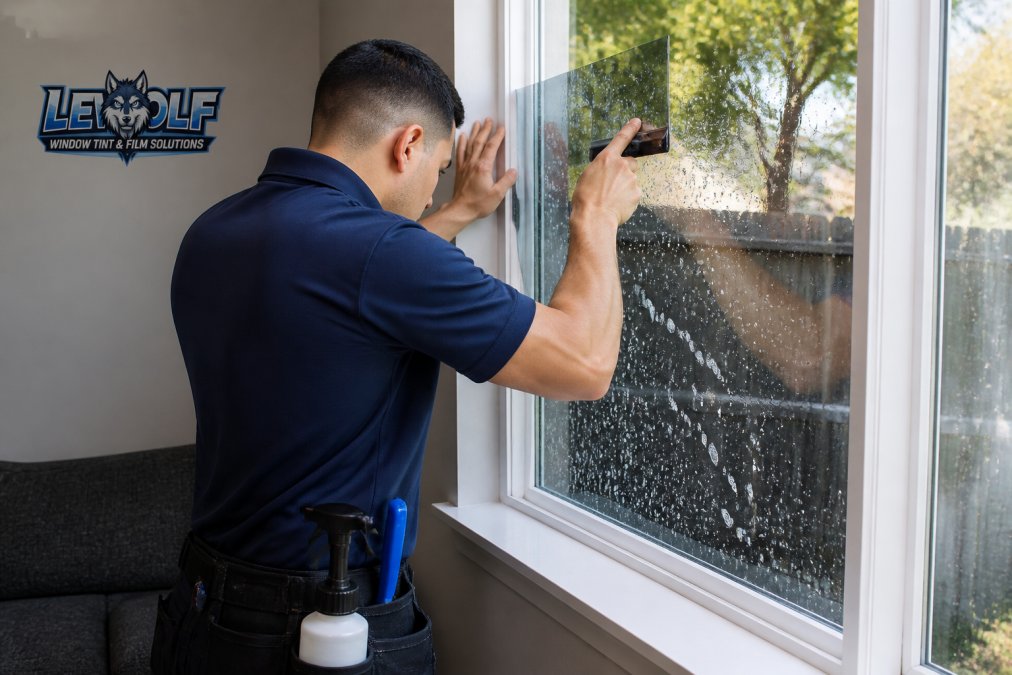
DIY installation makes sense in two scenarios: testing whether window film solves your problem, or accepting lower quality to minimize cost. Use DIY film to test whether tinting reduces screen glare before investing in professional installation. Some homeowners accept bubbles and uneven edges as acceptable tradeoffs for lower cost. Professional solutions often provide a more polished aesthetic for workspaces where glare control must integrate seamlessly with custom window treatments.
Why Professional Installation Delivers Superior Results
Professional installation provides precision application (no bubbles or misalignment), proper surface preparation (cleaned to manufacturer standards), and warranty-backed results. If professional installation fails, the installer replaces it at no cost. DIY failures cost you the film plus professional removal and reinstallation.
Window Film for Screen Glare: Protecting Your Digital Workspace
Screen glare (sunlight reflection on monitors) differs from solar glare and requires films with high reflective properties. Spectrally selective films like 3M Prestige Series excel because their multi-layer construction bounces light away from screens. A 70% VLT ceramic film with strong reflective properties often outperforms a 50% VLT dyed film for screen glare.
Key Performance Metrics: Solar Heat Gain, UV Protection, and Optical Clarity
Three metrics determine whether a window film actually delivers what you need: solar heat gain coefficient, ultraviolet rejection, and optical clarity.
| Metric | Professional Film | Consumer DIY Film | What It Means |
|---|---|---|---|
| SHGC | 0.20-0.35 | 0.40-0.50 | Lower = more heat rejection |
| UV Rejection | 99% | 95-99% | Most films perform well here |
| Optical Clarity | High | Variable | Professional films look more natural |
| Lifespan | 5-10 years | 2-4 years | Professional installation extends life |
| Warranty | Yes | No | Professional work is insured |
Maintenance, Longevity, and Legal Considerations
How Long Window Film Lasts
Professional-grade window film lasts 5-10 years on residential windows and 3-5 years on vehicles. South and west-facing films fail sooner due to constant UV exposure. Films fade gradually, becoming less effective at heat rejection before edges peel. Consumer DIY films last 2-4 years because bubbles and adhesive imperfections create weak points. Professional installation extends lifespan.
Caring for Your Tinted Windows
Clean tinted windows with mild soap, soft cloth, and water. Avoid abrasive cleaners. For two weeks after installation, avoid rolling down vehicle windows while the film cures. Slight haziness during the 30-day cure period is normal. Extreme temperature changes accelerate peeling.
HOA and Legal Restrictions
Check local regulations and HOA restrictions before installing window film. Vehicle tint laws vary by state: front windows typically require 70% VLT or higher; rear windows allow 35% VLT or lower. Windshield tinting is generally prohibited. Residential and commercial film is less regulated, but HOA bylaws may restrict exterior appearance. Professional installers like LeWolf know local regulations.
Choosing the Right Film for Your Needs
Your decision framework should follow this logic:
Step 1: Identify your primary glare source. Is it solar heat, screen reflection, concentrated reflection causing damage, or a combination? Your answer narrows the film type.
Frequently Asked Questions
What VLT percentage is best for glare reduction without darkening a room?
VLT (Visible Light Transmission) between 50-70% reduces glare significantly while maintaining natural brightness. Lower VLT (30-50%) provides stronger glare control but darkens interiors. For screen glare specifically, 40-60% VLT works well. The ideal percentage depends on your sun exposure, room use, and how much privacy you need. Professional installers can recommend the right VLT for your specific windows and orientation.
Does window film for glare reduction really work?
Yes. Quality window film blocks 99% of UV rays and reduces solar heat gain by 30-60%, which directly reduces glare and interior brightness. Spectrally selective films like 3M Prestige Series maintain optical clarity while rejecting infrared radiation. Results depend on film type, installation quality, and your window's sun exposure. Professional installation ensures optimal performance and longevity.
Can I install glare reduction window film myself, or do I need a professional?
DIY installation works for small, simple windows using budget films like Gila, but professional installation is strongly recommended for larger areas, complex shapes, or premium films. Professionals have specialized tools, experience with thermal stress management, and can ensure bubble-free application. Poor DIY installation can result in peeling, bubbling, or uneven glare reduction. For commercial or security-critical applications, professional installation is essential.
How long does window film last, and what maintenance does it need?
Maintenance is minimal: clean with soft cloths and mild soap, avoid abrasive cleaners, and don't apply pressure directly to the film for the first 30 days after installation. Professional installations include warranties covering adhesion failure and defects, providing peace of mind on your investment.