

13 min readBy Joshua Leleux
Table of Contents
- Texas Window Tint Law Overview
- Front Side Window Tint Requirements
- Rear Side and Back Window Regulations
- Windshield Tinting Rules and the AS-1 Line
- Texas Window Tint Medical Exemption
- Benefits of Ceramic Window Tint
- Consequences of Illegal Tinting and Enforcement
- Frequently Asked Questions
Last Updated: September 28, 2026
Texas Window Tint Law Overview
Texas law sets clear limits on window tint darkness, and getting it wrong means a citation and a mandatory fix. This guide from LeWolf Window Tint & Film Solutions breaks down the legal window tint darkness levels in Texas, window by window, so you know exactly what passes a state inspection before you spend money on film.
The short version: front side windows must let in at least 25% of visible light, while rear side and back windows have no darkness limit on passenger vehicles. Windshields allow tint only above the AS-1 line, a marking near the top of the glass. The Texas Department of Public Safety enforces these rules through the state inspection program, and a Texas DPS vehicle inspection overview outlines how that process works.
Here's what most tint shops won't tell you upfront: the legal limit is measured on the finished glass, not the film. Your factory glass already blocks some light, so a film rated at 30% VLT can push a window below the legal line. That single detail causes more failed inspections than anything else.
Front Side Window Tint Requirements
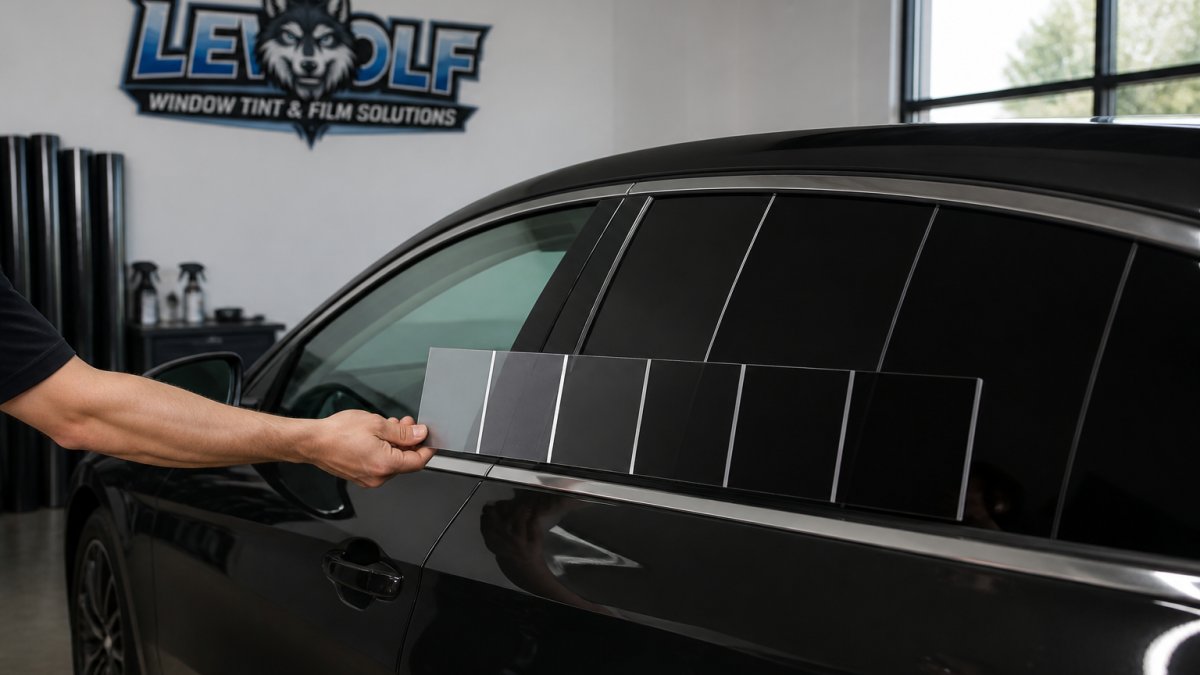
The legal limit for front side windows in Texas is 25% visible light transmission, meaning at least one quarter of outside light must pass through. This applies to the driver and passenger windows on cars, trucks, and SUVs alike.
Three rules apply to these windows:
- VLT minimum of 25% measured on the finished glass
- No red, blue, or amber tint allowed
- No mirror or reflective finish that bounces light back
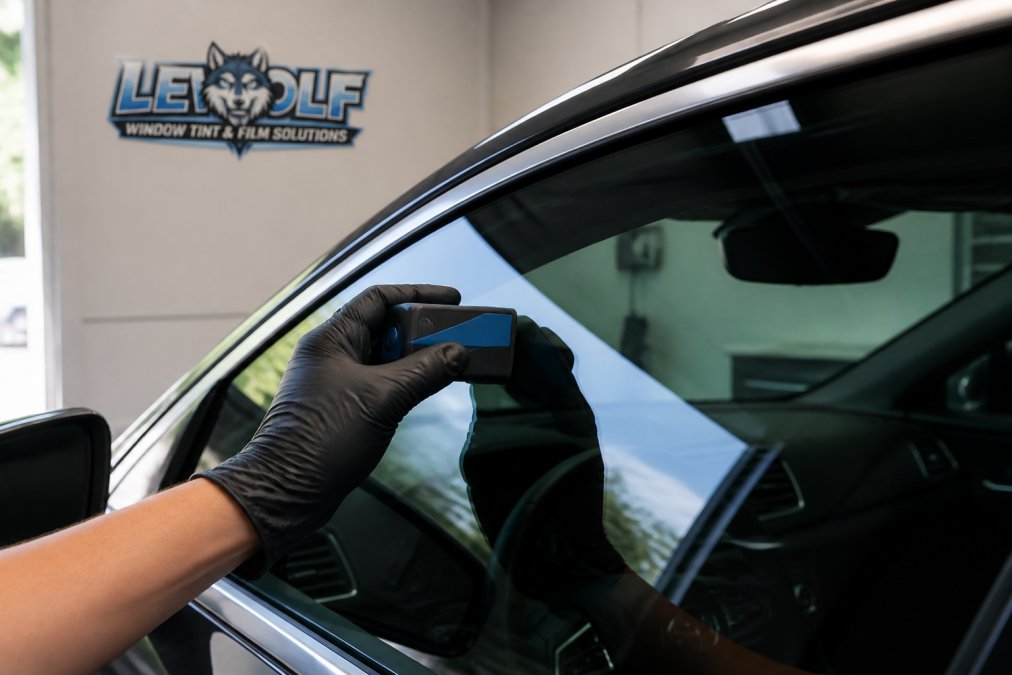
State inspectors check this with a handheld tint meter placed against the glass. If the reading falls below 25%, the vehicle fails inspection and the film has to come off. A common mistake is buying film rated exactly at 25% VLT, then discovering the factory glass already absorbs a few percent, landing the finished window at 21% or 22%. Choose film a step lighter than the limit to leave room for that gap.
Rear Side and Back Window Regulations
Rear side and back windows have no VLT limit on passenger vehicles, so you can legally go as dark as you want. The catch is the side mirrors.
If you darken the rear windows past a certain point, you must have an outside left and right mirror so the driver keeps a clear view behind. Most modern vehicles already have both, so this rarely causes a problem. Where it bites is on older trucks and vans with a single driver-side mirror.
Multi-purpose vehicles, a category that includes SUVs, vans, and trucks, follow the same rear-window rule. Some come from the factory with privacy glass already installed, which is legal and distinct from aftermarket film. Knowing the difference matters during a traffic stop, because factory tint is permanent and aftermarket film is not.
Factory Privacy Glass vs. Aftermarket Film
This is the distinction most guides gloss over, and it's the one that trips up drivers at inspection. Factory privacy glass is dyed during the glass manufacturing process, the tint is part of the glass itself, not a film applied to it. Aftermarket film is a separate layer adhered to the inside of the glass. The two are regulated differently in practice, even though both darken the window.
On rear windows, where there's no VLT limit, the difference rarely matters for legality.
What Happens at Inspection
When your vehicle goes through the state inspection program, the inspector measures tint on the windows the law covers, primarily the front side windows and the windshield. Rear side and back windows are generally not the focus of the darkness check because there's no limit to enforce. However, the inspector may still verify that the required outside mirrors are present if the rear windows are heavily darkened.
The Mirror Requirement in Practice
For vehicles with heavily darkened rear windows, the outside left and right mirrors become a legal requirement, not just a convenience. Older trucks and vans with only a driver-side mirror are the vehicles most likely to run into this. If you're darkening the rear glass on a vehicle like that, adding a passenger-side mirror keeps you compliant.
Why This Matters for Your Film Choice
Because rear windows have no darkness limit, this is where drivers often choose the darkest film available, frequently a 5% VLT limo tint. That's legal on the rear glass of a passenger vehicle. The mistake is carrying that same film choice to the front side windows, where the 25% limit applies. A shop that measures your glass and separates front from rear recommendations will keep you legal on both.
Windshield Tinting Rules and the AS-1 Line
Windshields allow tint only above the AS-1 line, a marking etched or printed near the top of the glass. Film below that line is illegal on the windshield, no exceptions short of a medical waiver.
Texas Window Tint Medical Exemption
A medical exemption lets you apply darker window tint than the standard limits when a licensed physician certifies a genuine need. The Texas Department of Motor Vehicles issues the exemption, and it must be carried in the vehicle.
- A licensed physician completes the exemption application
- The application goes to the Texas DMV for review
- If approved, you receive documentation to keep in the vehicle
- The exemption applies to the windows specified on the certificate
What the Exemption Actually Covers
A common misunderstanding is that a medical exemption unlocks unlimited darkness on every window. In practice, the certificate specifies which windows are covered and the maximum darkness allowed. Most practitioners find the exemption is written for the windows a physician identifies as medically necessary, often the front side windows and windshield, rather than the entire vehicle. If you install darker film on a window the certificate doesn't list, that window is still illegal, exemption or not.
How Enforcement Works at a Stop
When an officer measures your windows and the reading falls below the standard limit, the exemption is your defense, but only if you can produce it. The certificate must be in the vehicle, not at home in a drawer. A common pattern is a driver who legitimately holds an exemption but gets cited anyway because the paperwork isn't on hand.
The Inspection Connection
This is where the exemption intersects with the state inspection program in a way most guides skip. When your vehicle goes through inspection, the inspector measures tint on the covered windows. If your reading is below the standard limit, you need the exemption documentation present and current, or the vehicle fails. The exemption doesn't change the meter reading, it changes whether that reading is a violation.
Renewal and Record-Keeping
Because the exemption is tied to the person and expires, renewal means starting the physician certification process again. A practical approach is to note the expiration date and begin renewal well before it lapses, since driving on an expired exemption exposes you to the same citation as driving with no exemption at all. Keep the current certificate with the vehicle and file the prior one at home in case you need to show a history of medical need.
Benefits of Ceramic Window Tint
Ceramic window tint blocks heat and ultraviolet light more effectively than standard dyed or metallic films, and it does it without a reflective finish. That last point matters in Texas, where mirror-style tint on front side windows is illegal.
The practical benefits break down like this:
- Heat rejection: ceramic film reflects infrared heat rather than absorbing it, so the cabin stays cooler
- UV protection: ceramic film blocks the vast majority of ultraviolet rays, which protects skin and slows interior fading
- No signal interference: unlike metallic film, ceramic doesn't disrupt GPS, cell, or toll-tag signals
- Non-reflective: ceramic has a matte finish that satisfies the no-mirror rule
- Clarity: ceramic stays clear as it darkens, so driver visibility holds up
Consequences of Illegal Tinting and Enforcement
Illegal tint carries a citation and a requirement to fix the vehicle. Law enforcement can measure your windows during a traffic stop with a tint meter, and a reading below the legal limit results in a citation. You then have to remove the illegal film and show proof of correction.
Beyond the citation, illegal tint creates real problems:
- Failed state inspection: your vehicle won't pass until the film is corrected
- Repeat stops: dark front windows draw attention, especially at night
- Safety risk: tint that's too dark limits your view of pedestrians, cyclists, and other vehicles
- Insurance questions: in some cases, illegal tint can complicate a claim after an accident
Frequently Asked Questions
Is 20% window tint legal in Texas?
No. Texas law requires front side windows to allow at least 25% VLT. A 20% tint is darker than the legal limit, so it does not comply for front side windows. However, 20% may be allowed on rear side and back windows if the vehicle has dual side mirrors. Always verify your specific film's VLT rating before installation.
Is 20% or 35% tint darker?
20% tint is darker. VLT percentage indicates how much visible light passes through the film. A 20% film allows only 20% of light through, while 35% allows 35%. In Texas, 35% is legal for front side windows, but 20% is not. For rear windows, both may be allowed if the vehicle has dual side mirrors.
Why is 5% tint illegal in Texas?
A 5% tint, often called limo tint, blocks 95% of visible light. Texas law sets a minimum of 25% VLT for front side windows and prohibits any tint darker than 25% on those windows. This limit exists to ensure driver visibility and safety. Using 5% tint on front windows can result in a citation and require removal.
What are the medical exemptions for window tint in Texas?
Texas allows a medical exemption for darker tint if a licensed physician submits a signed statement to the Texas Department of Public Safety. The exemption must specify the medical condition and the required VLT level. Once approved, you receive a exemption certificate to carry in the vehicle. This allows tint darker than the standard legal limit.