
16 min readBy Joshua Leleux
Table of Contents
- 8 Warning Signs Your Car Window Tint Needs Replacing
- How Long Does Car Window Tint Last?
- The Cost of Removing Old Window Tint
- Benefits of Ceramic Window Tint for Your Next Install
- How to Tell If Window Tint Is Bad: A Quick Checklist
- Why Timely Replacement Protects Your Vehicle and Your Wallet
- Frequently Asked Questions
Last Updated: October 4, 2026
8 Warning Signs Your Car Window Tint Needs Replacing
Spotting the signs your car window tint needs replacing saves you from a hazy, blistered mess and costly emergency removal.
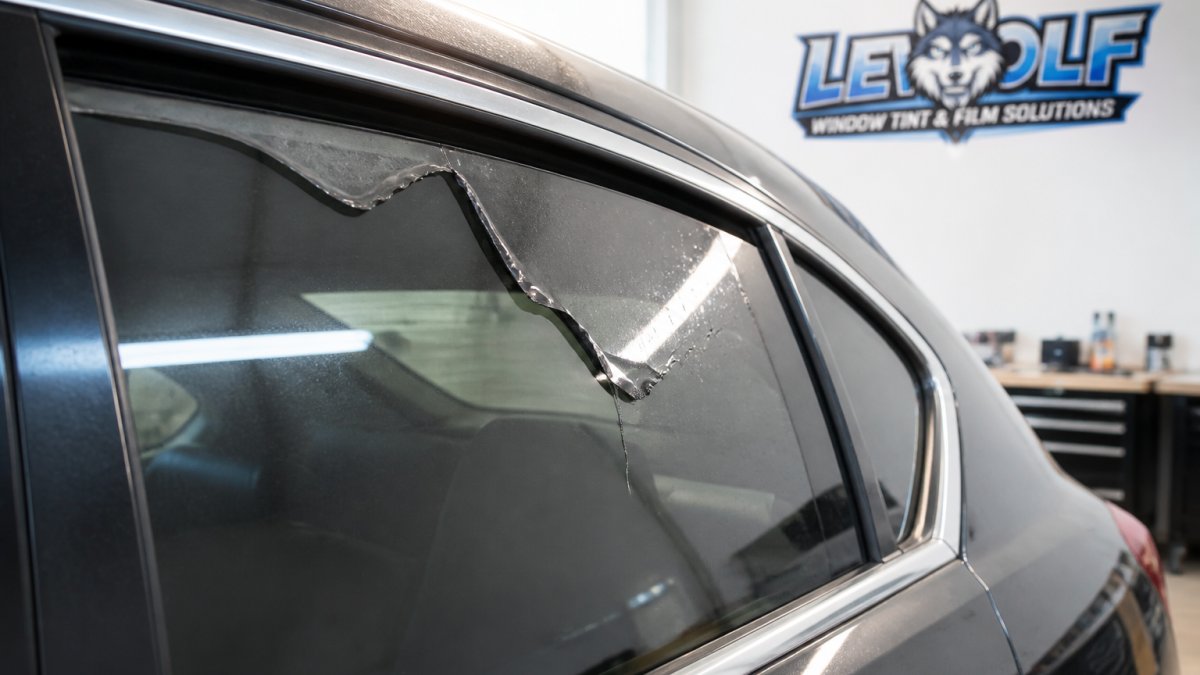
1. Purple, Blue, or Discolored Film
Purple tint is the classic death rattle of a dyed film. Cheaper films use dye in the adhesive layer, and ultraviolet rays break it down over time. The shift is permanent, no cleaner brings it back, and the tint lifespan is over.
2. Bubbles and Air Pockets
Tint bubbling means the adhesive has lost its grip on the glass. Small bubbles grow as moisture and heat work under the film, adhesive failure that accelerates in direct sun.
3. Peeling Edges and Lifting Corners
Peeling edges usually start at the top of a roll-down window or along a rear defroster line. Once a corner lifts, dirt and cleaner get underneath and delamination spreads. A lifted edge is also a safety hazard, it can snag clothing or seatbelts.
4. Hazy or Blurry Visibility
A hazy view is more than an annoyance. When film clouds over, optical clarity drops and night driving gets dangerous, visibility obstruction is a common reason drivers finally book a replacement.
5. Cracking or Brittle Film
Film degradation eventually makes the material brittle: fine cracks, a crackled texture, or flaking. This almost always means film oxidation has reached the adhesive, and removal gets harder the longer you wait.
6. Scratches and Surface Damage
Surface scratches happen from ice scrapers, rings, pets, and car washes. Light marks are cosmetic; deep gouges that catch a fingernail break the scratch-resistant coating and speed breakdown.
7. Increased Interior Heat and Fading
When thermal rejection fades, your cabin gets hotter and interior upholstery protection disappears. Dashboard cracks, faded seats, and a weak air conditioner signal film that no longer blocks heat transfer.
8. Loss of Privacy and Glare Reduction
Old film loses glare reduction and privacy long before it looks bad. If headlights blind you at night or passersby can see straight in, the film has stopped doing half its job.
How Long Does Car Window Tint Last?
There is no single answer, because "window tint" describes several products with different chemistries. The honest range is 2 to 4 years for the cheapest dyed films, 5 to 10 years for mid-grade metallized or hybrid films, and 10 years or more for quality ceramic and carbon films.
Watch This BEFORE Calling Your Tint Shop Back!
Blackout Tinting
Why Film Actually Fails (The Mechanism Most Guides Skip)
Automotive film is a layered sandwich: a scratch-resistant top coat, a polyester base, a dye or nano-particle layer, and a pressure-sensitive adhesive. Each layer ages on its own clock.
- The dye layer absorbs ultraviolet radiation and slowly oxidizes. This is why dyed film turns purple or blue before it bubbles.
- The adhesive cross-links and hardens as it cycles through heat and cold. Once it loses tack, you get bubbles and lifting edges.
- The top coat wears thin from abrasion, which is why older film scratches more easily than when new.
This explains a counterintuitive point: film can look fine and still be failing. A lightly tinted film that appears clear may have already lost most of its UV-blocking capacity, because the chemical blockers degrade before the visible color shifts.
The UV Protection Gap: When "Okay-Looking" Tint Stops Protecting You
The visible darkness of a film and its UV protection are two separate properties. A quality film blocks roughly 99% of UV-A and UV-B rays when new, but that number falls as the UV absorbers are consumed.
That matters for three reasons:
- Skin exposure. Side and rear windows are where passengers, especially children in the back seat, get the most cumulative sun exposure on long drives.
- Interior damage. UV drives dashboard cracking, seat fading, and brittle plastic trim. Film that has lost its UV performance no longer protects the interior even if it still looks dark.
- Heat. UV and infrared rejection are related but distinct. Film can still block visible light while letting infrared heat through, which is why a car with "dark" old tint can still feel like an oven.
If your film is more than five years old and you park outside, have a shop meter it rather than trusting your eyes.
Factors That Shorten Tint Lifespan
- Film quality and construction: Dyed films fade fastest; carbon and ceramic films resist oxidation for years longer because they do not rely on dye.
- Sun exposure and climate: A vehicle parked outside in a high-UV climate ages film far faster than a garaged one. Horizontal glass, windshields and rear windows, takes the most direct sun and usually fails first.
- Installation quality: A poor installation traps dust, moisture, and air under the film, giving the adhesive a head start on failure.
A Realistic Replacement Timeline
| Film Type | Typical Service Life | First Sign of Failure |
|---|---|---|
| Dyed | 2-4 years | Purple or blue color shift |
| Metallized / hybrid | 5-8 years | Haze, reduced clarity |
| Carbon | 8-12 years | Slight color fade |
| Ceramic | 10+ years | Adhesive failure, not color |
Treat these as planning numbers, not guarantees. A ceramic film on a garaged car in a mild climate can outlast the vehicle; the same film on a work truck parked in full sun will not.
The Legal and Resale Angle
Two consequences of aged film rarely make it into lifespan discussions, and both cost real money.
Legal exposure. Every state sets a minimum visible light transmission (VLT) for side and rear windows, and many set separate windshield limits.
Resale value. A buyer or trade-in appraiser sees purple, bubbling film as a defect, not a feature.
The Cost of Removing Old Window Tint
Removal is priced by labor time, set almost entirely by how far the film has degraded. Film already lifting and peeling can sometimes be pulled in large sheets in under an hour.
Most shops price removal per window, and the rear window almost always costs the most because of the defroster grid.
Why Aged Film Costs More to Remove
Three things drive the price up as film gets older:
- Adhesive cure. Fresh adhesive releases with heat and a plastic blade. Adhesive cross-linked over years bonds to the glass and requires chemical softening plus repeated scraping.
- Film brittleness. Old film tears instead of peeling, and every tear means starting a new edge, multiplying time on each pane.
- Defroster lines. On the rear window, the removal tool travels over thin conductive lines bonded to the glass. One slip with a metal blade cuts a line, and that section of the defroster stops working permanently.
The Defroster-Line Risk: The DIY Mistake That Costs the Most
This is the most expensive mistake in tint removal, and why most guides say leave the rear window to a professional. Rear defroster lines are fired into the glass, not printed on top.
A professional removal avoids this with steam or heat to soften the adhesive, plastic blades instead of metal, and, on the rear window, a technique that works the film off without dragging a hard edge across the grid.
What Professional Removal Actually Involves
A proper removal is a sequence, not a single step:
- Assessment. The technician checks whether the film is dyed, metallized, or ceramic, and whether it is lifting or fully bonded. This determines the method.
- Heat or steam. Controlled heat softens the adhesive so the film releases instead of tearing.
- Mechanical lift. Plastic blades and a steady pull remove the bulk of the film.
Removal and Replacement Together
If you are replacing the film anyway, ask the shop to quote removal and installation as one job. Most installers discount bundled removal, and doing both at once means the glass is prepped once and the new film goes on a clean surface. It also avoids installing new film over old adhesive residue, which guarantees bubbling within a year.
When to Skip Removal Entirely
One case where removal is not the right call: film that is still fully bonded, clear, and within its service life. If a shop meters the film and it is still performing, there is nothing to remove. Strip film based on failure, discoloration, bubbling, lifting, haze, or lost UV and heat performance, not age alone.
Benefits of Ceramic Window Tint for Your Next Install
Ceramic film is the upgrade most drivers should make on their next tint installation.
The practical benefits:
- Heat rejection that stays strong for the life of the film
- UV blocking that protects skin and interior surfaces
- Glare reduction without signal interference for GPS, tolls, or phones
For maximum performance, we install 3M Crystalline and other ceramic lines. The film quality difference shows up years later, when a cheap tint has gone purple and a ceramic film still looks new.
How to Tell If Window Tint Is Bad: A Quick Checklist
Run through this list before you book anything. If you check two or more boxes, replacement usually beats living with failing film.
- Film shows purple, blue, or brown discoloration
- Bubbles or tint bubbling anywhere on the glass
- Peeling edges or lifted corners on any window
| Sign | What It Means | Urgency |
|---|---|---|
| Purple or blue film | Dye breakdown from UV exposure | Replace soon |
| Bubbles or air pockets | Adhesive failure | Replace promptly |
| Peeling edges | Delamination spreading | Replace promptly |
| Hazy or blurry view | Visibility obstruction | Replace now |
| Cracking or brittle film | Film oxidation | Replace now |
| Scratches and gouges | Coating damage | Monitor or replace |
| Extra interior heat | Lost thermal rejection | Replace soon |
| Weak glare control | Worn glare reduction | Replace soon |
Why Timely Replacement Protects Your Vehicle and Your Wallet
Waiting on failing tint costs more than most drivers expect. Degraded film keeps baking your dashboard, seats, and electronics, and it can push you out of legal tint shade limits in some states. A hazy windshield or side window is also a real safety hazard at night.
Failing tint rarely fixes itself, and every month you wait makes removal harder and costlier. LeWolf Window Tint & Film Solutions has spent 30 years installing automotive film, and as a 3M Authorized Dealer and 3M Certified installer, we back every job with precision work and real accountability.
Frequently Asked Questions
How long should car window tint last?
Quality window tint typically lasts 5 to 10 years, with premium ceramic films often reaching 10 to 15 years or more. Lifespan depends on film quality, sun exposure, and installation. Dyed films tend to fade faster, while ceramic and carbon films resist degradation. Regular cleaning with ammonia-free products helps extend tint lifespan. If your tint is over 7 years old and showing discoloration or bubbling, replacement is likely due.
What does a bad tint job look like?
A poor tint installation shows visible bubbles, trapped debris under the film, peeling corners, and uneven edges. You may notice a hazy or distorted view through the glass, especially at night. Purple or blue discoloration indicates film oxidation or adhesive failure. Cracking or brittle film that flakes when touched is another clear sign. These issues often appear within months of a low-quality install and signal the film needs professional replacement.
Can old window tint affect visibility and safety?
Yes. Degraded tint with bubbles, haze, or scratches scatters light and reduces optical clarity, making it harder to see pedestrians, cyclists, or other vehicles, especially at night or in rain. Peeling film can obstruct your view through the rear window. Reduced visibility is a safety hazard. If your tint impairs your ability to see clearly, replace it promptly to maintain safe driving conditions.
Is it possible to repair window tint, or is replacement always necessary?
Minor issues like a single small bubble or a lifted corner may be repairable by a professional, but widespread bubbling, peeling, discoloration, or cracking means the film has failed and requires full replacement. Attempting to patch large areas often looks uneven and doesn't restore UV protection or heat rejection. For tint older than 5 years showing multiple signs of degradation, replacement is the reliable solution.
Does purple-tinted glass mean the film is failing?
Yes. Purple or blue discoloration signals film oxidation and adhesive breakdown, common in lower-quality dyed films exposed to intense sunlight. The purple tint indicates the dye molecules are breaking down, which also means UV blocking and heat rejection have dropped significantly. Once film turns purple, it cannot be restored. Replacement with a ceramic film offers better color stability and long-term performance.