
14 min readBy Joshua Leleux
Table of Contents
- Film Type: Ceramic vs. Carbon vs. Dyed
- Vehicle Size and Window Count
- Installation Labor and Expertise
- Ceramic vs. Carbon Window Tint Cost: A Breakdown
- How Long Does Auto Window Tinting Take?
- Additional Cost Factors: Removal, Warranty, and Legal Compliance
- Long-Term Value: Maintenance, Insurance, and Resale
- Frequently Asked Questions
Last Updated: September 23, 2026
Film Type: Ceramic vs. Carbon vs. Dyed
Auto window tint pricing is driven less by glass size than by the film on it, and film composition is the largest swing factor in any auto window tint pricing quote. A dyed and a ceramic film can cover the same windshield and back glass yet land hundreds of dollars apart, because they deliver different heat rejection, clarity, and lifespan.
How Film Composition Changes the Price
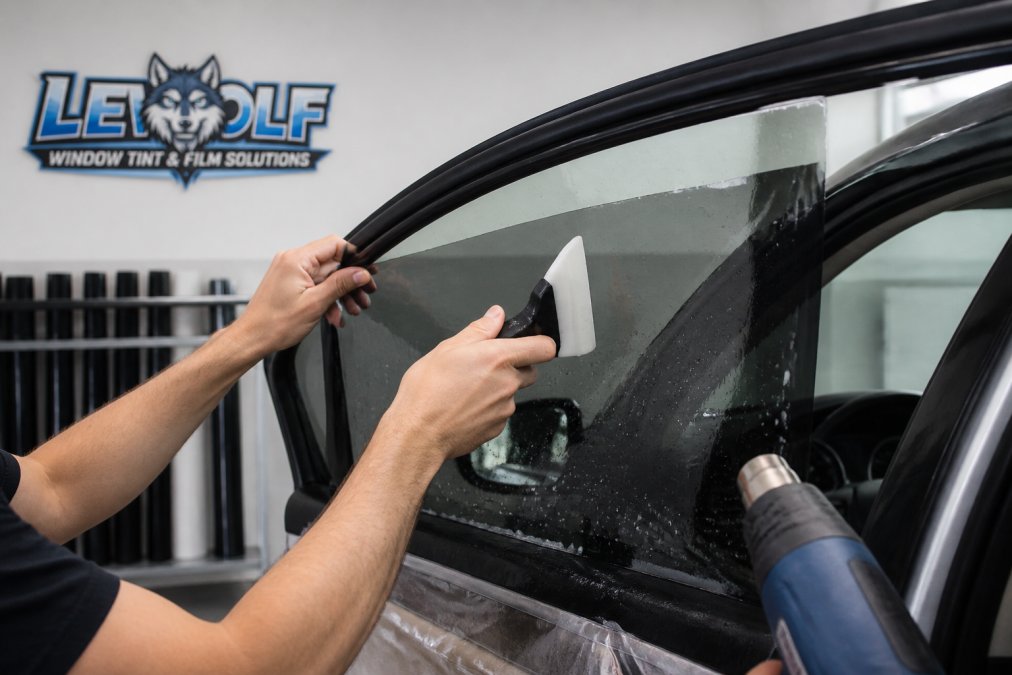
Window film is a multi-layer polyester sheet coated with adhesive and a scratch-resistant top coat, and the layers inside determine its cost. Dyed film uses colorant to darken glass, the cheapest way to cut visible light. Carbon film suspends carbon particles for a matte finish and better heat control without metal.
Performance Differences That Justify the Cost
The gap between grades shows up in three numbers: VLT percentage, infrared rejection, and UV protection. Dyed film blocks visible light but absorbs heat into the glass, doing little for cabin temperature. Carbon handles heat better and never interferes with electronics. Ceramic delivers the highest infrared rejection and UV protection while keeping a factory-clear look, which matters most on luxury vehicles where dark tint looks out of place.
Vehicle Size and Window Count
More glass means more film, more labor, and a higher total. A coupe has fewer, smaller windows than a three-row SUV, so the same film grade produces two very different quotes. Installers price by square footage of film plus shaping time, making vehicle class the second-biggest variable after film type.
Why a Sedan Costs Less Than an SUV
A sedan typically carries five or six windows, while a full-size SUV or truck can have eight or more, including quarter glass and rear cargo panes. Each extra window adds film, cutting time, and a chance for a redo. Factory tint on the rear glass also changes the math, since the installer must match the front doors to already-darkened glass.
Complexity of Window Curves and Shapes
Flat glass is easy; curved rear glass is not. Windshields and back windows often have compound curves that require heat shrinking the film to conform without creases, adding labor minutes per pane. Glass complexity is one of the most underrated cost drivers, which is why two cars with identical window counts can still price differently.
Installation Labor and Expertise
Installation labor is usually the largest line on a tint invoice, and the one customers question most. Film is a commodity; the hands applying it are not. A certified installer who has spent years learning to shrink film and lay it without contamination charges more than a hobbyist with a heat gun, and the finished result shows it up close.
Why Professional Installation Costs More Than DIY Kits
DIY kits sell on price and fail on execution. A pre-cut kit cannot account for your glass's specific curve, and trapped dust becomes permanent bubbles. Professional installation includes surface prep, a dust-controlled bay, and a warranty a home kit will never match. When adhesive fails or lifts, a pro fixes it; a kit leaves you peeling film off with a razor.
Certifications and Precision Cutting
Certifications signal an installer has been trained on specific film systems. LeWolf Window Tint & Film Solutions is a 3M Authorized Dealer with 3M Certified installers, and that training covers plotter software, precision cutting, and each film's handling specs. Precision matters because a slipping blade scores the glass, while a plotter-cut pattern fits without trimming on the vehicle.
Ceramic vs. Carbon Window Tint Cost: A Breakdown
Ceramic film costs more than carbon, and carbon more than dyed, but the gap depends on how the film is built, not what it is called. Two shops can quote the same 'ceramic' job hundreds of dollars apart because ceramic describes a class of film, not a single product. Understanding what drives the spread is the difference between paying for performance and paying for a label.
What Actually Drives the Price Gap Between Grades
Three manufacturing inputs separate the grades:
- The heat-rejection layer. Dyed film darkens polyester with colorant, which is cheap and blocks visible light but absorbs heat into the glass. Carbon film suspends carbon particles for a matte finish and better heat control without metal. Ceramic film embeds nano-ceramic particles, typically metal oxides, that reject infrared energy while staying nearly clear. That nanoparticle layer is the biggest cost input.
- The adhesive system. Higher-grade films use pressure-sensitive adhesives engineered to stay optically clear for years. Cheap adhesives are the leading cause of the purple haze and bubbling that send owners back for a re-tint.
- The top coat. A scratch-resistant hard coat protects the film from squeegees, rings, and cleaning. Thinner coats on budget film wear through and expose the dyed layer underneath.
A Grade-to-Cost Framework
Rather than quote a single national number, which varies by shop, region, and vehicle, think in relative tiers. Most installers price the same vehicle in a predictable ladder:
| Film Grade | Heat Rejection | Clarity | Best For | Relative Cost |
|---|---|---|---|---|
| Dyed | Low | Good, darkens glass | Budget builds, older vehicles | Lowest |
| Carbon | Moderate to high | Matte, no signal interference | Daily drivers, electronics-heavy cars | Mid |
| Ceramic | Highest infrared rejection | Near-clear | Luxury vehicles, maximum UV and heat control | Highest |
Why the Same Grade Quotes Differently
Even within one grade, quotes move for reasons worth asking about:
- Film line within the grade. A manufacturer's entry ceramic and its flagship ceramic are not the same product, and the price reflects it.
- Warranty terms. A film backed by a manufacturer warranty against color change and bubbling costs the shop more than an unbranded roll, and that cost lands in your quote.
- Installer certification. Shops certified on a specific film system pass some training cost through, but they also install it correctly the first time.
How Long Does Auto Window Tinting Take?
Auto window tinting takes roughly two to four hours for a standard sedan and four to six hours for a large SUV or truck, depending on film type and window count. That covers prep, cutting, installation, and initial inspection. Full curing takes longer: the film bonds for several days, and small water pockets that look like bubbles usually dry out on their own.
Several factors stretch the timeline:
- Removal of old tint, which can add hours if the adhesive has bonded to the glass
- Complex curved rear glass that needs heat shrinking
- Vehicles with many small panes, like cargo vans or three-row SUVs
- Colder shop temperatures, which slow the curing process
Additional Cost Factors: Removal, Warranty, and Legal Compliance
Three items sit outside the film-and-labor core and surprise people at pickup: old tint that has to come off, the warranty backing the work, and your state's legal limits on front-window darkness. Ignoring any can turn a clean quote into a change order, or, with a fix-it ticket, a recurring cost you did not budget for.
Removal of Old Tint
Tint removal is billed separately because it is slow, messy work. Old film that has turned purple or bubbled has usually bonded to the glass, and pulling it leaves adhesive that must be dissolved before new film goes on. A car with failing tint on every window can add a meaningful chunk to the total, and skipping removal is not an option if you want new film to adhere.
- Intact film. A single sheet peels off in one piece with heat and a steady hand, the cheapest removal.
- Failing film. Film that has already started to bubble or flake comes off in fragments, and every fragment leaves adhesive behind.
- Adhesive-bonded film. Film that has baked onto the glass for years requires solvent, scraping, and sometimes steam, and it is the most expensive removal.
Warranty Coverage and Film Durability
Warranty coverage is where cheap jobs fall apart. Quality film carries a manufacturer-backed warranty against bubbling, peeling, and color change, and durability under that warranty often runs for years when installed correctly. The catch: most film warranties require professional installation, so a DIY job voids coverage before it starts. Ask what the warranty covers and who honors it, the shop, the manufacturer, or both.
Two warranty terms matter more than the length:
- Who pays for removal. A warranty that covers replacement film but not the labor to strip the old film leaves you paying the expensive half.
- What voids it. Ammonia-based cleaners, abrasive pads, and DIY re-tints are the most common void triggers. A warranty is only as good as the care routine that keeps it valid.
Regional Legal Compliance Costs
Every state sets its own VLT percentage limits for front side windows, and some restrict windshields and rear glass too. A legal shade in one state can be a ticket in another, so installers near state lines must know both sets of rules. If your preferred shade falls below the legal limit, you may need lighter film on the front doors, meaning two film grades for one vehicle.
Long-Term Value: Maintenance, Insurance, and Resale
The purchase price is only part of what tint costs you. Maintenance, insurance treatment, and resale value all shift the real number, and most quotes never mention them. A film that lasts a decade with almost no care is cheaper than a bargain film that fails in three years and must be stripped and replaced.
Maintenance and Long-Term Care Costs
Care costs are minimal with quality film. Use mild soap and water with a soft cloth, avoid ammonia-based cleaners that degrade the top coat, and skip abrasive pads. The real cost of poor film is replacement: a tint that bubbles or turns purple must be removed and redone, meaning you pay for removal and installation twice.
Insurance and Resale Value Impact
Window tint rarely changes your premium, but it can affect a claim if the film was undisclosed or exceeds legal limits. On resale, intact, professionally installed film reads as a maintained vehicle, while peeling tint reads as neglect. If you added paint protection film or a ceramic coating to preserve a high-end finish, that protection is a selling point you can document.
Frequently Asked Questions
Is $500 a lot for window tint?
It depends on the film type, vehicle size, and installation quality. A $500 job might use a high-performance ceramic film with infrared rejection and UV protection, while a lower quote could use a basic dyed film that fades. For a full-size SUV with complex windows, $500 can be reasonable. For a compact sedan with standard film, it may be on the higher end. Always compare film specifications and warranty coverage, not just the price.
Is it worth getting ceramic tint over regular tint?
Ceramic film blocks more infrared heat and offers better UV protection than dyed or carbon films. If you park outside or drive long commutes, the reduced heat and glare can improve comfort and protect your interior. Ceramic also resists fading and bubbling longer. The higher upfront cost may be offset by lower cooling needs and fewer replacements. For luxury vehicles or hot climates, ceramic is often the better long-term value.
How does vehicle size affect the total cost of a tint job?
Larger vehicles have more windows, which means more film, more labor, and longer installation time. An SUV or truck with rear quarter windows and a panoramic sunroof requires more material and precision cutting. A compact coupe has fewer and smaller windows. Expect a full-size SUV to cost more than a sedan for the same film type. Vehicle size is one of the most predictable factors influencing auto window tint pricing.
Does removing old tint increase the installation price?
Yes, removing old tint adds labor and time. Adhesive removal requires chemicals, steam, or heat, and can take an hour or more depending on the film's condition. If the old tint is peeling or has damaged defroster lines, removal is more delicate. Many shops charge a separate removal fee. Budget for this if your vehicle already has tint, and ask whether the quote includes removal.