

13 min readBy Joshua Leleux
Table of Contents
- What Security Film Does for Schools
- How Security Film Delays Forced Entry and Protects Against Intrusion
- Security Window Film Thickness for Schools: Understanding Mil Ratings
- How Commercial Glass Safety Ratings Matter for Businesses and Schools
- Cost of Security Film Installation for Schools and Maintenance Considerations
- Integration with Alarm Systems and Emergency Preparedness
- Grant Funding and Budget Planning for School Security Upgrades
- Frequently Asked Questions
Last Updated: September 18, 2026
Security Film for Schools: A 2026 Guide
What Security Film Does for Schools
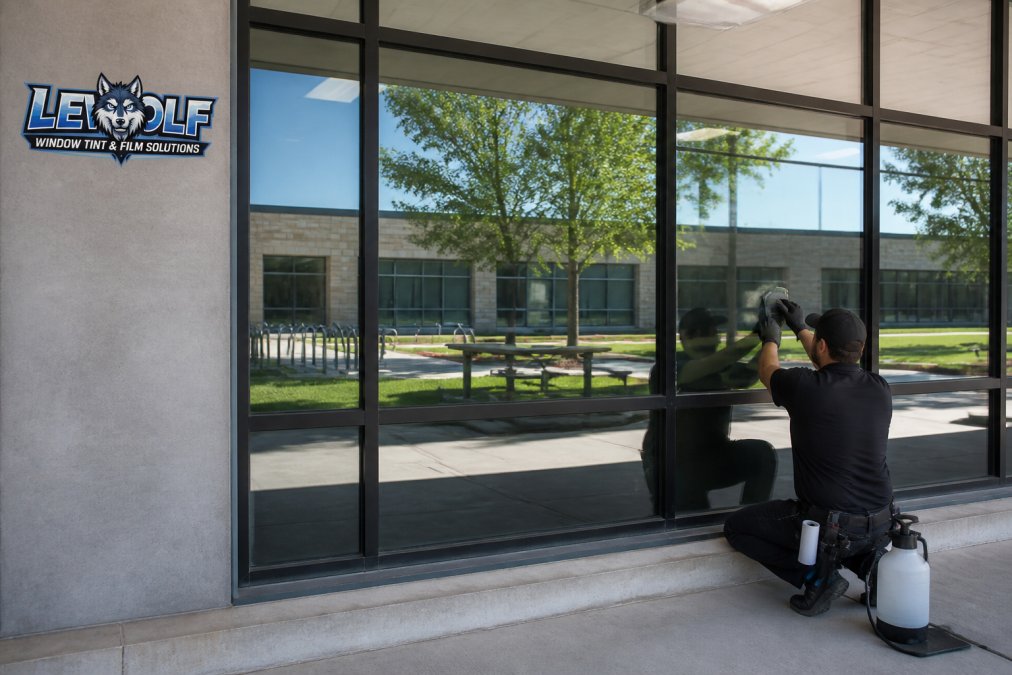
Security film schools use is a protective coating applied to glass windows and doors that holds shattered glass together during impact, forced entry attempts, or severe weather events. Rather than glass fragmenting into sharp, dangerous pieces, the film keeps the pane intact and significantly delays intruders from gaining access to building interiors.
The core function is straightforward: when impact occurs, the polyester film acts as a barrier that prevents glass from separating and scattering. This serves multiple purposes simultaneously. It protects occupants from flying shards during accidents or natural disasters. It creates time for first responders to arrive during active threats. It deters opportunistic vandalism because breaking through takes substantially longer than breaking ordinary glass.
Schools face distinct security challenges compared to other buildings. Students, staff, and visitors occupy the same spaces daily. Perimeter security must balance safety with maintaining a welcoming environment. Retrofitting existing structures presents logistical constraints that new construction doesn't face. Security film addresses these constraints without requiring structural modifications or complete window replacement.
At LeWolf Window Tint & Film Solutions, we've worked with Texas school districts to implement security film systems that integrate with existing alarm infrastructure while maintaining natural daylighting and optical clarity. The film thickness, attachment method, and integration with emergency protocols all affect how well the system performs when needed.
How Security Film Delays Forced Entry and Protects Against Intrusion
Security window film creates measurable delay in forced entry attempts. When an intruder strikes glass protected by security film, the impact doesn't immediately create an opening. The film holds fragments in place, requiring repeated strikes or tools to create a breach large enough to enter.
This delay is the critical variable. Active shooter response protocols rely on time. Law enforcement response times vary by location, but every additional second increases the likelihood that threats are contained before reaching building interiors. A five-second delay becomes ten seconds. Ten seconds becomes thirty. Security film doesn't prevent determined attackers indefinitely, but it shifts the timeline in favor of protective response.
The film's tensile strength, its resistance to tearing, determines how much force is needed to create an opening. Thicker films rated at higher mil values require proportionally more effort to breach. A 4-mil security film provides intrusion delay. An 8-mil film provides substantially more delay. A 15-mil film creates delays measured in minutes rather than seconds under sustained impact.
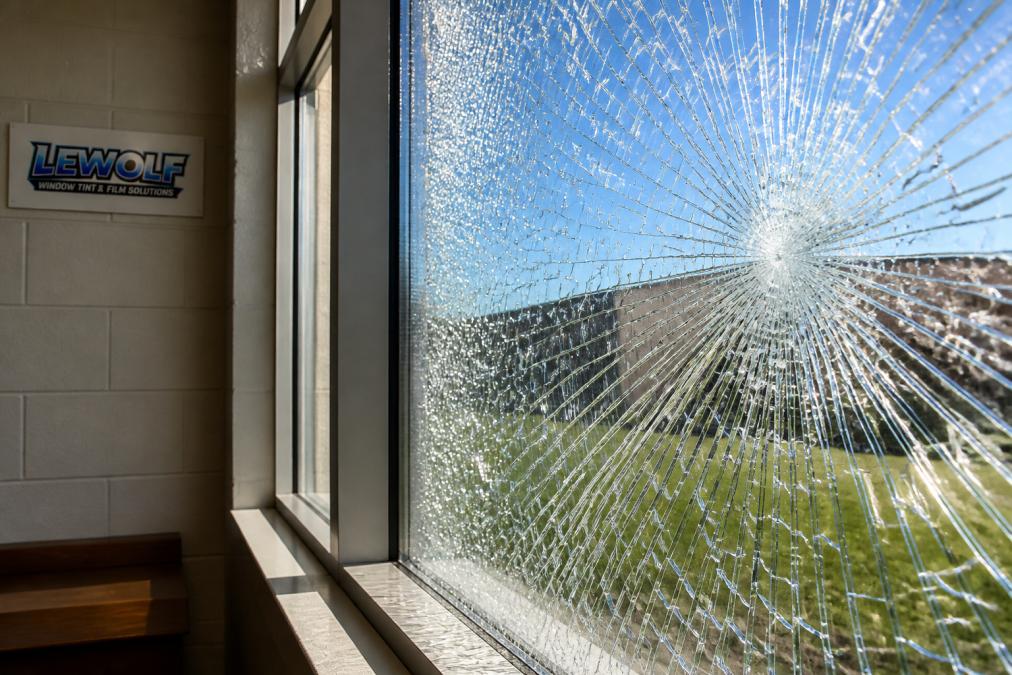
Attachment systems matter as much as film thickness. If the film is applied directly to glass without proper anchor sealant at the perimeter, an attacker can peel the film away and access the glass directly. Professional installation uses structural-grade sealant around the film's edges, anchoring it to the window frame itself. This prevents the film from being separated from the mounting surface.
Security Window Film Thickness for Schools: Understanding Mil Ratings
Film thickness is measured in mils, where one mil equals one-thousandth of an inch. This measurement determines the film's durability, optical properties, and intrusion resistance.
Common mil ratings for security film schools deploy range from 4 mil to 15 mil. A 4-mil film is the minimum thickness for meaningful security benefit. It provides basic fragmentation control and modest intrusion delay. Many schools use 4-mil film for lower-risk areas like hallways and classrooms where the primary concern is preventing injury from accidental glass breakage.
An 8-mil film provides substantially more intrusion delay and is the standard recommendation for entry points, administrative offices, and areas requiring higher security. The difference between 4-mil and 8-mil isn't simply a matter of doubling thickness, the tensile strength and tear resistance increase significantly, requiring substantially more force to breach.
A 12-mil or 15-mil film is reserved for highest-risk locations: main entrances, security offices, and areas where extended delay is critical. These thicker films can withstand sustained impact and tool-based attack for minutes. The tradeoff is reduced optical clarity and higher cost.
Optical clarity decreases slightly as mil rating increases. A 4-mil film is nearly invisible, most occupants won't notice it's present. An 8-mil film shows minimal visual impact. A 15-mil film may show slight haziness or color tint, particularly when viewed at angles. For school applications, this tradeoff is usually acceptable given the security benefit, though it's worth confirming with stakeholders during planning.
| Film Thickness | Intrusion Delay | Best For | Optical Impact |
|---|---|---|---|
| 4 mil | 5-10 seconds | Classrooms, hallways | Minimal |
| 8 mil | 15-30 seconds | Entries, offices | Very slight |
| 12 mil | 45-90 seconds | High-risk areas | Slight |
| 15 mil | 2+ minutes | Critical points | Moderate |
How Commercial Glass Safety Ratings Matter for Businesses and Schools
Commercial glass safety ratings establish standards for how glass performs under impact, pressure, and environmental stress. Understanding these ratings helps facility managers select appropriate security solutions and verify that installations meet recognized standards.
The primary standard for impact-resistant glazing in the United States is ASTM F1233, which tests how glass and protective systems respond to high-velocity impact. The standard measures whether glass breaks, whether fragments are retained by the protective system, and how quickly a breach can be created.
Safety glazing standards also include ANSI Z97.1, which covers safety performance for architectural glazing. These standards don't specifically address security film, but they provide context for how safety performance is measured and verified. A security film system that meets ASTM F1233 standards has been tested under controlled impact conditions and proven to provide measurable delay and fragmentation control.
For schools, compliance with recognized standards provides documentation that security measures meet industry best practices. This matters for insurance purposes, for demonstrating due diligence in threat assessments, and for gaining community confidence that security upgrades are effective. Insurance carriers often recognize certified installations and may offer premium adjustments.
Facility managers should verify that any security film installation includes testing documentation confirming compliance with relevant standards. This documentation should be retained as part of the school's security infrastructure records.
Cost of Security Film Installation for Schools and Maintenance Considerations
Security film installation cost varies based on film thickness, window size, number of windows, and installation complexity. Schools typically evaluate cost per square foot of protected surface, though total project cost is what appears in budgets.
Installation typically requires professional application to ensure proper adhesion, perimeter sealing, and integration with existing window frames.
Integration with Alarm Systems and Emergency Preparedness
Security film works most effectively when integrated with broader emergency preparedness systems. The film provides time delay, but that delay only benefits your school if staff and students have protocols for responding to the delay it creates.
Grant Funding and Budget Planning for School Security Upgrades
Many schools struggle with security upgrades because capital budgets are stretched thin. Federal and state grant programs exist specifically to fund school security improvements, including window protection systems like security film.
Frequently Asked Questions
Does security film prevent forced entry into classrooms?
Security film significantly delays forced entry by holding glass fragments together after impact. While it does not make glass unbreakable, it forces intruders to spend additional time breaking through and removing shards, time that allows first responder response and gives occupants critical seconds to secure themselves. The delay is the key benefit; combined with other security measures like alarm integration, it becomes part of a layered facility hardening strategy.
What security window film thickness for schools is recommended?
Film thickness is measured in mils (thousandths of an inch). Schools typically use 4-mil to 15-mil security films depending on threat assessment results. Thicker films (8-mil and above) provide greater impact protection and longer intrusion delay. The right thickness balances protection level, optical clarity, and budget. A security professional should evaluate your specific windows and threat profile to recommend the appropriate mil rating.
How long does security window film last on school glass?
Quality security films typically last for many years with proper maintenance. Lifespan depends on film quality, climate exposure, and how well the installation and attachment system are maintained. Regular cleaning and inspection of anchor sealant around edges helps extend life. UV-protective films may degrade faster in high-sun climates, so lifecycle planning should account for regional weather patterns and replacement budgets.
Can security film be retrofitted to existing school windows?
Yes, security film is one of the most cost-effective retrofit solutions for existing school buildings. Unlike replacing windows or adding protective barriers, film can be applied to current glass without major structural changes. Installation requires proper surface preparation and professional application to ensure the attachment system works correctly. Retrofit projects typically cause minimal disruption to school operations if scheduled during breaks or after hours.
How much does security film installation cost for schools?
Cost varies based on square footage of glass, film thickness (mil rating), window complexity, and labor. Schools should request quotes from certified installers and factor in long-term maintenance and lifecycle costs, not just installation price. Many schools use grant funding or cooperative purchasing programs to offset expenses. Contact a professional installer for a detailed estimate based on your facility's specific needs.
Does security film meet safety standards for educational facilities?
Quality security films meet ASTM F1233 and other safety glazing standards. These standards verify impact resistance, glass fragmentation control, and tensile strength. When installed correctly by certified professionals with proper attachment systems and anchor sealant, security film transforms standard windows into safety glazing that protects occupants during active threats, severe weather, and accidents.