

15 min readBy Joshua Leleux
Table of Contents
- Why School Districts Need a US Safety Film Alternative
- Security Window Film for Schools: How It Works
- Forced Entry Protection for Schools: Film vs. Tempered Glass
- Cost of Security Film for Schools vs. Glass Replacement
- Independent Performance Testing and Safety Standards
- Procurement, Grant Funding, and Cooperative Purchasing
- Maintenance and Lifecycle Management for School Window Film
- Frequently Asked Questions
Last Updated: September 11, 2026
Why School Districts Need a US Safety Film Alternative
School window film is now a core line item in campus safety budgets because glass is the weakest point in most school buildings. This guide from LeWolf Window Tint & Film Solutions covers what districts should look for when their specified product is unavailable, discontinued, or outmatched. The best alternative is not a brand but a film system pairing sufficient mil thickness with a mechanical attachment system and documented independent testing; districts that shop on brand name alone often end up with glass that looks protected but is not.
Three factors drive the search for an alternative: inconsistent supply chains for specialty security products, procurement rules favoring cooperative purchasing vehicles, and facility managers who want performance data for a school board. What most guides miss is that the film is only half the system, the attachment method decides whether glass stays in the frame during forced entry, severe weather, or blast pressure.
Security Window Film for Schools: How It Works
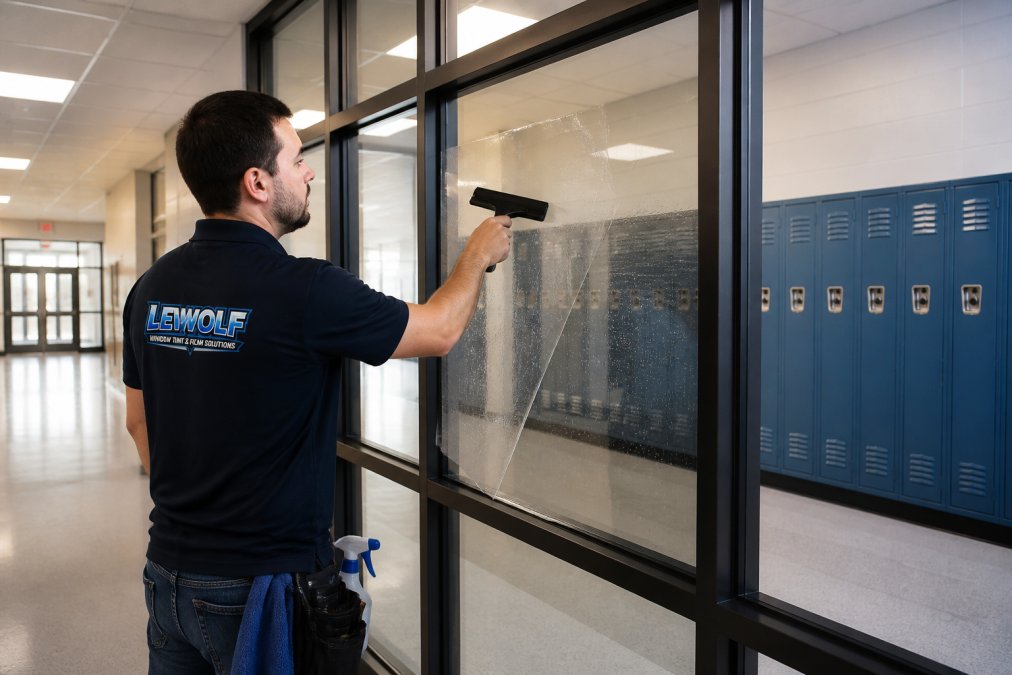
Security window film is a heavy-gauge polyester laminate, typically polyethylene terephthalate, bonded to the interior face of existing glass so broken shards stay together instead of falling free. It does not make glass unbreakable; it changes what happens after the glass breaks, which is what matters for occupant safety and entry delay.
Film Thickness and Glass Retention
Thickness is measured in mils, or thousandths of an inch, with common security grades running from 4 mil up to 14 mil and beyond. Thicker film raises tensile strength and tear resistance, but thickness alone does not guarantee glass retention: a 14-mil film that peels away from the frame under load performs worse than a properly anchored 8-mil film. Treat mil thickness as one input among several, not the headline spec. Optical clarity and daylight transmission also matter in classrooms, and a quality film should leave both essentially unchanged.
Attachment Systems and Anchoring
An attachment system mechanically connects the film edge to the window frame or surrounding wall structure, using structural silicone beads, wet glaze attachment, or dry mechanical anchoring with a retention profile. Anchoring converts a shatter-resistant membrane into a true glass retention system: without it, the film holds the glass together as a single sheet and the whole pane can still push inward; with it, the frame becomes part of the load path. This detail separates a security installation from a privacy or solar installation.
Forced Entry Protection for Schools: Film vs. Tempered Glass
Tempered glass is stronger than annealed glass in everyday use and is the code default in many door and sidelight applications, but it is not a security product. When it fails, it releases the entire pane at once into small dice, leaving the opening fully clear within seconds. Security film keeps fragments bonded to the membrane and holds the assembly in the frame, so an intruder must defeat the film and the anchoring before gaining passage. That delay is the security value.
A security film assembly works in three stages. First, the film's tensile strength holds the broken glass together as a single sheet rather than letting it fall away. Second, the attachment system, structural silicone, wet glaze, or a mechanical retention profile, transfers the load from the film edge into the window frame. Third, the frame must be strong enough to carry that load into the surrounding wall structure. If any link fails, the assembly fails, which is why a film-only installation on a flimsy frame performs nothing like a fully engineered system even when both use the same 8-mil or 14-mil product.
Ballistic Resistance vs. Forced Entry Delay
These are different problems and different test protocols, and conflating them is one of the most common specification errors in school safety projects.
Ballistic resistance measures whether a projectile penetrates the assembly. The relevant protocols come from the National Institute of Justice (NIJ) for body armor and vehicle armor, and from UL 752 for bullet-resistant equipment. A UL 752 Level 1 rating, for example, addresses 9mm handgun threats; higher levels address rifle threats. Window film alone rarely achieves a ballistic rating because the glass substrate and frame must also be engineered for it.
Forced entry protection measures how long the assembly resists deliberate physical attack with tools, crowbars, hammers, pry bars, and in some protocols, fire axes. ASTM F1233 is the standard test method for security glazing materials and systems, classifying performance by the tools used and the time the assembly resists, while ASTM F1915 covers forced entry resistance of window assemblies. These are the standards a district should cite when writing a specification.
Blast mitigation is a third category. The General Services Administration (GSA) publishes security glazing test standards that rate assemblies against blast pressure and fragment hazards. GSA ratings are widely referenced in school specifications even though the tests were developed for federal facilities, because they provide a consistent benchmark across vendors.
School districts are usually buying forced entry delay and blast mitigation, not ballistic protection, so they should confirm the test data matches the threat they are planning for. Vendors that blur the two categories, or present a ballistic rating as proof of forced entry performance, are worth a second look.
| Threat Scenario | Tempered Glass Alone | Security Film, No Anchoring | Security Film + Anchoring |
|---|---|---|---|
| Accidental impact | Dice into fragments | Fragments held in place | Fragments held in place |
| Forced entry attempt | Immediate clear opening | Brief delay, pane can push in | Sustained delay, glass retained |
| Severe weather pressure | Full pane failure | Partial retention | Frame-integrated retention |
| Blast pressure | Full pane failure, fragment hazard | Partial retention, reduced fragments | Frame-integrated retention, controlled fragments |
| Vandalism deterrent | Low | Moderate | High |
Cost of Security Film for Schools vs. Glass Replacement
The cost of security film for schools is consistently a fraction of full glazing replacement, and that gap is the strongest argument for retrofitting. Replacing tempered glass with laminated security glazing requires new glass, new stops, disposal, and often temporary barriers during construction. Film installation is a retrofit that works with the existing glazing and can be scheduled around the school calendar. Exact figures depend on square footage, film grade, attachment method, and site conditions, so districts should request a written quote rather than rely on per-square-foot rules of thumb. Districts should request a written quote rather than rely on per-square-foot rules of thumb.
[General Services(/services) Administration security glazing guidance | gsa.gov]
Independent Performance Testing and Safety Standards
Independent testing is where most procurement conversations should start: third-party labs test window film assemblies under standardized protocols, and the results are what a school board can rely on. Two references come up repeatedly in school specifications.
ASTM testing covers impact and forced entry performance for glazing assemblies, defining how a specimen is mounted, how the impact is delivered, and what constitutes a pass. A film tested as a system, film plus attachment plus substrate, tells you far more than a film tested alone.
GSA ratings come from federal security glazing testing and are widely used as a benchmark for blast and forced entry performance, identifying the threat level and performance category achieved. Districts should ask for the test report, not just the rating number.
Building code compliance adds a second layer. Security film must not compromise the fire, egress, or life safety performance of the existing assembly, and safety glazing requirements still apply where they applied before.
ASTM International standards for security glazing
Procurement, Grant Funding, and Cooperative Purchasing
Procurement is the step that stalls most district projects, and it is where an experienced vendor earns their fee. Districts generally have three paths: a competitive solicitation, a cooperative purchasing contract, or a state or federal grant award. Each has different documentation requirements, and that documentation often determines whether a project moves forward.
Cooperative Purchasing Vehicles
Cooperative purchasing lets a district buy under a contract already competitively awarded by another entity, shortening the timeline and reducing legal risk. Common vehicles for security film and glazing work include:
- TIPS (The Interlocal Purchasing System), a national cooperative serving K-12 and higher education, with awarded vendor contracts that districts can piggyback on.
- EPIC 6, a purchasing cooperative serving school districts across multiple states, with competitively bid contracts for facility and safety products.
- Sourcewell, a Minnesota-based cooperative that serves government, education, and nonprofit entities nationwide.
- OMNIA Partners, a large cooperative with contracts spanning facilities, safety, and technology.
A district using one of these vehicles typically does not need its own solicitation, provided the scope of work falls within the awarded contract, but it should still verify the vendor's contract covers the specific film grade, attachment method, and installation services required.
Documenting Security Upgrades for Grant Applications
Grant funding for school safety improvements varies by program and year, and eligibility rules change, so districts should confirm current terms with the administering agency before budgeting around an award. A few federal programs come up repeatedly:
- The School Violence Prevention Program (SVPP), administered by the Bureau of Justice Assistance (BJA), funds security improvements including window film and glazing upgrades.
- The STOP School Violence Act programs, also administered through BJA, fund threat assessment and security infrastructure.
- The COPS School Violence Prevention Program, administered by the Office of Community Oriented Policing Services, funds school security measures.
- FEMA's Nonprofit Security Grant Program (NSGP) funds target hardening for eligible nonprofit and religious institutions, and some private schools qualify.
Grant reviewers want documentation tying the proposed upgrade to a specific threat and a measurable outcome. A strong application package typically includes:
- A site assessment identifying the specific glass vulnerabilities on campus
- The test standard the proposed film assembly meets (for example, ASTM F1233 or GSA security glazing ratings)
- The independent lab report showing the assembly was tested as installed
- A cost comparison showing film retrofit versus full glazing replacement
- A maintenance and lifecycle plan showing the district will sustain the investment
- A timeline that fits the grant period
Districts that treat the grant application as a procurement document, with the same specificity as a bid specification, tend to score better than those submitting a general description of "window film for security."
Structuring the Procurement Package
Whether the district uses a cooperative contract or runs its own solicitation, the specification should require:
- Film thickness in mils, with the specific product named or an approved equal
- The attachment method, described in detail (structural silicone bead, wet glaze, or mechanical retention profile)
- The test standard the assembly must meet, and the independent lab report as a submittal
- Installation qualifications, including manufacturer certification for the installers
- A warranty that covers both the film and the attachment system
- A post-installation inspection protocol
A specification naming only the film product and mil thickness leaves the most important part of the system, the attachment, undefined, and bidders will price to the lowest interpretation.
Bureau of Justice Assistance school safety funding
Grants.gov school safety funding opportunities
Maintenance and Lifecycle Management for School Window Film
Lifecycle planning is the gap in most school film projects. Film is not a permanent building element, and districts that budget for installation but not upkeep end up with degraded performance within a few years. A workable maintenance plan covers four things.
- Annual visual inspection of every filmed pane for edge lift, bubbling, or hazing
- Immediate repair of any breach in the attachment bead, since a compromised anchor defeats the whole system
- Cleaning with approved methods only, no ammonia-based products on film
- A documented re-inspection schedule tied to the district's safety audit calendar
Typical service life depends on film grade, sun exposure, and interior environment, so districts should ask for a realistic replacement horizon in writing at purchase and fold that number into the capital plan.
School districts face a real constraint: they need verifiable forced entry protection, documented testing, and a procurement path that survives board review, without replacing every pane of glass on campus. LeWolf Window Tint & Film Solutions brings 30 years of experience, 3M authorized dealer status, and certified installers to campus glass projects, and as a TIPS awarded vendor with EPIC 6 cooperative purchasing, the team can work within the contracting vehicles districts already use. Get started with LeWolf Window Tint & Film Solutions and secure your campuses with film systems built to be tested, anchored, and maintained.
Frequently Asked Questions
What certifications should school districts look for in security film?
Districts should verify independent performance testing, including ASTM standards for forced entry resistance and GSA ratings for blast mitigation. Ask for documentation showing the film meets safety glazing requirements and building code compliance. Installers should hold manufacturer certifications, such as 3M Certified, and be authorized dealers. Check for cooperative purchasing contracts like TIPS or EPIC 6, which simplify procurement and confirm vendor vetting. Request test reports specific to the film thickness and attachment system proposed for your campus.
Is security film effective against forced entry in schools?
Yes. Security window film for schools is designed to delay forced entry by holding glass together when struck. The film's tensile strength and tear resistance prevent shattering, keeping the pane intact. When combined with a structural attachment system that anchors the film to the window frame, forced entry protection for schools improves significantly. The delay gives staff time to lock down and law enforcement to respond. Effectiveness depends on film thickness, attachment method, and proper installation, so specify these details during procurement.
How long does professional security film installation last?
Professional installation of security window film typically lasts 10 to 15 years or more, depending on film quality, sun exposure, and maintenance. High-quality films resist discoloration and bubbling. To maximize lifespan, clean with mild soap and water, avoid abrasive cleaners, and inspect edges annually for lifting. Facility managers should schedule professional inspections every few years to address gasket seal issues or edge contamination. Proper maintenance preserves both optical clarity and impact protection, ensuring the district's investment continues to perform.
What are the maintenance requirements for school security window film?
Maintenance is minimal. Clean with a soft cloth and mild detergent solution; avoid ammonia-based cleaners that degrade the film. Check for scratches, bubbling, or peeling during routine facility inspections. Repair any edge lifting promptly to prevent moisture intrusion. For attachment systems, verify that anchoring remains secure. Document installation dates and film specifications for lifecycle planning. Most districts budget for professional cleaning once a year and minor repairs as needed, keeping the film functional for its full service life.