

13 min readBy Joshua Leleux
Table of Contents
- How Security Film Works on School Glass
- Key Benefits of Security Film for Schools
- Fragment Retention and Glass Containment During Impact
- Commercial Glass Safety Ratings and Certification Standards
- Security Film vs. Bulletproof Glass: What Schools Actually Need
- Window Film Attachment Systems and Professional Installation
- Maintenance, Lifecycle Costs, and Long-Term Value
- Frequently Asked Questions
Last Updated: September 21, 2026
How Security Film Works on School Glass
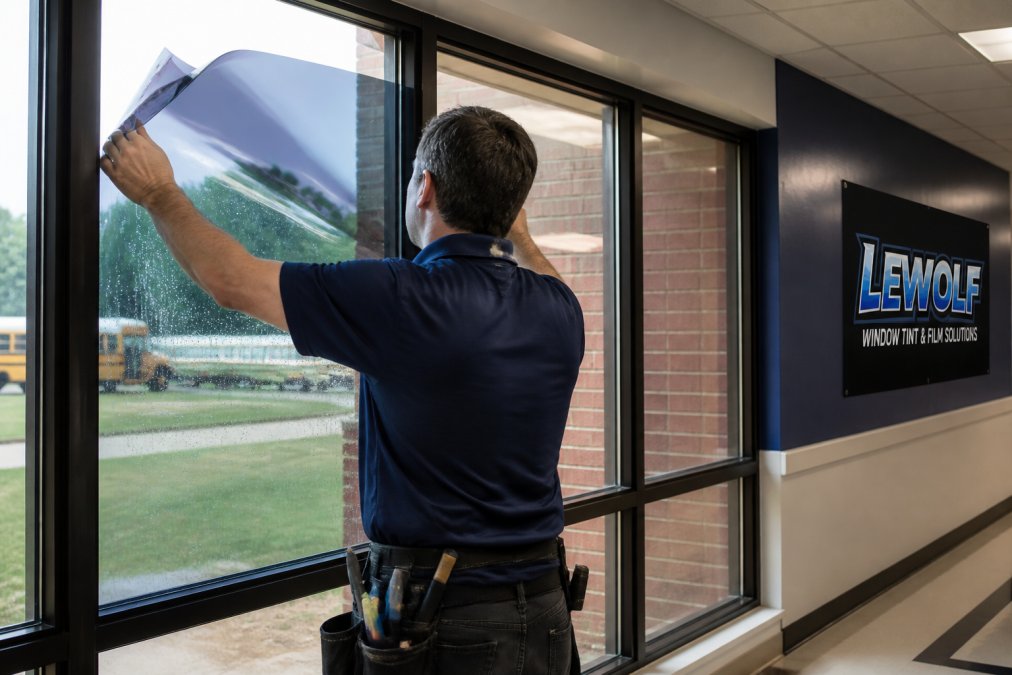
Security film for school glass operates through a straightforward but highly effective mechanism: a thin polyester layer bonded to the interior surface of a window using specialized adhesive. When impact occurs, whether from a break-in attempt, severe weather, or accident, the film holds glass fragments together rather than allowing them to scatter. The adhesive bond between film and glass is critical; it must be strong enough to contain shards while remaining flexible enough to absorb the energy of the impact.
The film's construction typically involves multiple layers. The polyester core provides tensile strength and tear resistance. The adhesive layer creates the bond to glass. Together, these components transform ordinary window glass into a containment system. The thickness of the film, measured in mils (thousandths of an inch), directly affects performance. Thicker films provide greater impact resistance and delayed entry times, though they also affect optical clarity slightly.
At LeWolf Window Tint & Film Solutions, we understand the principle remains consistent: the film doesn't stop impact, it manages it. Glass still breaks, but the fragments stay adhered to the film rather than becoming dangerous projectiles or creating an open entry point.
Key Benefits of Security Film for Schools
Schools face distinct security and safety challenges that extend beyond typical commercial properties. Security film for school glass addresses multiple concerns simultaneously: forced entry delay, fragment containment, and UV protection for students spending extended time indoors.
The primary benefit is forced entry delay. A determined intruder cannot simply break glass and reach through to unlock a door or window. With security film applied, breaking the glass requires significantly more time and effort. This delay is measured in seconds to minutes, enough time for lockdown procedures to activate, for staff to move students to safe areas, or for law enforcement to respond. The delay effect compounds when film is applied to multiple panes or combined with other security measures like reinforced frames or anchoring systems.
Fragment retention prevents secondary injuries. During severe weather events, earthquakes, or accidents, shattered glass becomes a hazard. Security film keeps fragments bonded to the film layer, reducing cuts and preventing injuries from flying glass. This benefit applies equally to accidental impacts and intentional breaches.
UV rejection is an often-overlooked advantage. Security film blocks a significant portion of ultraviolet radiation, protecting students from UV exposure during the school day. Over time, this reduces fading of classroom furnishings, educational materials, and flooring. For schools with large south-facing windows, the cumulative benefit is substantial.
Energy efficiency improves as well. Security film reduces solar heat gain in summer and retains interior warmth in winter. Schools report noticeable reductions in HVAC cycling, particularly in rooms with extensive glazing. The savings accumulate across dozens of windows over a full year.
Fragment Retention and Glass Containment During Impact
Fragment retention is the core function of security film for school glass. When untreated glass breaks, fragments fall freely and scatter across floors, creating hazards and potentially causing injuries. Security film changes this outcome entirely.
The polyester layer in security film has high tensile strength, it resists tearing and stretching. When glass breaks, the fragments remain adhered to the film through the adhesive bond. The film acts as a net, holding shards in place even after the glass structure fails. This containment persists even if the impact is forceful enough to bend or partially separate the film from the frame.
The adhesive bond is engineered for this specific purpose. It must remain flexible to absorb impact energy without cracking, yet strong enough to hold fragments indefinitely. Quality security film uses pressure-sensitive adhesives that cure over time, becoming stronger after installation. This is why professional installation includes a curing period, the adhesive needs time to reach full strength.
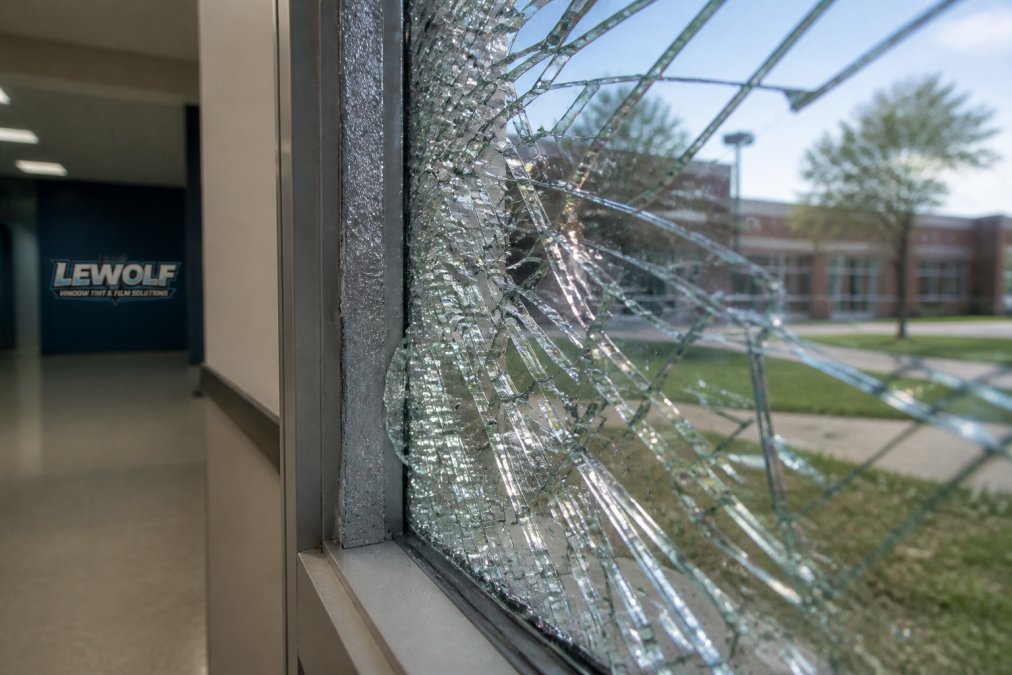
The practical outcome is clear: a window treated with security film breaks into fragments that remain attached to the film rather than falling or scattering. Occupants remain protected from flying glass. The window frame retains its structural integrity in most cases, preventing easy access through the opening.
Testing standards validate this performance. According to ASTM International safety glazing standards, security film must meet specific retention requirements. The film must hold fragments for a defined time period under standardized impact conditions. This ensures consistent performance across different manufacturers and installations.
Commercial Glass Safety Ratings and Certification Standards
Schools must comply with specific safety standards for window glazing. These standards define performance requirements for impact resistance, fragment retention, and structural integrity. Understanding these ratings is essential for facility managers making purchasing decisions.
The primary standard in the United States is ASTM F1233, which establishes criteria for security glazing. This standard measures how long a window can resist forced entry attempts and whether glass fragments remain contained. Windows are rated based on their ability to withstand repeated impacts from a defined test apparatus.
Another relevant standard is ANSI Z97.1, which addresses safety glazing performance. This standard focuses on reducing injuries from accidental impacts, though it has applications for security contexts as well. Windows meeting ANSI Z97.1 demonstrate adequate fragment containment for general safety purposes.
For higher-threat environments, ASTM F356 addresses blast-resistant glazing. While most schools do not require blast-level protection, some districts in high-risk areas specify this standard. Blast-rated security film for school glass provides protection against explosive forces, not just forced entry or accidental impact.
The distinction between these standards matters. A window rated for fragment retention under ANSI Z97.1 may not meet the forced entry delay requirements of ASTM F1233. Facility managers should verify which standard applies to their specific security objectives and local building codes.
Certification typically comes from independent testing laboratories. These labs conduct impact tests, measure retention times, and verify adhesive performance. When security film carries a certification mark, it indicates third-party validation of performance claims. This is different from manufacturer claims alone.
Security Film vs. Bulletproof Glass: What Schools Actually Need
The comparison between security film for school glass and bulletproof glass is often misunderstood. These are not equivalent solutions, and schools rarely benefit from choosing bulletproof glass over security film.
Bulletproof glass is engineered to resist ballistic impact, bullets fired at close range. True bulletproof glass typically consists of multiple layers of tempered glass bonded with polycarbonate or other polymers. The cost is substantial, ranging significantly higher than security film installations. Bulletproof glass also presents practical challenges: it's heavy, difficult to install in existing frames, and reduces optical clarity noticeably.
Security film for school glass addresses the actual threat profile most schools face. These threats include forced entry attempts, accidental impacts, severe weather, and fragment injuries, not ballistic attack. Security film handles all of these effectively at a fraction of the cost of bulletproof glass.
The forced entry delay provided by security film can be significant, depending on film thickness, application area, and the specific impact method used. This delay is sufficient for lockdown procedures, evacuation, and emergency response.
Window Film Attachment Systems and Professional Installation
The performance of security film depends heavily on how it's installed. The attachment system, how the film bonds to the glass, determines whether the film will remain effective during impact or separate and fail.
Maintenance, Lifecycle Costs, and Long-Term Value
Security film for school glass is a long-term investment. Understanding maintenance requirements and lifecycle costs helps facility managers make informed budget decisions.
Frequently Asked Questions
Does security film for school glass actually prevent forced entry?
Security film delays forced entry by holding glass fragments together and requiring significantly more time and effort to break through. While not completely unbreakable, the film adds critical seconds that allow emergency response protocols to activate and students to reach safety. The delay created by proper fragment retention and adhesive bonding systems makes the barrier far more difficult than unsecured glass.
What are the commercial glass safety ratings schools should look for?
Schools should verify that security film meets relevant industry standards for impact resistance, tear resistance, and tensile strength. These commercial glass safety ratings ensure the film maintains structural integrity during forced entry attempts and severe weather. Ask your installer for documentation proving the film's performance.
How does security film for school glass compare to bulletproof glass?
Security film is more cost-effective and retrofits existing windows without replacement, while bulletproof glass requires complete window replacement. Security film offers fragment retention and forced entry delay; bulletproof glass provides ballistic protection. For most schools, security film addresses the primary threat, intrusion and glass containment during emergencies, at a fraction of the cost of full glass replacement.
How long does professional installation of security film take?
Professional installation involves proper application, including surface preparation, adhesive application, and curing time. Professional installers ensure the film's optical clarity and adhesive bond remain intact. DIY installation risks improper adhesion and reduced effectiveness during emergencies.
What maintenance does security film require after installation?
Security film requires minimal maintenance, occasional cleaning with standard glass cleaner and soft cloths. Avoid abrasive materials that could compromise the film's surface. Professional installers provide specific maintenance guidelines to maximize the film's performance over its lifecycle.
Can security film be integrated with other school security systems?
Yes. Security film works alongside access control, surveillance, and alarm systems as part of facility hardening. The film's primary role is passive security, delaying forced entry and containing glass during impact, while other systems provide detection and response. Professional installers can coordinate window film placement with security system layouts to maximize overall campus protection.