

13 min readBy Joshua Leleux
Table of Contents
- UV Window Film and Energy Efficiency: What Actually Works
- How Solar Control Window Film Reduces Heat and Cooling Costs
- Does Window Film Lower Energy Bills in Practice
- Window Film Pros and Cons for Your Home
- Best Window Film for Home Energy Savings: Film Types Compared
- Installation, Warranties, and Payback Period
- Is UV Window Film Worth the Investment
- Frequently Asked Questions
Last Updated: October 17, 2026
UV Window Film and Energy Efficiency: What Actually Works
When homeowners ask is uv window film worth it for energy efficiency, they're usually asking two different questions at once: ultraviolet protection and heat reduction. These are not the same thing, and conflating them is where most people make the wrong decision.
At LeWolf Window Tint & Film Solutions, we've spent three decades helping homeowners and commercial clients understand what window film actually delivers. The distinction between UV-only and solar-control films matters enormously: one protects your furniture from fading, the other reduces your air conditioning load.
Is UV window film worth it for energy efficiency? The answer depends on your climate, your window orientation, and whether you're primarily concerned with UV protection, heat reduction, or both. Solar-control films can meaningfully reduce cooling costs in warm climates.
Let's separate the claims from the reality.
How Solar Control Window Film Reduces Heat and Cooling Costs
Solar Heat Gain vs. UV Rays: The Critical Difference
Solar heat gain and ultraviolet radiation are two separate phenomena, and understanding the difference changes whether window film makes financial sense for your home.
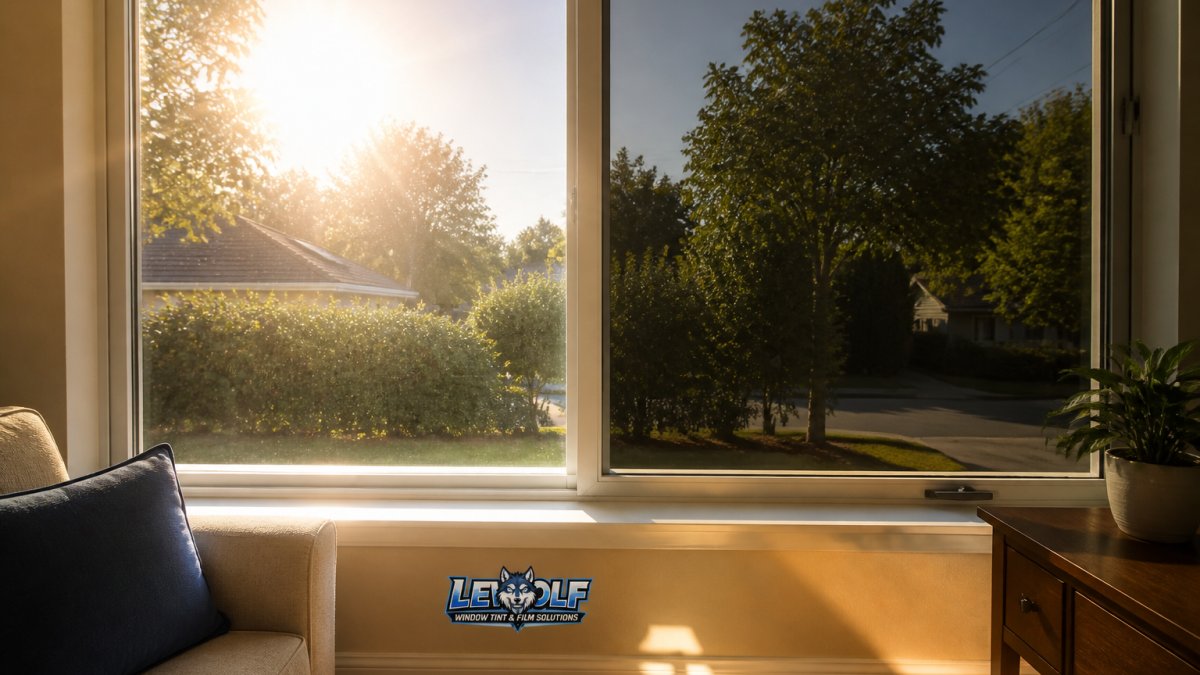
Solar heat gain is the infrared radiation that passes through glass and heats your interior. It's the reason a car left in the sun becomes an oven.
Ultraviolet rays are a different part of the light spectrum. They fade furniture, artwork, and flooring over time, but they carry far less thermal energy than infrared radiation.
This distinction is critical: a film that blocks UV rays might not reduce your cooling bills at all. A film designed to reduce solar heat gain will lower cooling costs but may be reflective or tinted in ways you don't want indoors.
How Much Can You Actually Save on Cooling
The potential cooling-cost reduction from solar-control window film ranges from 15% to 30% according to industry analysis, but this masks enormous variation. A Phoenix home with unshaded south-facing windows sees savings near the high end; a Seattle home with mostly north-facing windows may see single digits.
Savings depend on four factors: your climate, your current cooling costs, your window orientation (south and west-facing windows absorb far more heat), and the film's solar heat gain coefficient.
A rough calculation: if your summer cooling bill is $200 per month and you reduce solar heat gain by 20%, you might save $40 per month during cooling season. Over six months, that's $240 in savings.
The math improves in hot climates and worsens in mild ones. It also improves if you have high cooling costs to begin with.
Does Window Film Lower Energy Bills in Practice
Measuring Real Energy Savings
Energy savings from window film are real but difficult to measure precisely, because consumption depends on dozens of variables: outdoor temperature, thermostat settings, insulation quality, air leaks, HVAC efficiency, and time spent at home.
Installers sometimes cite thermal imaging to show heat reduction, but surface temperature is not the same as savings on your utility bill. A film that reduces glass temperature by 10 degrees might cut your cooling load by only 3% if windows represent 30% of your total heat gain.
The honest answer: you can expect real but modest cooling-cost reductions. Don't expect a dramatic drop in your energy bill. Expect 10% to 25% reduction in cooling costs during warm months, depending on your situation.
Climate and Window Orientation Matter
A solar-control film in Miami delivers far more value than the same film in Portland. The difference isn't just temperature, it's the number of days per year when cooling is a significant expense.
Window orientation matters equally. South and west-facing windows receive far more solar heat gain than north-facing ones; if your home is mostly north-facing, solar-control film will do almost nothing for cooling costs. A single large west-facing window might drive 30% of your cooling load on summer afternoons.
Before investing in film, identify which windows receive the most direct sun. A professional energy audit can help, but you can also observe where the sun hits hardest at different times of day. Focusing film on high-impact windows dramatically improves the return on investment.
Window Film Pros and Cons for Your Home
Benefits Beyond Energy Savings
Energy savings are only one reason homeowners choose window film. UV protection is another major benefit, and for many homes, it's the primary reason.
UV-blocking films prevent fading of furniture, artwork, hardwood floors, and fabrics. Sunlight fading is cumulative and irreversible, so a film that blocks 99% of UV rays can extend the life of furnishings by years or decades, with genuine financial value if you own valuable pieces.
Window film also reduces glare, improving indoor comfort even if it doesn't lower your cooling bill. Less glare often feels more noticeable than a drop in temperature.
Privacy is another benefit. Reflective or tinted films obscure the view into your home from outside, which increases security and comfort without the cost of curtains or blinds.
Real Drawbacks and Limitations
Window film is not a perfect solution, and several limitations matter.
Installation quality varies dramatically. Poor installation causes bubbles, peeling, and visible imperfections; the film is durable, but the adhesive bond depends entirely on the installer's technique. At LeWolf Window Tint & Film Solutions, we prioritize precision installation.
Certain window types don't work well with film.
Reflective films can create a mirror effect some homeowners dislike. Ceramic and non-reflective films reduce this issue but typically cost more.
Removal is permanent. Window film is designed to last 10+ years, but if you want to remove it, the process is labor-intensive and can damage the glass if done incorrectly.
Best Window Film for Home Energy Savings: Film Types Compared
UV-Only vs. Solar-Control vs. Low-Emissivity Films
Three main categories of window film serve different purposes.
UV-only films block ultraviolet radiation while remaining nearly transparent, protecting furnishings without darkening windows. They do almost nothing to reduce cooling costs because they don't block infrared (heat) radiation. Choose them if your primary goal is protecting artwork and furnishings, not reducing energy bills.
Solar-control films reduce solar heat gain and may be tinted, reflective, or ceramic. Ceramic films are the premium option: they block heat without the reflective look of older films, cost more, and deliver better aesthetics and superior heat rejection.
Low-emissivity (Low-E) films reduce heat loss in winter by reflecting interior heat back inside. They're most valuable in cold climates where heating costs dominate and less useful in warm ones. Some also block UV rays, but their primary function is winter heat retention, not summer cooling.
| Film Type | Primary Benefit | Best For | Energy Savings Potential |
|---|---|---|---|
| UV-Only | Furnishing protection | Homes with valuable artwork, antiques | Minimal (5% or less) |
| Solar-Control | Heat rejection | Warm climates, high cooling costs | Moderate (15-30%) |
| Low-Emissivity | Winter heat retention | Cold climates, high heating costs | Moderate in winter |
Performance Ratings You Should Know
Window film performance is measured by specific ratings that matter for your decision.
The Solar Heat Gain Coefficient (SHGC) measures how much solar energy passes through the window; lower numbers mean more heat blocked.
Visible Light Transmission (VLT) measures how much visible light passes through. A VLT of 80% means 80% of visible light enters; a VLT of 50% means the window is noticeably tinted.
UV Rejection Rate measures what percentage of UV rays the film blocks. Most quality films block 99% of UV rays. This number is fairly consistent across products, so it's not usually a differentiator.
These ratings matter because they show the trade-off: better energy savings usually means a darker window. Understanding your priorities, energy savings versus aesthetics, helps you choose the right film for your situation.
Installation, Warranties, and Payback Period
How Long Window Film Lasts
Quality window film typically lasts 10 to 15 years, sometimes longer, depending on film quality, installation quality, and sun exposure. Films on south-facing windows in hot climates degrade faster; north-facing windows or mild climates last longer.
The adhesive bond is the limiting factor. Over time, UV exposure and temperature cycling can weaken the adhesive, causing the film to peel or bubble. Professional-grade films and proper installation extend lifespan significantly. Cheap films or poor installation can fail within 5 years.
Most manufacturers offer warranties of 5 to 10 years against defects, peeling, and discoloration. A warranty is only as good as the installer's commitment to honoring it. Choose an installer with a solid reputation and verified warranty coverage.
What to Expect from Professional Installation
Professional installation takes 4 to 8 hours for a typical home, depending on window count and size. Windows are temporarily unavailable, but the process doesn't damage your home or require structural changes.
The installer cleans the glass thoroughly, applies the film using a precise technique, and uses tools to remove air bubbles and ensure a smooth bond. The film needs 24 to 48 hours to cure fully before you should clean the windows or expose them to heavy sun.
At LeWolf Window Tint & Film Solutions, we handle the installation process with care to ensure a flawless finish. Poor installation is the primary reason homeowners regret window film, so choosing an experienced, certified installer matters enormously. Our team's 30 years of experience delivers precision installation, meaning your film will look professional and perform as designed.
Is UV Window Film Worth the Investment
The answer depends on your situation. If your primary concern is UV protection for valuable furnishings, a quality UV-blocking film is absolutely worth the investment.
If your primary goal is reducing cooling costs, the math is more complicated. In warm climates with high cooling costs and south or west-facing windows, solar-control film delivers real savings and an 8- to 12-year payback.
The honest assessment: window film is a legitimate energy-efficiency tool, but it's not a silver bullet. It works best as part of a broader strategy that includes proper insulation, HVAC maintenance, and smart thermostat management.
If you're ready to explore whether solar-control or UV-blocking film makes sense for your home, LeWolf Window Tint & Film Solutions can conduct a professional assessment.
Window film can meaningfully reduce cooling costs and protect your home's interior from UV damage, but only if you choose the right type for your climate and priorities. With our 3M certification and commitment to transparency, you'll understand exactly what to expect before we begin. Book Now for a professional consultation and discover whether solar-control or UV-blocking film is right for your home.
Frequently Asked Questions
Does UV window film actually reduce heat, or does it only block ultraviolet rays?
UV window film and solar-control film serve different purposes. UV film blocks up to 99% of ultraviolet radiation, which protects furnishings and skin but does little to reduce heat. Solar-control film, by contrast, rejects infrared radiation and visible light to lower solar heat gain. High-performance solar-control films can reduce solar heat gain by up to 70%, directly lowering cooling costs. Many homeowners confuse the two; UV-only film is primarily for furniture protection, while solar-control film drives energy savings.
Can window film lower air-conditioning costs, and by how much?
Yes, solar-control window film can lower cooling costs by 15% to 30%, depending on your home's size, climate, window orientation, and existing insulation. Homes in hot climates with large south-facing or west-facing windows see the greatest savings. Results vary significantly by location and home design, so there is no one-size-fits-all figure. Professional installation and high-performance films maximize results. For an exact estimate, consult a window film specialist who can assess your specific windows and cooling load.
What are the main drawbacks of residential window film?
Common drawbacks include reduced visible light transmission (darker interiors), potential reflectivity that affects curb appeal, installation disruption, and upfront cost. Some reflective films can create a mirror-like appearance that neighbors may dislike. Low-quality installations risk bubbling, peeling, or hazing over time. Certain films may affect cell phone signals or satellite reception. Warranty coverage varies by manufacturer and installer, and some films are not suitable for all window types. Professional installation and quality products from authorized dealers minimize these issues.
Is window film worth installing on older windows?
Yes, window film can extend the life of older windows by reducing thermal stress and protecting glass from UV damage. If replacement windows are not yet affordable, solar-control film improves comfort and energy efficiency without the cost of new windows. UV film also prevents further fading of furnishings. However, if windows are already failing (broken seals, significant air leaks), film alone will not solve the problem. Assess the window condition first; film works best on structurally sound glass, regardless of age.