

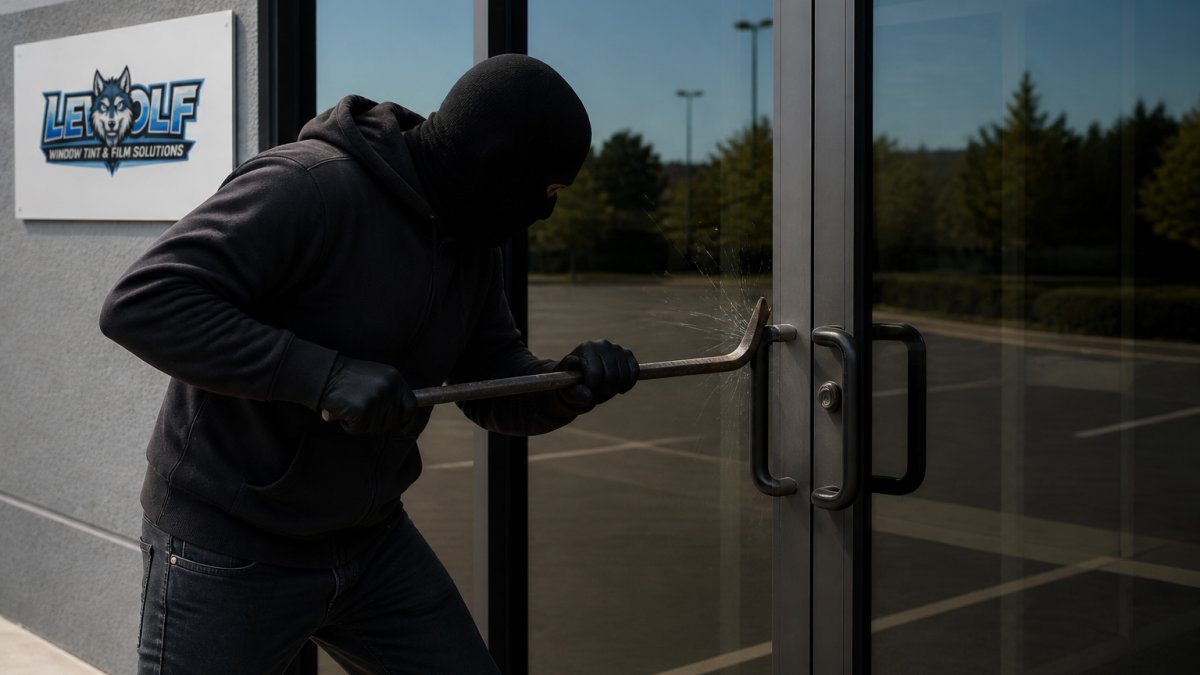
13 min readBy Joshua Leleux
Table of Contents
- Understanding Glass Break-In Vulnerabilities
- Step 1: Upgrade to Stronger Window Locks and Locking Mechanisms
- Step 2: Install Security Window Film to Prevent Glass Shattering
- Step 3: How to Burglar-Proof Windows with Bars and Physical Barriers
- Step 4: Install Glass-Break Sensors and Window Alarms
- Step 5: Add Motion-Activated Lighting and Security Cameras
- How to Secure Glass Doors Against Forced Entry
- Security Window Film for Break-Ins: Installation, Specs, and Limitations
- Layered Security: Combining Strategies
- What to Do If Someone Attempts to Break Your Window
- Conclusion
- Frequently Asked Questions
Last Updated: October 9, 2026
Understanding Glass Break-In Vulnerabilities
Windows are the second most common entry point for burglars after doors.
At LeWolf Window Tint & Film Solutions, we understand what stops break-ins. The answer isn't one solution, it's layers. Each measure makes the job harder, and once it's hard enough, intruders move on.
This guide covers seven proven strategies to prevent glass break-in attempts. Some are cheap, some cost more, and all work better combined.
Step 1: Upgrade to Stronger Window Locks and Locking Mechanisms
Most residential windows come with basic latches designed to keep windows closed in the wind, not to stop forced entry. An intruder can pry them open in seconds.
Stronger locks create friction. They make the break-in take longer and louder. Here's what matters:
- Keyed locks require a key to open from outside. This stops casual opportunistic entry.
- Pin locks are small metal rods that fit into the window frame. They're cheap and effective for sliding windows and doors.
- Sash locks tighten the connection between the two window panes on double-hung windows. They're harder to pry apart.
- Mortise locks are heavy-duty and recessed into the frame. They're the strongest option for wood frames.
Install locks on every operable window, not just ground-floor ones, burglars climb.
Check your locks monthly, wear and corrosion weaken them, and a stuck lock doesn't work.
Step 2: Install Security Window Film to Prevent Glass Shattering
Security window film is a transparent adhesive layer that bonds to glass from the inside.
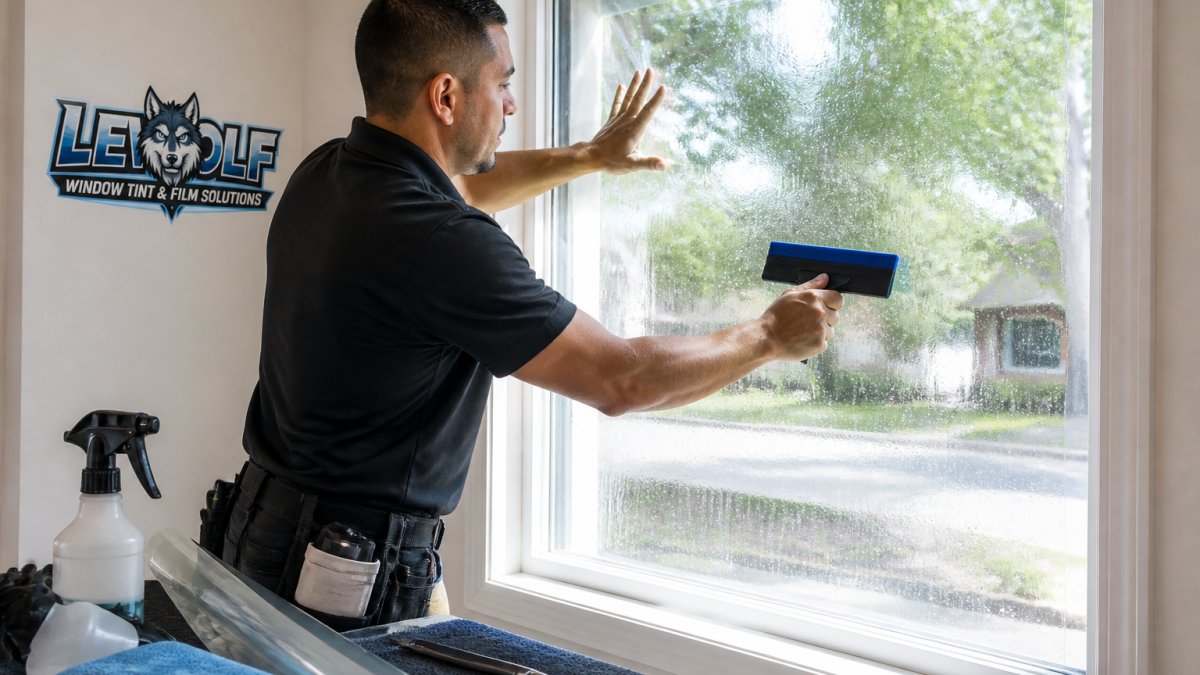
How security film works:
Security film comes in thicknesses measured in mils (1/1000th of an inch).
- 4-mil film holds glass together but offers light protection. It's good for privacy and UV blocking.
- 8-mil film is the standard for residential security. It delays break-ins by 30-60 seconds.
- 12-mil film is heavy-duty. It's used on storefronts and high-risk windows. It can delay entry by several minutes.
- 15-mil film is commercial-grade. It's rarely needed for homes.
Thicker film costs more and slightly reduces light transmission. Choose based on your risk level and budget.
Installation matters. Poor installation leaves gaps where glass separates from the film. LeWolf Window Tint & Film Solutions uses 3M certified methods to bond film completely to the frame and glass edges.
Limitations to know:
- Film doesn't prevent the initial break sound, the glass still cracks and makes noise.
- Tempered glass breaks differently than annealed glass; film works on both, but behavior varies.
- Installation takes 30-45 minutes per window, and cost depends on size and film thickness.
Step 3: How to Burglar-Proof Windows with Bars and Physical Barriers
Window bars are the most visible deterrent, metal grilles bolted to the frame or wall that make forced entry nearly impossible.
Security Window Film Test: Does It Really Stop Break-Ins? (Real Home Demo)
AmericanWindowFilm
Types of window bars:
- Fixed bars are permanent. They bolt to the frame. They're the strongest option.
- Removable bars slide in and out. They're good for rental properties where permanent installation isn't allowed.
- Decorative bars look like ornamental grilles. They provide security without the prison aesthetic.
- Sliding bars move on a track. They let you open the window while keeping it secure.
Where bars make sense:
Ground-floor windows on the street side, windows near fire escapes, and windows easy to reach from a ladder. Focus on vulnerable entry points rather than every window.
Fire safety and building codes:
Check local building codes first, many jurisdictions require bedroom windows to remain accessible for emergency escape, which is why quick-release bars exist. Never install bars that trap occupants.
Step 4: Install Glass-Break Sensors and Window Alarms
Sensors detect breaking glass and signal your alarm system, which sounds the alarm and scares off the intruder.
Two types of glass-break sensors:
- Acoustic sensors listen for the sound of breaking glass. They're cheaper and easier to install. They can be triggered by other loud noises like a door slam or a car horn.
- Vibration sensors detect the physical vibration of glass breaking. They're more reliable and less prone to false alarms.
Most modern systems use acoustic sensors because they're affordable; vibration sensors are worth the extra cost if false alarms are a problem.
How they integrate:
Sensors connect to your alarm panel, which signals your monitoring company to call you and police within seconds. Install sensors on all accessible windows, ground-floor, near doors, and facing alleys are priority. Upper-floor windows are lower risk but still worth covering.
Step 5: Add Motion-Activated Lighting and Security Cameras
Burglars hate light and cameras. Motion-activated lights turn on when someone approaches, making the burglar visible and suggesting someone is home.
Install lights on:
- All entry points (doors and ground-floor windows)
- Dark corners and blind spots
- Sides of the house facing alleys or woods
- Areas where a ladder could be placed
Lights are cheap and effective, a motion-activated floodlight costs $20-50 and lasts years.
Security cameras add a second layer.
Cameras don't stop break-ins; they record them, helping identify intruders, and they deter some burglars. Visible cameras deter, hidden cameras record, use both if your budget allows.
Camera placement:
- Point cameras at entry points and vulnerable windows
- Ensure a clear line of sight
- Position cameras high enough that they're hard to disable
- Make sure night-vision or low-light modes work, since most break-ins happen at night
Cameras need internet access to send alerts. Make sure your Wi-Fi reaches the camera location or use a wired connection.
How to Secure Glass Doors Against Forced Entry
Glass doors are easier to break than windows because they're larger and often accessed directly. Sliding glass and French doors are common entry points.
Reinforce glass doors with:
- Security film (same as windows, apply it to glass doors)
- Door bars or locks that prevent sliding
- Security doors with metal frames and tempered glass
- Reinforced frames that are bolted to the wall studs, not just the door frame
Sliding glass doors have a weak point: the latch. The door can be lifted out of the track or pried open, so add a pin lock at the top and bottom of the track.
French doors are vulnerable because so much of the door is glass. Apply security film to all panels and install a deadbolt on the frame.
Security Window Film for Break-Ins: Installation, Specs, and Limitations
Security film is one of the most practical ways to prevent glass break-in attempts. Here's what to know before installing it.
Film thickness and performance:
Film thickness determines how long it delays break-in, but there's a point of diminishing returns.
Installation process:
Professional installation involves cleaning the glass, applying a soap solution, positioning the film, smoothing it with a squeegee, removing air bubbles, and sealing the edges to the frame.
Limitations you should know:
- Film doesn't prevent the glass from cracking, it just holds the pieces together.
- The initial break is still loud; an alarm sensor catches it, but the sound happens first.
- Film can be cut with a knife or blade, letting an attacker remove a section. It takes time, but it's possible.
- Heat can weaken the adhesive over time, so film may degrade faster in very hot climates.
- Some films reduce light transmission by 10-20%, which is barely noticeable but worth knowing.
Cost and ROI:
Cost depends on window size, film thickness, and labor.
The real ROI is peace of mind and delay. Film won't stop a determined attacker with power tools.
Layered Security: Combining Strategies
The strongest approach combines multiple strategies. Here's a practical plan by budget:
Budget $200-500:
- Upgrade window locks on ground-floor windows
- Install motion-activated lights on entry points
- Add acoustic glass-break sensors to your alarm system
Budget $1,000-2,000:
- Apply 8-mil security film to ground-floor windows
- Install keyed locks on all operable windows
- Add motion-activated lights and one security camera
Budget $2,500+:
- Apply security film to all windows
- Install window bars on ground-floor windows
- Add motion-activated lights, cameras, and vibration sensors
- Upgrade to a professional monitoring system
No single measure stops all break-ins. But layers make your home a harder target. Most burglars move to the next house when they encounter resistance.
What to Do If Someone Attempts to Break Your Window
If you detect an attempted break-in:
Immediately after glass breaks:
- Stay safe first. Don't confront the intruder. Move to a secure room and lock the door.
- Call 911. Give your address, say a break-in is in progress, and state your location inside the home.
- Alert your alarm company if you have monitoring, they'll call police if you can't.
- Stay on the line with the dispatcher until police arrive.
After police clear the scene:
- Document the damage with photos for insurance.
- Board up or tape the window if it's not secure.
- Call your insurance company to file a claim.
- Assess what was taken and file a police report.
- Repair or replace the window as soon as possible.
Prevent the same method twice:
If the intruder broke a window to get in, apply security film to that window immediately. Reinforce the lock. Add a sensor. Don't wait. Burglars sometimes return if they know the entry point works.
Conclusion
Preventing glass break-in attempts requires layers. Stronger locks slow entry. Security film holds glass together when it breaks. Sensors alert you. Cameras record. Lights deter.
At LeWolf Window Tint & Film Solutions, we recommend starting with security film on your most vulnerable windows, ground-floor windows and those near entry points.
The best security is the one you actually install. Start with what fits your budget and add more layers as you're able.
Ready to protect your windows? The National Institute of Justice offers evidence-based home security guidance and The FBI's home security tips provide law enforcement perspective on break-in prevention.
| Strategy | Best For | Installation Time | Cost Range |
|---|---|---|---|
| Upgraded locks | All windows | 15-30 min per window | $50-200 per window |
| 8-mil security film | Ground-floor windows | 2-4 hours per window | $200-500 per window |
| Window bars | High-risk entry points | 1-2 hours per window | $300-800 per window |
| Glass-break sensors | All accessible windows | 30 min per sensor | $100-300 per sensor |
| Motion-activated lights | Entry points | 1 hour | $50-150 per light |
| Security cameras | Visible entry points | 1-2 hours | $150-400 per camera |
Frequently Asked Questions
Does security window film actually prevent burglars from entering?
Security film delays forced entry by holding glass fragments together, making the window much harder to break through. It won't stop a determined burglar indefinitely, but combined with alarms and sensors, it significantly increases the time and noise needed to break in, which deters most opportunistic attempts. Professional-grade security film rated for impact resistance offers the best performance. Film alone is not a complete solution; layering it with locks, alarms, and lighting creates the most effective deterrent.
How long does it take to install security window film?
Installation time depends on window size and complexity. A single residential window typically takes 30 minutes to 2 hours. Larger installations or multiple windows may take a full day or require multiple visits. Always confirm timing and scheduling options with your installer before booking.
What should I do immediately after discovering an attempted break-in?
First, ensure your safety and leave the property if you feel threatened. Call local law enforcement and file a report, providing details about damage, attempted entry points, and timing. Document all damage with photos for insurance claims. Do not touch or clean the broken glass area until police have investigated. After the police report, contact your insurance company and a window repair or replacement service. Review your security measures and consider upgrades like additional sensors or alarms to prevent future attempts.
Are window locks alone enough to prevent a break-in through glass?
Window locks alone are not sufficient. Determined intruders can break glass and bypass locks. Locks are most effective when combined with reinforced glass, security film, sensors, alarms, and motion-activated lighting. This layered approach, called perimeter security, makes your windows a much harder target. The combination of multiple deterrents and detection methods is far more effective than any single measure.