

14 min readBy Joshua Leleux
Table of Contents
- Understand How Sunlight and UV Radiation Affect Your Home
- Assess Your Exposure: Room-by-Room Protection Planning
- Step 1: Determine Your Primary Goal, Heat, UV, or Both
- Step 2: Select Window Film for UV Protection
- Step 3: Choose the Right Film for Heat Reduction
- Step 4: Evaluate Visible Light Transmission for Your Needs
- Step 5: Compare Window Film Types and Protection Methods
- Protect Furniture and Flooring with the Right Window Film
- Frequently Asked Questions
Last Updated: October 21, 2026
Understand How Sunlight and UV Radiation Affect Your Home
Understanding how to choose window film for direct sunlight starts with recognizing that sunlight streaming through your windows is two separate forces working against your interior.
UV rays and solar heat are not the same thing. UV radiation causes fading and discoloration. Solar heat raises indoor temperature. A film that blocks UV might not reduce heat. A film that reduces heat might not block UV.
The difference between UV rays and solar heat
UV rays are invisible light waves that break down chemical bonds in dyes, fabrics, wood finishes, and paint, fading colors and weakening materials.
Solar heat is infrared radiation that warms your space, strains your air conditioning, and shows up as glare you feel immediately.
A south-facing window gets both all day. A west-facing window gets intense afternoon heat. A north-facing window gets minimal UV but steady light. Your exposure pattern determines which film you need.
Why uneven fading and discoloration happen
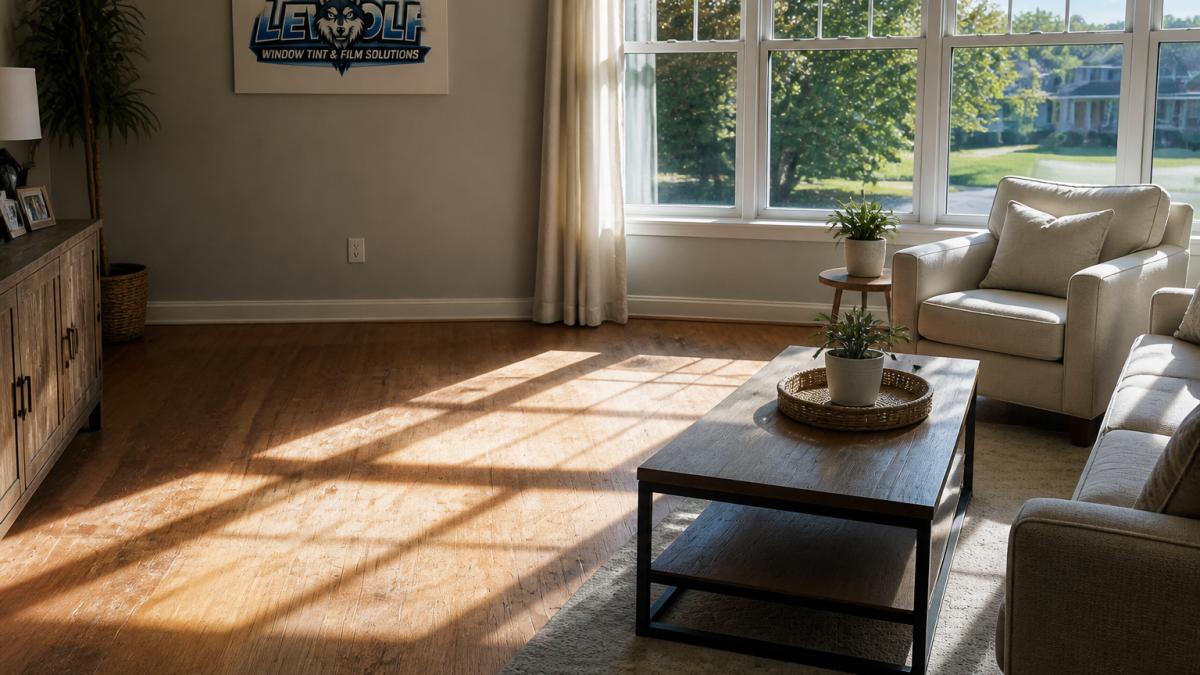
Uneven fading is a classic sign of sun damage: one side of a room looks darker than the other, and furniture on the sunny side has lost color while shaded pieces look fresh.
The area closest to the window gets the strongest dose, while spots protected by curtain rods, furniture, or architectural features stay darker, creating a visible pattern that proves UV damage is happening now.
Different wood species fade at different rates: light woods like ash and maple fade faster than dark walnut, and red and orange stains fade more noticeably than browns and blacks.
Assess Your Exposure: Room-by-Room Protection Planning
Not every room needs the same protection. A north-facing room needs less help than one facing south, and a bedroom used only at night doesn't need what a home office does.
Walk through your home, note which rooms get direct sunlight and when it hits hardest, and check for existing fading. This 20-minute assessment tells you exactly where to invest.
South-facing and west-facing windows: highest risk
South-facing windows get sun from morning through late afternoon. West-facing windows get intense afternoon and evening heat.
South-facing rooms are high-priority for UV protection because the sun is strong and steady and fading compounds over years.
West-facing windows create a different problem: hot afternoon sun spikes cooling costs and glare makes spaces uncomfortable.
East-facing windows get morning sun but afternoon shade, making them moderate priority. North-facing windows need UV film least of all.
Identifying existing sun damage versus other floor and furniture problems
Not all discoloration is sun damage. Water stains, pet accidents, and dust accumulation look different, so tell the difference before investing.
Sun damage follows the path of sunlight through your windows, is stronger on south and west sides, and matches window shapes.
Water damage looks blotchy with ring patterns, pet stains are localized, and general dirt is everywhere rather than in sun-exposed patterns.
On hardwood, a clear line where sunlight hits and doesn't hit is UV damage, and a dull, chalky finish on the sunny side is oxidation. These are the signs window film will help.
Step 1: Determine Your Primary Goal, Heat, UV, or Both
Before you decide how to choose window film for direct sunlight, determine what you're solving for: fading, cooling costs, glare, energy bills, or privacy.
Most homeowners need both UV and heat protection, but the balance matters: a home office prioritizes glare and heat, artwork prioritizes UV blocking, and a west-facing bedroom prioritizes heat reduction.
Heat reduction versus UV blocking: what each protects
UV-blocking film stops fading and protects hardwood floors, furniture, artwork, and fabrics, but doesn't significantly reduce heat or cooling costs.
Heat-reducing film lowers indoor temperature, cooling costs, and glare, but blocks less UV than specialized UV film.
Dual-function film blocks both UV and reduces heat. It costs more but solves both problems. It's the smart choice for most homeowners.
If cooling costs spike, heat reduction is worth it; if fading is visible, UV protection is essential. Most homes need both.
Step 2: Select Window Film for UV Protection
UV-blocking film comes in different types. Some films block 99% of UV rays. Others block less. The percentage matters if you're trying to stop fading.
UV-blocking agents and UV inhibitors in film
Films block UV two ways: some absorb the radiation, others reflect it outside. Absorption is more common and works well.
Look for films that block 99% of UV-A and UV-B rays. That level stops most fading and is what museums use for display cases.
Thicker film blocks more UV, but it's harder to install and costs more. Most residential applications use 1.5-mil to 2-mil film.
Protection for different wood species, stains, and finishes
Light woods like ash, oak, and maple fade faster than dark woods, so light-colored floors need stronger UV protection.
Red and orange stains fade noticeably. Yellow and brown stains fade slower.
Matte finishes show fading faster than glossy ones because texture makes color changes more visible, so UV protection matters more on matte floors.
Polyurethane finishes can yellow under UV exposure, creating a darker, dirtier look even if the wood hasn't faded. UV-blocking film prevents this yellowing.
Step 3: Choose the Right Film for Heat Reduction
Heat reduction is measured by solar heat gain coefficient (SHGC). Lower SHGC means more heat is blocked. The difference between films is significant.
Solar heat gain coefficient and how it works
SHGC ranges from 0 to 1: a film with SHGC of 0.3 blocks 70% of solar heat, while 0.5 blocks 50%.
A typical residential window without film has SHGC of about 0.8.
West-facing windows benefit most from low-SHGC film. The afternoon sun is intense. Reducing heat gain makes rooms more comfortable and cuts energy use.
Ceramic film and low-E film both reduce heat effectively. Ceramic film is thicker and more durable, while low-E film is thinner and less visible.
Low-E glass and ceramic film options
Low-E glass has a metallic coating that reflects infrared heat. It's installed during window replacement, permanent and very effective, but expensive: replacing windows costs thousands per room.
Ceramic film is applied to existing windows. It blocks heat without the metallic look of older tint and is less visible than reflective film.
Low-E glass is the right choice if you're replacing windows anyway. Ceramic film is the right choice if you want heat reduction without replacing windows.
Step 4: Evaluate Visible Light Transmission for Your Needs
Visible light transmission (VLT) is the percentage of light that passes through the film. Higher VLT means more light comes through. Lower VLT means darker film.
What VLT percentage means and how it affects brightness
A film with 70% VLT blocks 30% of visible light, 50% VLT blocks 50%, and 30% VLT blocks 70%.
Darker film (lower VLT) blocks more heat and UV but makes rooms feel darker and more closed-off. Lighter film (higher VLT) keeps rooms bright but blocks less heat and UV.
The right VLT depends on your room. A north-facing room can handle lower VLT because it doesn't get much sun anyway.
Balancing protection with natural light in living spaces
Living rooms and kitchens need 60% VLT or higher to feel normal. Bedrooms can handle 40-50% VLT. Home offices work best with 50-60% VLT.
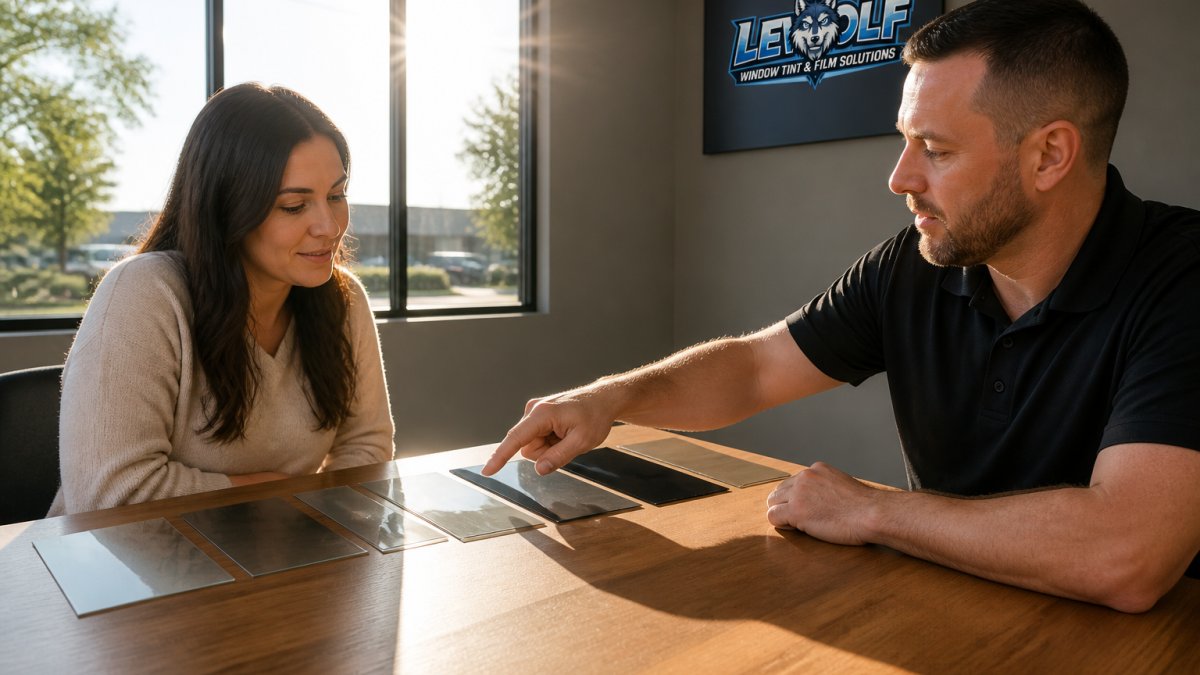
Test the film before committing. Hold a sample against your window at different times of day. See how it affects the room's brightness and feel.
Remember that film appearance changes with viewing angle. From inside, the film looks one way. From outside, it looks different.
Step 5: Compare Window Film Types and Protection Methods
You have multiple options for protecting your home from sunlight. Each has trade-offs. Understanding them helps you choose the best solution for your situation.
UV-blocking film versus window treatments versus low-E glass
Window film is applied to existing glass. It's semi-permanent. It blocks UV and/or heat depending on the type. It costs less than replacing windows.
Window treatments like curtains, blinds, and shades block sunlight physically. They're removable. They let you control light throughout the day.
Low-E glass is a permanent solution. It's built into replacement windows. It blocks UV and heat effectively. It's expensive. It requires window replacement.
For most homeowners, window film offers a balance of cost, effectiveness, and convenience.
Trade-offs: cost, lifespan, maintenance, and effectiveness
| Option | Cost | Lifespan | Maintenance | UV Protection | Heat Reduction |
|---|---|---|---|---|---|
| Window Film | Low to Medium | 10-15 years | Minimal | High (99%) | Medium to High |
| Curtains/Blinds | Low | 5-10 years | Moderate | Low | Medium |
| Low-E Glass | High | 20-30 years | Minimal | High | High |
Window film requires little maintenance. Clean it with soft cloth and mild soap. Avoid abrasive cleaners.
Curtains need regular washing and adjustment. They wear faster in sunny rooms. They block light completely, which some people dislike.
Low-E glass lasts decades but costs thousands to install. It's the right choice if you're already replacing windows. It's overkill if you just want to stop fading.
Protect Furniture and Flooring with the Right Window Film
Window film is part of a complete protection strategy. Understanding how to layer your defenses can enhance results.
How UV-protective finishes and window film work together
Your hardwood floor has a finish, polyurethane, wax, or oil. This finish protects the wood.
Some floor finishes have UV inhibitors built in. These finishes yellow less under UV exposure. They're worth choosing when you refinish floors.
New UV-protective coatings are available for existing floors. They're applied over your current finish. They add UV protection without refinishing.
Furniture upholstery fades faster than hardwood. Leather and fabric both suffer from UV damage. Combine film with furniture covers for enhanced protection.
Rug and furniture rotation as a complementary strategy
Even with window film, rotating furniture and rugs slows fading. Move heavy furniture every 6-12 months. Rotate area rugs quarterly.
Rearranging also prevents permanent indentations and color patterns. It's a simple, free strategy that works.
Use area rugs to protect hardwood in high-sun areas. Rugs block UV rays from reaching the floor.
Furniture pads under legs prevent marks and allow easy movement. Rolling furniture is faster than sliding it. This makes rotation practical and sustainable.
Protecting your home from direct sunlight requires understanding what you're fighting. LeWolf Window Tint & Film Solutions has 30 years of experience helping homeowners and business owners select film that matches their needs, whether that's stopping hardwood fading, reducing energy bills, or both.
Frequently Asked Questions
Does window film actually prevent hardwood floors from fading?
Yes, UV-blocking window film significantly reduces fading by blocking 99% of harmful UV rays before they reach your floors and furniture. Combined with UV-protective floor finishes and periodic rug or furniture rotation, window film provides comprehensive protection. However, no single solution eliminates fading entirely, the combination approach works best for rooms with direct sunlight exposure.
What is the difference between solar and UV-blocking window film?
Solar window film blocks both UV rays and infrared heat, reducing cooling costs and interior temperature. UV-blocking film focuses primarily on blocking ultraviolet radiation to prevent fading and color change, with minimal heat reduction. For direct sunlight protection, solar film offers dual benefits; for UV-sensitive artwork or antiques in moderate climates, UV-blocking film may be sufficient and allows more natural light transmission.
How do I choose the right window film for a sun-facing room?
Start by identifying your primary goal: heat reduction, UV protection, or both. Measure your room's sun exposure (south and west-facing windows receive the most direct sunlight). Check the film's visible light transmission (VLT) percentage, higher VLT means more natural light but less glare reduction. Select a film with UV inhibitors and appropriate solar heat gain coefficient for your climate. Consider professional installation for best results and durability.
Will window film make my room too dark?
Modern window films offer a range of visible light transmission (VLT) percentages, typically from 50% to 80%, so you can maintain natural brightness while still blocking UV rays and heat. Lighter films (70%+ VLT) preserve most natural light with modest protection, while darker films (50-60% VLT) provide stronger heat and glare reduction but require more artificial lighting. Test samples in your specific room before committing to installation.