

13 min readBy Joshua Leleux
Table of Contents
- Why Sunlight Fades Furniture: UV, Heat, and the Visible Light Spectrum
- How to Stop Furniture Fading with UV Blocking Window Film Benefits
- Best Window Treatments for Sun Protection Beyond Film
- How to Protect Hardwood Floors from Sun Fading
- Furniture Rotation and Preventative Maintenance: A Simple Routine
- Material-Specific Care: Upholstery, Leather, Wood, and Natural vs Synthetic Fibers
- When Fading Has Already Happened: Furniture Restoration and Next Steps
- Frequently Asked Questions
Last Updated: September 12, 2026
Why Sunlight Fades Furniture: UV, Heat, and the Visible Light Spectrum
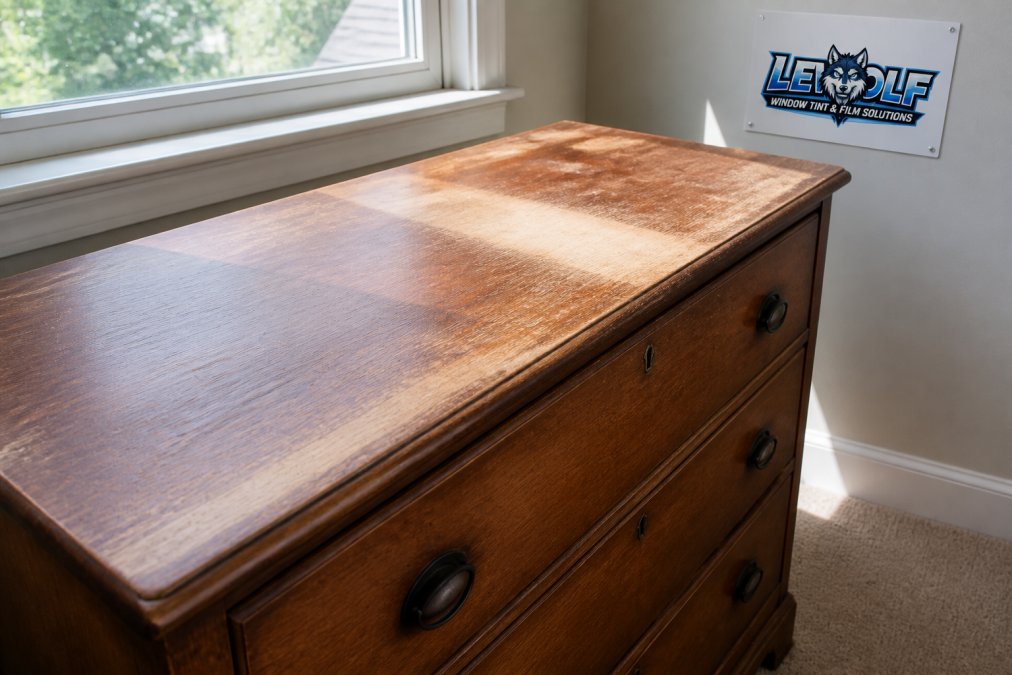
Furniture fading is the permanent loss of color and finish caused by light exposure, and ultraviolet radiation is the primary culprit. UV rays break the chemical bonds in dyes and pigments, a process called photodegradation, while infrared rays and visible light add heat that accelerates the damage (PubMed).
Sunlight delivers three separate threats to your furniture at once. UV radiation attacks pigment directly, causing the color loss you notice first. Infrared rays raise surface temperature, which dries out wood finish and leather over time. Even the visible light spectrum plays a role, since prolonged exposure to bright light degrades natural fibers and speeds up material aging.
That combination explains why a sofa near a west-facing window fades faster than one in a shaded corner. It also explains why sun-bleaching shows up on upholstery, hardwood, and artwork before homeowners realize the damage is permanent. Once pigment breakdown occurs, no cleaning product reverses it.
How to Stop Furniture Fading with UV Blocking Window Film Benefits
The most effective way to stop furniture fading is to install UV-blocking film on the windows that receive direct sunlight. Quality window film blocks the ultraviolet radiation responsible for most pigment breakdown while still letting visible light into the room.
The benefits go beyond color protection. A UV-blocking film also reduces solar heat gain, which lowers cooling costs and slows the heat-driven aging of wood and leather (energy.gov). Glare reduction makes living spaces more comfortable for screens and reading, and the film adds a layer of privacy without darkening the room the way heavy tint might.
DIY vs. Professional Installation: What Actually Works
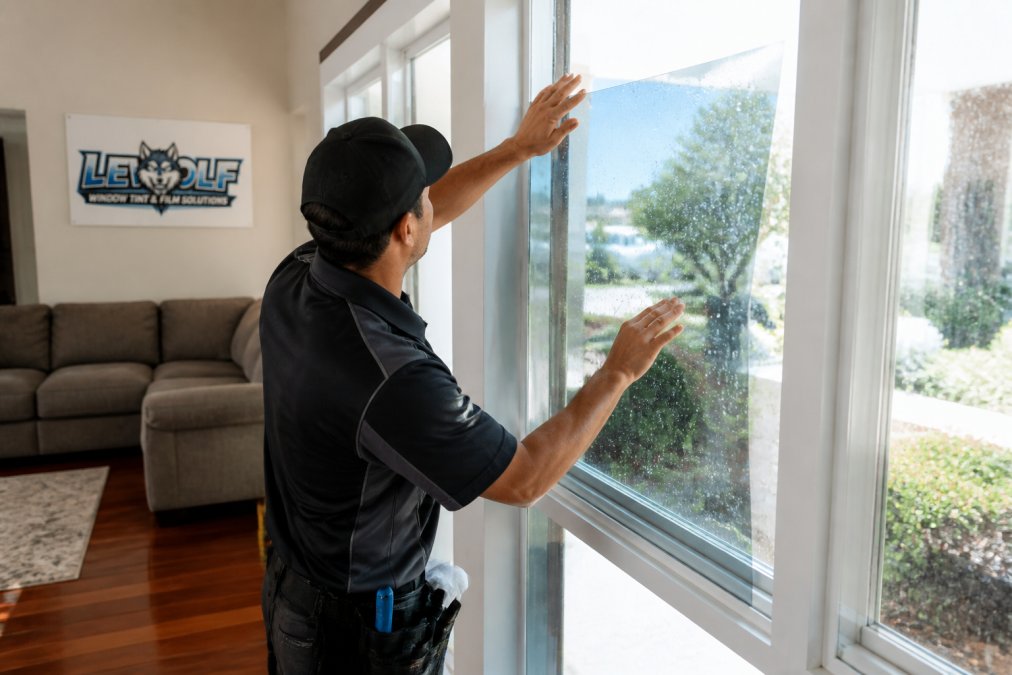
DIY film kits exist, and they can work on a single small window. The problem is that most fading happens on large or multi-pane windows, where trapped air bubbles, dust, and misaligned edges show up fast. A common mistake is buying inexpensive film that claims UV protection but offers no real warranty against peeling or discoloration.
Professional installation solves the two things DIY cannot: clean, bubble-free adhesion and film that is warrantied against failure. At LeWolf Window Tint & Film Solutions, our certified installers work as a 3M authorized dealer, which means the film carries manufacturer-backed performance.
Best Window Treatments for Sun Protection Beyond Film
Window film is the most direct fix, but it is not the only one. The best window treatments for sun protection work alongside film or as a starting point when installation is not yet an option. What separates a real solution from a decorative one is how it handles the three threats at once: ultraviolet radiation, solar heat gain, and visible light intensity.
Here is how the main options actually perform, and where each one falls short.
- Solar shades and solar blinds: Woven or perforated fabrics rated by openness factor, which is the percentage of the window left open to view. A lower openness factor blocks more light and heat but darkens the room. Look for a UV-blocking claim on the fabric itself, not just a "room darkening" label. Best for west- and south-facing windows where heat gain is the main problem.
- Sheer curtains: Diffuse direct sunlight and cut the intensity of visible light reaching furniture, which slows surface heating. They do not block UV outright, so they work best as a second layer behind film rather than as the only defense.
- Lined drapes: A lined drape with a tightly woven or blackout lining is the most effective interior barrier when closed, because it stops light before it reaches the upholstery. The catch is that it only protects while it is drawn, so it demands daily attention and blocks the view.
- Exterior shades, awnings, and shutters: These stop sunlight before it reaches the glass, which is the most efficient approach of all because the heat never enters the room. They also protect the glass and film from direct exposure. The trade-off is cost, mounting hardware, and in some cases approval from a homeowners association or landlord.
- Cellular and honeycomb shades: The air cells add an insulating layer that reduces solar heat gain at the glass, which slows the heat-driven aging of wood and leather. They are a strong pairing with film on windows that get both direct sun and winter cold.
A practical way to think about it: exterior shading beats interior shading, and interior shading beats nothing. Film sits in a different category because it works whether the drapes are open or shut, which is why many homeowners pair film for constant baseline protection with curtains or shades for style and additional control.
One more consideration competitors rarely mention: layering treatments can trap heat between the glass and the fabric, which is hard on both the window seal and the textile. If you stack film, a shade, and a drape on the same window, leave an air gap and avoid sealing the layers tight against the glass.
How to Protect Hardwood Floors from Sun Fading
Hardwood floors fade the same way upholstery does, and the fix follows the same logic. UV exposure breaks down the stain and finish, leaving lighter patches where sunlight lands most often. But wood is not one material, and the protocol that protects a solid oak floor is not the same one that protects engineered hardwood or a factory-finished plank.
Solid hardwood. The color lives in the stain and the finish, and both are vulnerable to UV. Sanding and refinishing is possible, which means fading is recoverable, but it is expensive and disruptive. Protect it with UV-blocking film on the windows that cast light across the floor, area rugs in the highest-exposure zones, and periodic rotation of furniture and rugs so no single section takes the full load of sun year-round.
Engineered hardwood. The wear layer is thin, so aggressive sanding is limited or impossible. That makes prevention more important than restoration. Keep film on the sun-facing windows and use rugs or runners in the light path, because once the wear layer is compromised there is no refinishing fix.
Factory-finished and prefinished planks. The factory finish is harder and more UV-stable than a site-applied finish, but it cannot be spot-repaired invisibly. If fading occurs, the whole plank usually has to be replaced to match. This is the material where film pays for itself fastest.
Wood finish and heat. Wood finish is especially vulnerable to heat, not just UV. When infrared rays warm the surface, the finish dries and dulls faster, and the wood itself can lose moisture and develop hairline cracks along the grain. Reducing solar heat gain with film protects the color and extends the life of the finish itself.
A simple protection routine for floors:
- Apply UV-blocking film to windows with direct sun exposure across the floor.
- Place area rugs or runners in the highest-exposure zones as a physical barrier.
- Rotate rugs and furniture every few months so fading stays even rather than patchy.
- Keep indoor humidity steady, since dry air plus heat accelerates finish degradation.
- Reapply a protective finish or conditioner on the manufacturer's schedule to slow surface wear.
Furniture rotation will not stop fading on its own, but it prevents the sharp contrast lines that make fading look worse. Combined with film, it keeps wear patterns subtle instead of obvious.
Furniture Rotation and Preventative Maintenance: A Simple Routine
Preventative maintenance is the cheapest protection you will ever buy, and it takes minutes per month. Rotating furniture and cushions spreads sun exposure evenly so no single surface absorbs the full dose of direct sunlight.
A simple routine keeps fading in check:
- Rotate sofa and chair cushions every two to three weeks.
- Shift furniture a few inches away from windows seasonally.
- Rotate area rugs every few months to even out floor fading.
- Dust and clean upholstery regularly, since grime traps heat and dulls color.
- Inspect window film annually for bubbles, lifting edges, or haze.
Furniture rotation will not stop fading on its own, but it prevents the sharp contrast lines that make fading look worse. Combined with film, it keeps wear patterns subtle instead of obvious.
Material-Specific Care: Upholstery, Leather, Wood, and Natural vs Synthetic Fibers
Not all materials fade at the same rate, and knowing the difference changes how you protect them. Natural fibers and synthetic materials respond to sunlight in distinct ways, and each needs its own care approach.
Natural fibers such as cotton, linen, and silk fade faster because their dyes sit closer to the surface and break down more readily under ultraviolet radiation (PubMed). Synthetic materials like polyester and olefin hold color longer, though they are not immune to photodegradation over years of exposure. Fabric lightfastness, the rating that measures how well a textile resists fading, is the number to check when buying new upholstery.
| Material | Fades Fastest From | Best Protection |
|---|---|---|
| Natural fibers (cotton, linen, silk) | UV radiation | UV-blocking film plus sheer curtains |
| Synthetic materials (polyester, olefin) | Heat and prolonged light | Film to cut solar heat gain |
| Leather | UV plus dryness | Film plus regular leather conditioning |
| Wood and finish | Heat and UV | Film plus protective coatings |
Leather needs conditioning to stay supple, since heat pulls moisture from the surface and leads to cracking alongside color loss. Wood benefits from protective coatings that shield the finish from both UV and thermal stress. Textile preservation comes down to cutting the UV dose before it reaches the fabric.
When Fading Has Already Happened: Furniture Restoration and Next Steps
Fading cannot be reversed by cleaning, but it can often be restored. Once color loss has occurred, restoration means refinishing, re-dyeing, or reupholstering the affected piece rather than trying to wash the damage away.
For wood, restoration usually means sanding back to bare timber and reapplying stain and finish. Leather can sometimes be re-dyed by a specialist, though severe sun damage may require panel replacement. Upholstery is the most straightforward: new fabric solves the problem entirely, and it is the moment to choose a higher lightfastness rating.
The critical step is protecting the restored piece before it fades again. Restoration without UV protection simply resets the clock. This is where a professional assessment pays off, because the right film depends on your window orientation, glass type, and how much direct sunlight the room receives.
LeWolf Window Tint & Film Solutions has spent 30 years installing residential and commercial film, and our team can assess which windows are driving the damage. As a 3M authorized dealer and a TIPS awarded vendor, we install film backed by manufacturer warranties and certified workmanship. If you are weighing DIY film against professional installation, our team can walk you through the difference.
Fading is a slow problem, which is exactly why it catches homeowners off guard. The fix is not complicated, but it does require acting before the damage is done. LeWolf Window Tint & Film Solutions installs UV-blocking window film that protects upholstery, hardwood, and leather from the ultraviolet radiation and heat that cause fading in the first place. With 30 years of experience, 3M authorized certification, and a veteran-owned team, we handle the assessment and installation so your furniture stays protected. Book Now
Frequently Asked Questions
Does window film actually prevent furniture fading?
Yes. Window film blocks up to 99% of ultraviolet radiation, the main driver of fading. It also reduces solar heat gain and filters some visible light, which further slows photodegradation. Clear films offer protection without changing the look of your windows, while tinted films add glare reduction and energy efficiency. Professional installation ensures the film adheres properly and maintains its UV-blocking performance over time.
How much UV light do standard windows block?
Standard single-pane glass blocks roughly 25% of UV rays, while dual-pane glass can block up to 50%. That leaves a substantial amount of ultraviolet radiation entering your home, enough to fade upholstery, wood finishes, and artwork over months or years. Adding a UV-blocking film raises that protection to nearly 99%, making it one of the most effective steps in how to stop furniture fading.
What is the best UV protectant for outdoor furniture?
For outdoor furniture, a UV-resistant fabric protector spray can help, but it wears off and needs reapplication. The more durable solution is to use outdoor covers when the furniture is not in use and to place pieces under shade. For indoor furniture near windows, UV-blocking window film offers continuous protection without the maintenance of sprays. Combining film with covers gives the best results for both indoor and outdoor pieces.
How do I protect hardwood floors from sun fading?
Apply UV-blocking window film to the windows that cast direct sunlight on your floors. Rearrange rugs and furniture periodically so the same area is not always exposed. Use sheer curtains or solar blinds during peak sun hours to cut glare and UV. These steps reduce how much ultraviolet radiation reaches the wood, slowing the color change and keeping your floors more even over time.