

15 min readBy Joshua Leleux
Table of Contents
- Does Clear Bra Protect Against Bird Droppings?
- What the Film Actually Blocks
- Where Protection Stops
- How Bird Droppings Damage Automotive Paint and Clear Coat
- How to Clean Bird Poop Off a Clear Bra
- Can Bird Poop Stain Paint Under PPF?
- How Long Does Paint Protection Film Last?
- Ceramic Coating Protection From Bird Droppings
- Film Care That Keeps Bird Damage From Becoming Permanent
- Frequently Asked Questions
Last Updated: October 7, 2026
Does Clear Bra Protect Against Bird Droppings?
Bird droppings are one of the most damaging things your car faces, and they hit hardest when you're parked and unaware.
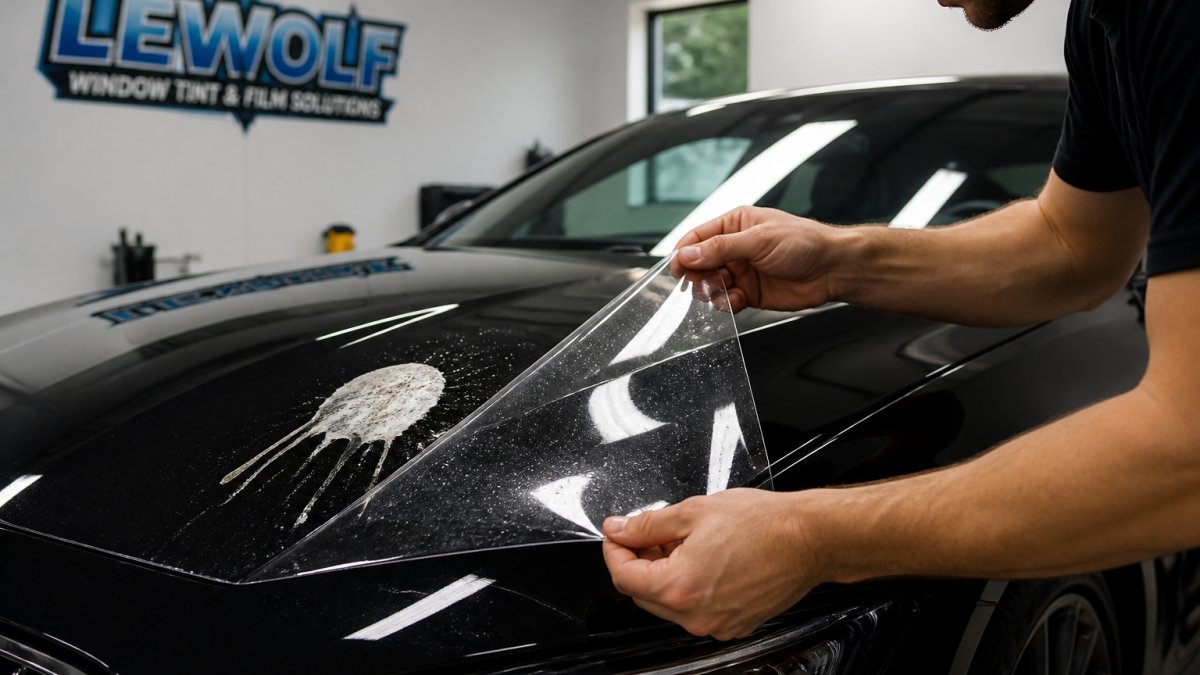
So, does clear bra protect against bird droppings? A clear bra, also called paint protection film, is a clear urethane layer that sits on top of your paint and takes the hit instead of your finish.
Here's the key point most guides skip: the film protects your paint, but the film itself can still stain if you leave a dropping on it too long.
What the Film Actually Blocks
A clear bra is a transparent urethane film applied over your vehicle's paint to absorb impacts and shield the finish from contaminants. It works as a physical and chemical barrier:
- The physical bulk of the dropping never touches your paint
- Most of the acid stays on the film surface
- Stone chips, road salt, and bug splatter get blocked the same way
Bird droppings are acidic, and that acid eats into unprotected paint. On a clear bra, the acid sits on the film instead.
Where Protection Stops
The film is not armor. It slows damage, but does not make your car invincible.
Two limits matter most. First, coverage: a clear bra covers the panels you paid to protect, usually the hood, fenders, bumper, and mirrors, so a dropping on your roof or trunk lands on bare paint.
Second, time. Even on film, a fresh dropping left in the sun will work its way in. Heat speeds up the reaction.
How Bird Droppings Damage Automotive Paint and Clear Coat
Bird droppings damage automotive paint through acid and heat working together. The uric acid in the dropping is the main culprit, and it attacks the clear coat first.
Your car's finish has layers: the color coat, and on top of it the clear coat, a thin transparent layer that gives the paint its shine and shields the color underneath. When acid sits on that clear coat, it starts to break down the surface.
The damage shows up in stages:
- Staining: the surface discolors but the layer is intact
- Etching: the acid eats a shallow mark into the clear coat
- Paint damage: the acid reaches the color layer, which needs paint correction or respray
Acid, Heat, and Exposure Time
Exposure time is the single biggest factor in how bad the damage gets. A dropping removed within a few hours usually leaves nothing behind; the same dropping left for a day in direct sunlight can etch.
Heat makes acid more aggressive, and a dark hood in the sun can get hot enough to speed up the reaction. That's why summer is the worst season for bird damage.
How to Clean Bird Poop Off a Clear Bra
Clean bird poop off a clear bra by softening it first, then lifting it with a wet microfiber cloth, never by scrubbing or scraping. The film's top coat scratches more easily than glass or bare clear coat, so technique and product choice matter more than elbow grease. Here's the step-by-step method we recommend:
- Flush loose grit first. Rinse with plain water before you touch it. Droppings often carry sand, seed husks, and grit that will drag across the film if you wipe dry.
- Soak, don't scrub. Lay a clean, plush microfiber towel soaked in lukewarm water over the dropping for three to five minutes. This rehydrates the uric acid and softens the bulk so it releases instead of smearing.
- Lift in one direction. Wipe with light pressure in a single direction, folding the towel to a clean face for each pass. Back-and-forth rubbing grinds residue into the top coat.
- Use a film-safe cleaner for the residue. A pH-neutral car wash soap diluted in water, or a cleaner labeled safe for paint protection film, is the right choice. Spray it on, let it dwell 30 to 60 seconds, and wipe gently.
- Rinse thoroughly. Flush with clean water so no acidic residue or soap film is left behind.
- Dry with a clean, soft towel. Don't let water spots dry on the film, especially in hard-water areas.
- Re-inspect in daylight. Some marks look worse when wet. Check the spot again once dry before deciding whether more work is needed.
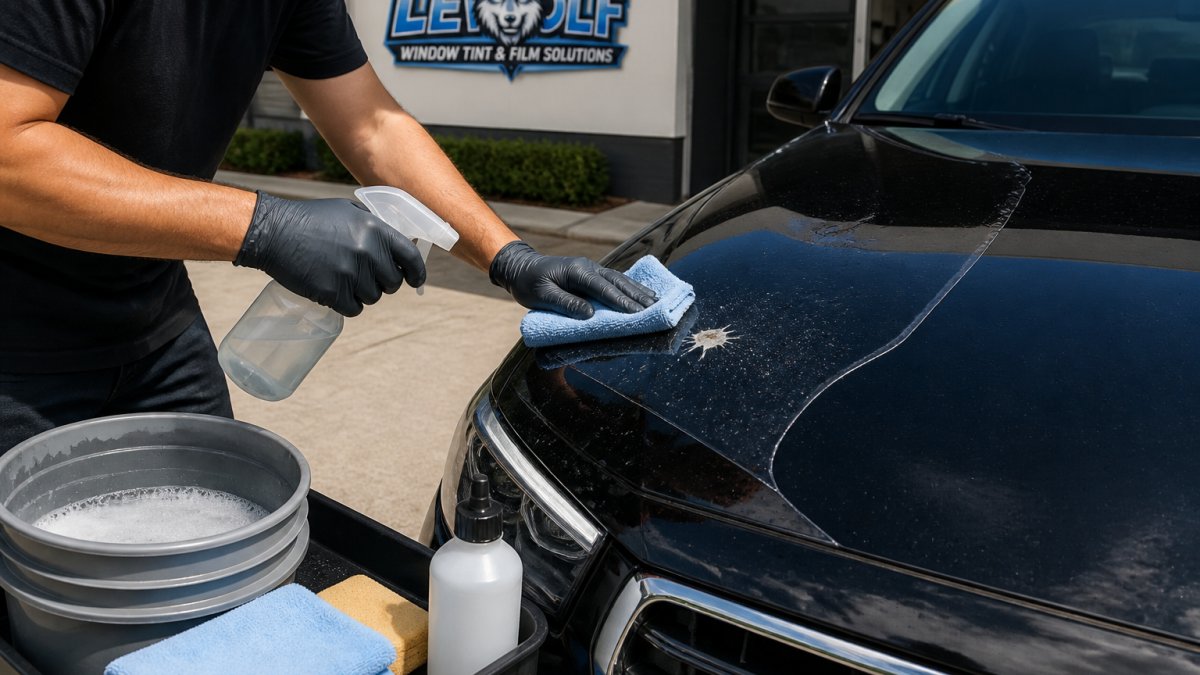
The sooner you do this, the better your result. A dropping caught in the morning before the sun hits it is often a two-minute job; one baked on through an afternoon of direct sun can take several passes and may still leave a faint shadow.
What Not to Use on Paint Protection Film
Some common cleaning habits will damage your film faster than any bird. Avoid these:
- Paper towels, which scratch the surface
- Dry wiping, which grinds grit into the film
- Household glass cleaner with ammonia
Ammonia-based cleaners can cloud the film and break down its top coat over time. The same caution applies to strong degreasers and any product not labeled safe for paint protection film.
Product Compatibility: Check the Film Maker's List First
Film manufacturers publish their own care guidance, and it overrides generic car-care advice. Before using any new spray, wax, or sealant on a clear bra, check the film maker's approved-products list.
Film-safe products are typically pH-neutral, free of ammonia and harsh solvents, and formulated for urethane film. When in doubt, plain water and a pH-neutral car wash soap are the safest default.
If a Mark Remains After Cleaning
A faint mark after cleaning isn't necessarily permanent damage. Work through this order before assuming the worst:
- Residue: Sometimes what looks like a stain is leftover soap film or unremoved dropping. A second gentle wash with film-safe soap often clears it.
- Temporary discoloration: Some marks fade on their own over a few days of sun exposure as the film off-gasses and dries. Give it a few days before judging.
- Light etching: If the mark is still visible after a week, it may be a shallow etch in the film's top coat. A professional can sometimes polish it out with a film-safe polish.
This is the part most guides skip: the film is the sacrifice layer, so a stained film is doing its job. Your paint is still protected even when the film looks imperfect.
Can Bird Poop Stain Paint Under PPF?
Bird poop can stain paint under PPF, but only if the film is damaged or the dropping sits long enough to work through.
As long as the film is intact, the acid never reaches the clear coat.
There's a catch: if the film has a tear, a lifted edge, or a worn spot, acid can get underneath.
The more common problem is the film itself staining.
How Long Does Paint Protection Film Last?
Paint protection film lasts between five and ten years with proper care, depending on film quality and how you treat it.
Several things shorten film life:
- Leaving contaminants like bird droppings and tree sap on the surface
- Washing with harsh chemicals or abrasive tools
- Parking in constant direct sun
Film maintenance is simple: wash it like you'd wash your paint, keep it clean, and remove droppings quickly.
At LeWolf Window Tint & Film Solutions, we install paint protection film backed by our 3M Authorized Dealer status and 3M Certification.
Ceramic Coating Protection From Bird Droppings
Ceramic coating protection from bird droppings works differently than film, and the two are often confused. A ceramic coating is a liquid polymer that bonds to your paint or film and adds a slick, chemical-resistant layer. Here's how they compare:
| Feature | Clear Bra (PPF) | Ceramic Coating |
|---|---|---|
| Blocks physical impacts | Yes | No |
| Resists acid and chemicals | Yes | Yes |
| Protects against stone chips | Yes | No |
| Makes cleaning easier | Somewhat | Yes |
| Can be applied over the other | Yes | Yes |
The best setup for bird-dropping defense is both. A ceramic coating on top of a clear bra gives you impact protection plus an easier-to-clean, more chemical-resistant surface, so droppings lift off faster and have less time to cause damage. Coating alone won't stop a rock chip; film alone won't make cleanup as easy. Together, they cover each other's weak spots.
Film Care That Keeps Bird Damage From Becoming Permanent
Film care comes down to speed, the right products, and knowing when a mark is cosmetic versus structural. A simple routine keeps your clear bra in shape:
- Rinse or wash your car every week or two
- Remove bird droppings the day you spot them
- Use pH-neutral soap and microfiber only
That routine handles the easy cases. The harder question is what to do when a dropping has already left a mark, and how to tell whether the film is still doing its job.
Reading the Mark: Residue, Discoloration, or Damage
Not every mark on a clear bra means the same thing. The categories behave differently and call for different responses.
Residue is material still sitting on the surface. It wipes away with a film-safe cleaner and a clean microfiber towel.
Temporary discoloration is a faint shadow that fades over several days as the film dries and off-gasses.
Etching is a physical change in the film's top coat.
When to Get a Professional Assessment
Bring the car to a film installer when:
- A mark is still visible after two weeks of normal washing and sun exposure
- You can feel the etch with a fingernail
- The film is clouded, cracked, or lifting at an edge near the mark
A professional can often polish light etching out of the film's top coat using a film-safe polish and a dual-action polisher. This is not a DIY job with a rubbing compound, which can burn through the top coat and make things worse.
When Replacement Makes Sense
Section replacement is the right call when the film is permanently damaged, when a mark is deep enough to be visible from a few feet away, or when the film has started to lift or crack near the damage.
Drivers often wait too long because they assume a stained film means the paint is ruined. Usually the opposite is true: the film took the damage so the paint didn't have to.
Coverage Limits and Real-World Expectations
Protection depends entirely on coverage.
Film edges are another weak point. A lifted edge lets acid and moisture get underneath, where it can sit against the paint.
Finally, film condition matters. A film that's already yellowed, cracked, or contaminated won't protect as well as a fresh one.
As documented in 3M's guidance on paint protection film care, using the right products protects both the film and the finish under it. For broader vehicle care standards, the Specialty Equipment Market Association tracks industry practices for aftermarket protection products.
The real difference between a film that lasts three years and one that lasts ten comes down to care.
Frequently Asked Questions
Does a clear bra protect against bird droppings?
Yes, a clear bra (paint protection film) puts a sacrificial urethane layer between the dropping and your paint. The film absorbs the acid attack that would otherwise etch the clear coat. It is not permanent armor, though: a dropping left on the film in direct sun for a day or more can still leave a mark on the film itself. Remove it within 24 hours when possible.
How long can bird poop sit on a clear bra before it causes damage?
Treat 24 hours as your working limit. Fresh droppings wipe off with soapy water and a microfiber cloth. Past a day in summer heat, the uric acid starts to affect the film's topcoat, and past several days you may see a dull spot or faint outline that needs polish or a film replacement. Cool, shaded conditions buy you more time, but do not rely on it.
Can bird poop stain the paint under paint protection film?
In most cases the paint stays intact because the film takes the hit. Staining under the film happens mainly when the film is already compromised: a lifted edge, a puncture, a seam, or an older film with worn topcoat lets acid reach the paint. If you see a mark that will not wipe off the film surface, have it inspected before assuming the paint is ruined.
Does ceramic coating protect against bird droppings better than clear bra?
They work differently. A ceramic coating makes the surface slicker so droppings release faster and leave less residue, but it is a thin chemical layer and acid can still reach the clear coat if left long enough. Paint protection film is a physical barrier with real thickness. Many owners stack them: PPF for impact and acid resistance, ceramic coating on top for easier cleaning.