
13 min readBy Joshua Leleux
Table of Contents
- Why Professional Paint Protection Matters
- Ceramic Coating vs Paint Protection Film: Which to Choose
- Automotive Paint Protection Film Cost Guide
- What Happens During Professional Application
- How to Maintain Ceramic Coating After Installation
- Choosing the Right Professional Installer
- Common Mistakes to Avoid When Booking Paint Protection
- Frequently Asked Questions
Last Updated: September 19, 2026
Why Professional Paint Protection Matters
Your vehicle's paint is under constant assault. Road salt, UV rays, bird droppings, tree sap, and stone chips wear away at the clear coat every single day. Most car owners don't realize the damage until it's too late, oxidation sets in, swirl marks multiply, and what was once a pristine finish looks weathered and dull.
This is where professional paint protection becomes essential. A paint protection service isn't cosmetic; it's preventive maintenance that preserves your vehicle's value and appearance for years. Whether you drive a daily commuter or a luxury vehicle, the cost of protection is far less than the cost of paint correction or a full respray down the road.
At LeWolf Window Tint & Film Solutions, we understand the importance of a robust protection strategy for vehicle ownership. The difference in results between professional-grade ceramic coatings or paint protection film and relying on wax alone often comes down to durability, application quality, and the materials used.
Ceramic Coating vs Paint Protection Film: Which to Choose
Both ceramic coating and paint protection film offer surface protection, but they work in fundamentally different ways. Understanding the distinction helps you choose the right solution for your vehicle and driving habits.
Ceramic coating is a liquid nanoceramic treatment that bonds chemically to your paint. It creates a hydrophobic layer that repels water, dirt, and contaminants while providing UV resistance and enhanced gloss. The coating hardens through a curing process.
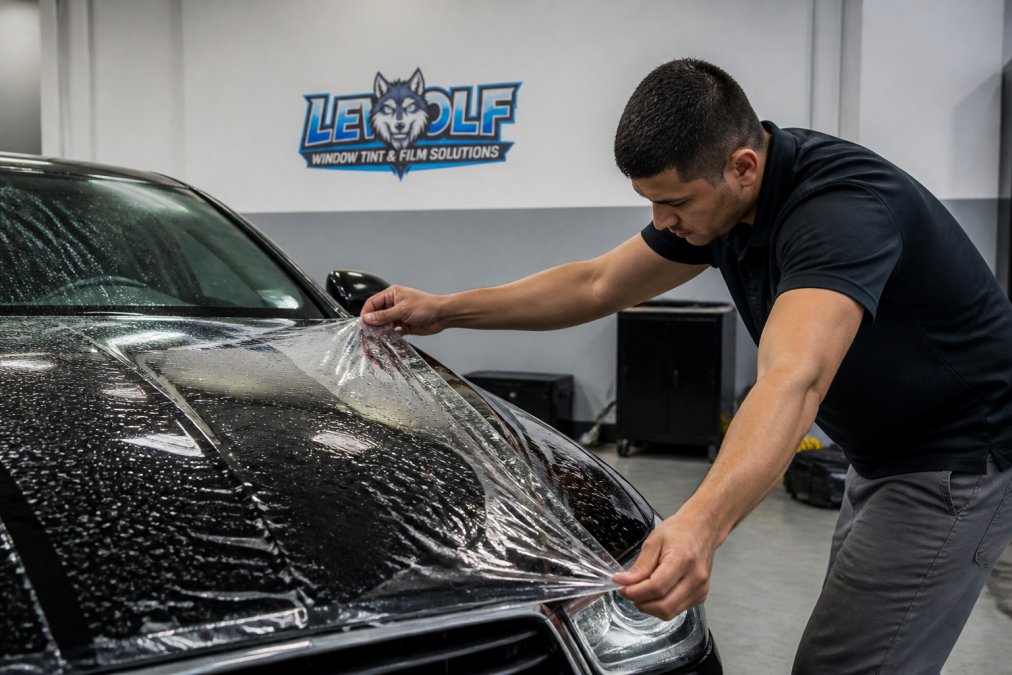
Paint protection film (PPF), also called clear bra, is a physical polyurethane layer applied directly to vulnerable areas like the hood, bumper, and fenders. It absorbs impact energy from stone chips and road debris, protecting the paint underneath. Premium PPF products feature self-healing technology that allows minor scratches to disappear when exposed to heat.
Ceramic coating excels at:
- Creating a deep, glossy finish
- Providing chemical resistance against contaminants
- Reducing maintenance (less frequent washing needed)
- Cost-effective protection for the entire vehicle
Paint protection film excels at:
- Preventing physical damage from road debris
- Protecting high-impact zones like the front bumper and hood
- Offering transparent, invisible protection
- Providing long-term durability (10+ years with proper care)
Many vehicle owners choose both. A ceramic coating applied over PPF creates layered protection: the film handles physical impacts while the coating protects exposed paint and enhances aesthetics. This combined approach is especially popular among luxury vehicle owners and enthusiasts who want maximum protection.
Automotive Paint Protection Film Cost Guide
The cost of paint protection film varies significantly based on coverage area, film quality, and installer expertise. Rather than focusing on price alone, consider what you're actually paying for: material quality, application skill, and warranty coverage.
Several factors influence the final cost:
Coverage area determines the primary cost driver. Full-body PPF costs substantially more than partial coverage (hood, fenders, bumper, mirrors). Many owners choose strategic coverage on high-impact zones rather than complete protection.
Film quality ranges from basic polyurethane to premium self-healing films with superior clarity and durability. Budget films may yellow over time or require more maintenance. Premium brands like 3M Paint Protection Film offer superior optical clarity and longer-lasting protection.
Installer expertise matters more than most people realize. A skilled installer ensures seamless edges, proper stretching, and bubble-free application. Poor installation can result in visible seams, trapped air, or premature peeling. This is why choosing a certified professional installer is critical.
Vehicle complexity affects labor time. Vehicles with curved body panels, aggressive angles, or intricate trim details require more precision and time. A sports car costs more to protect than a sedan.
For specific pricing on paint protection film installation, visit the LeWolf Window Tint & Film Solutions pricing page to request a quote based on your vehicle's make, model, and coverage preferences. Professional installers provide detailed estimates after assessing your vehicle's condition and protection goals.
What Happens During Professional Application
Professional paint protection film application is a multi-step process that requires skill, precision, and the right environment. Understanding what happens during installation helps you appreciate why professional application costs more than DIY attempts.
The process begins with a thorough vehicle inspection and cleaning. The installer examines the paint condition, identifies any existing damage or swirl marks, and discusses coverage areas with you. If paint correction is needed, that happens before film application.
Next comes surface preparation. The vehicle is washed meticulously to remove all contaminants, dirt, wax residue, tar, and industrial fallout. A clay bar treatment removes microscopic particles that would prevent proper film adhesion. The surface is then dried completely and wiped with a final preparation solution.
The installer measures and cuts the film using precision templates or custom cutting techniques. For full-body protection, this step alone can take several hours. Custom-cut patterns ensure seamless coverage without overlapping seams.
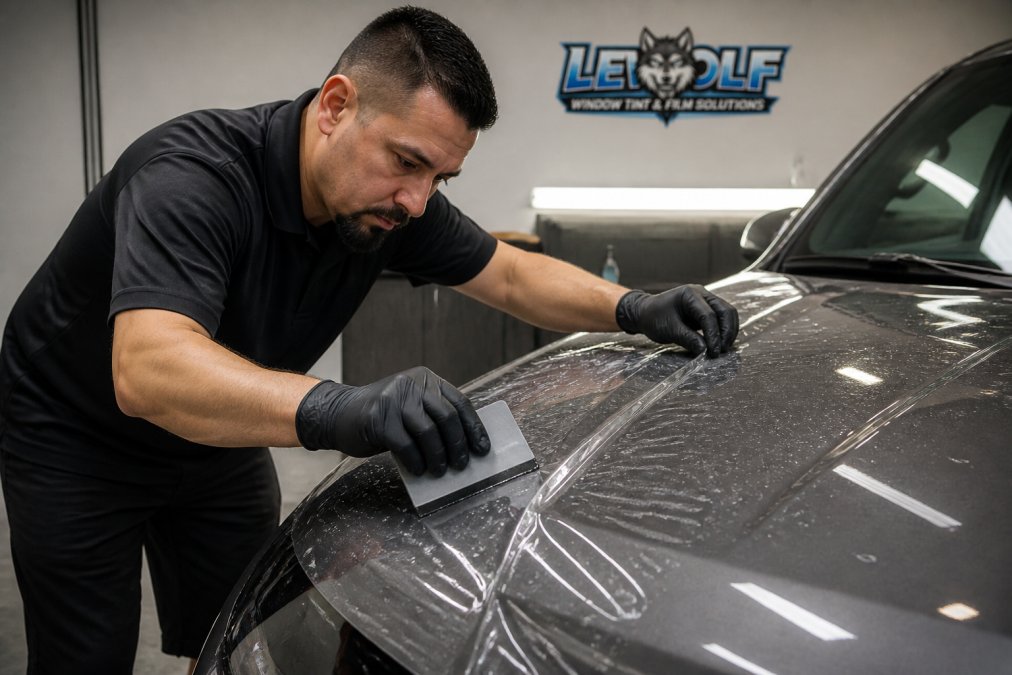
Application involves carefully positioning the film, using a slip solution to allow repositioning, and then using a squeegee to remove air bubbles and excess solution. The installer works methodically from one section to the next, ensuring proper adhesion and eliminating trapped air.
After application, the vehicle cures. During this time, the adhesive fully bonds to the paint, and any residual moisture evaporates. You'll be advised to avoid washing, waxing, or driving in rain during the curing period.
The entire process depends on coverage area and vehicle complexity. This investment in time is what separates professional results from amateur attempts.
How to Maintain Ceramic Coating After Installation
Ceramic coating maintenance is straightforward but essential for long-term protection. Proper care extends the coating's lifespan and maintains its hydrophobic properties and gloss.
Initial curing period requires patience. For the initial period after application, avoid washing your vehicle. The coating needs time to fully harden. Check with your installer for specific guidance based on the coating product used.
Washing technique matters significantly. Hand-wash your vehicle using the two-bucket method: one bucket with soapy water, one with clean rinse water. This prevents dragging contaminants across the paint. Use a soft microfiber wash mitt and pH-neutral car shampoo. Avoid automated car washes and high-pressure sprayers, which can compromise the coating.
Frequency depends on driving conditions. In dusty or salty environments, wash every two weeks. In cleaner conditions, monthly washing is sufficient. More frequent washing doesn't harm ceramic coating, it actually extends its life by removing contaminants before they etch the surface.
Drying should be done with clean microfiber towels to prevent water spots. If your area has hard water, consider using distilled water for a final rinse.
Maintenance products designed for ceramic-coated vehicles can enhance protection. Ceramic coating boosters or top coats provide additional layers of protection and refresh the hydrophobic properties. These are typically applied every 6-12 months depending on the product.
What to avoid:
- Automatic car washes with brushes
- Abrasive scrubbing or harsh chemicals
- Parking under trees (bird droppings etch coating)
- Allowing bird droppings or tree sap to sit on the surface
With proper maintenance, quality ceramic coatings maintain their protective properties and gloss for 3-5 years or longer.
Choosing the Right Professional Installer
The quality of your paint protection service depends entirely on the installer's skill, experience, and commitment to precision. A poor installation can ruin expensive materials and create problems that are expensive to fix.
| Selection Criteria | What to Look For | Red Flags |
|---|---|---|
| Certifications | Manufacturer-certified installers | No certifications or training documentation |
| Experience | 5+ years with paint protection products | New to the industry or vague about experience |
| Warranty | Written warranty covering adhesion, yellowing, defects | No warranty or verbal promises only |
| Facility | Climate-controlled, clean, professional workspace | Outdoor installation or dusty environment |
| Portfolio | Before/after photos of similar vehicles | No portfolio or unwilling to share examples |
| Communication | Clear explanation of process and expectations | Vague answers or pressure to decide quickly |
Common Mistakes to Avoid When Booking Paint Protection
Booking a paint protection service seems straightforward, but several common mistakes can undermine results or waste money. Knowing what to avoid helps you make a decision you won't regret.
Frequently Asked Questions
What is the difference between ceramic coating and paint protection film?
Ceramic coating is a liquid nanoceramic layer that bonds chemically to paint, offering hydrophobic properties and UV resistance for 2-5 years. Paint protection film (PPF) is a clear polyurethane layer that physically shields paint from road debris, stone chips, and scratches. PPF provides superior impact protection but is more visible on edges. Ceramic coating enhances gloss and water beading but requires professional maintenance. Many owners use both for maximum protection.
How long does professional paint protection last?
Ceramic coatings typically last several years depending on the product line and maintenance routine. Paint protection film usually lasts many years before yellowing or peeling becomes noticeable. Longevity depends on climate, UV exposure, and how well you follow aftercare instructions. Professional installers provide warranty coverage that specifies expected lifespan.
What should I look for in a professional paint protection installer?
Verify the installer holds certifications from major manufacturers like 3M. Check for documented experience with your vehicle type. Ask about warranty coverage, including what defects and damage are covered. Review their surface preparation process, this determines final quality. Request references or portfolio photos of completed work. Confirm they use professional-grade products, not consumer-level alternatives.
Is professional paint protection worth the cost?
Professional paint protection prevents costly paint correction and repainting. It preserves resale value on luxury vehicles by maintaining original paint condition. For daily drivers in harsh climates with road salt and UV exposure, protection saves money long-term. The investment is highest for new vehicles or recently repainted surfaces where original finish is pristine. Owners of high-value vehicles typically see strong ROI through preserved aesthetics and resale value.