

12 min readBy Joshua Leleux
Table of Contents
- Why Car Paint Protection Matters
- Paint Protection Film vs Ceramic Coating: Which Wins
- Ceramic Coating vs Wax for Cars: Durability and Maintenance
- How Long Does Ceramic Coating Last on Your Vehicle
- Is Dealership Paint Protection Worth the Investment
- Protection Methods by Driving Habits and Climate
- Conclusion: Choosing the Right Paint Protection
- Frequently Asked Questions
Last Updated: October 11, 2026
Why Car Paint Protection Matters
Your car's paint is under constant assault. UV rays fade the clear coat. Road salt corrodes the underlying layers. Stone chips from highway driving create entry points for rust. Without proper car paint protection, a fresh paint job deteriorates within months, and repair costs skyrocket fast.
A single deep scratch or chip costs $500 to $2,000 to repair; full repaints run into the thousands. The right car paint protection strategy applied early prevents this damage.
The question is which method works best for your vehicle, driving habits, and budget. Paint protection film, ceramic coatings, wax, and sealants work differently, last different lengths of time, and come with different trade-offs. Understanding these differences prevents costly mistakes.
Paint Protection Film vs Ceramic Coating: Which Wins
Paint protection film (PPF) and ceramic coatings are the two primary contenders in automotive paint protection, solving different problems.
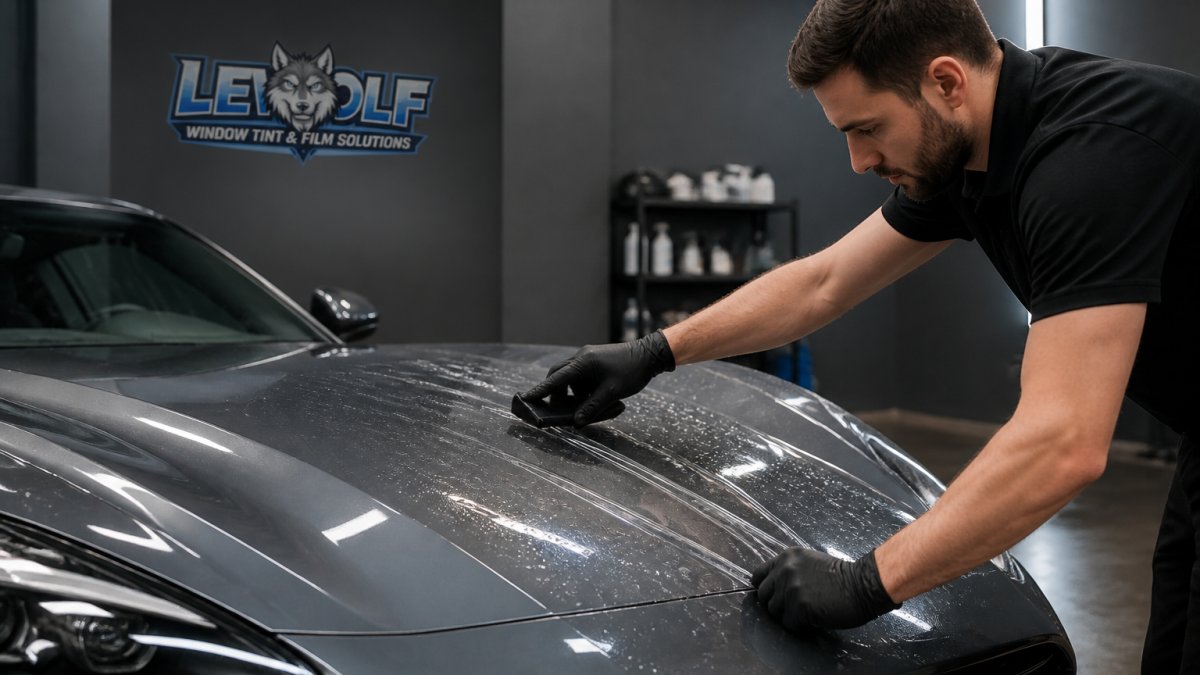
Paint protection film is a physical barrier, a thin polyurethane sheet that absorbs impacts, stone chips, and minor scratches before they reach the clear coat. It's self-healing; minor scratches disappear with heat exposure. The tradeoff: installation requires precision, costs more upfront, and can yellow or peel if applied poorly.
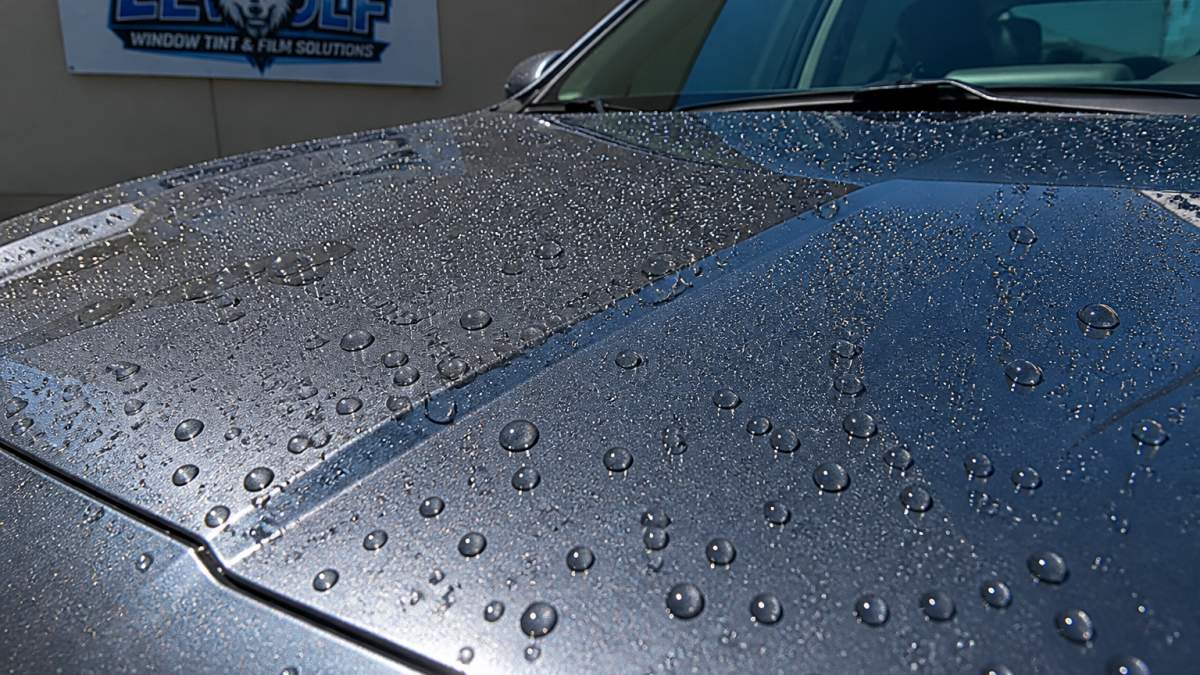
Ceramic coatings are liquid polymers that chemically bond to paint, creating a hard hydrophobic layer that repels water, dirt, and contaminants while enhancing gloss. They don't protect against physical impact like PPF does, but excel at UV protection and environmental contamination resistance.
Many car owners use both: PPF on high-impact zones (hood, front bumper, fenders) and ceramic coating on remaining surfaces for maximum protection at lower cost than full-coverage PPF.
Ceramic Coating vs Wax for Cars: Durability and Maintenance
Wax sits on top of paint, beads water, and adds temporary gloss for 3-6 months before degrading. It's affordable and easy to apply yourself, but doesn't protect against UV rays and offers no chemical bonding to paint.
Ceramic coating chemically bonds to clear coat, lasting 2-5 years with genuine UV protection, hydrophobic properties, and self-cleaning benefits. Higher cost and professional application are the main drawbacks.
Wax suits everyday drivers in moderate climates willing to reapply regularly. Ceramic coating delivers better long-term value for intense-sun climates, expensive vehicles, or those wanting minimal maintenance.
How Long Does Ceramic Coating Last on Your Vehicle
Product Grade and Expected Lifespan
Consumer-grade ceramic coatings last 1-3 years ($300-$600 installed); professional-grade lasts 3-5 years ($800-$1,500); premium lasts 5-7 years ($2,000+). Annual cost averages $150-$300 for consumer-grade and $160-$300 for professional-grade, making premium products often better value despite higher upfront cost.
How Ceramic Coating Degrades
Ceramic coating degrades gradually: peak beading and self-cleaning in months 1-12, reduced beading by month 18-24, noticeably diminished hydrophobic properties by year 3. UV protection and gloss persist longer than hydrophobic properties, so many owners reapply before full degradation to maintain peak performance.
Maintenance Practices That Extend Lifespan
Proper care adds 12-24 months to lifespan: use pH-neutral soap and two-bucket washing method; avoid automatic car washes; hand wash every 2 weeks (weekly in harsh climates). Air dry or use microfiber towels. Garage storage extends lifespan 1-2 years; use a car cover if outdoor parking is necessary. Remove bird droppings, tree sap, and tar within 24 hours. Optional maintenance sprays ($50-$150 per application) reinforce hydrophobic properties for 6-12 months.
Recognizing When Reapplication Is Needed
Reapply when water sheets instead of beads, washing requires more effort, gloss dulls, or hydrophobic properties become inconsistent (typically 2-4 years after application). Early reapplication is cheaper than waiting for complete failure, as the old coating can be lightly abraded before applying a new layer.
Cost-Per-Year Comparison
Annual protection cost: professional ceramic coating ($1,000 installed, 4-year lifespan) = $250/year; consumer ceramic ($400, 2-year lifespan) = $200/year; wax ($100 per application, every 4 months) = $300/year; PPF front-end ($2,500, 7-year lifespan) = $357/year. Professional ceramic coating often costs less per year than frequent wax reapplication, making it the better long-term investment.
Is Dealership Paint Protection Worth the Investment
What Dealerships Actually Sell
Dealership packages include: ceramic coating (consumer to mid-tier, often rebranded), PPF (full or partial), or hybrid combinations. The problem: dealerships rarely disclose specific product names, hardness ratings, expected lifespan, or warranty terms upfront.
Pricing Reality and Markups
Dealership pricing is substantially higher: ceramic coating ($1,200-$2,500 vs. $400-$800 at independent shops); PPF full vehicle ($4,000-$7,000 vs. $2,500-$4,500); hybrid packages ($3,500-$6,000 vs. $1,800-$3,500).
Warranty Terms: What to Scrutinize
Before signing, ask for written warranty details: coverage duration (2, 5, or lifetime years?), what's covered (defects vs. normal degradation?), exclusions (improper washing, automatic car washes?), transferability, reapplication coverage, and film replacement terms.
Installation Quality and Expertise
Dealership technicians apply paint protection as one of many services, limiting specialization. Independent shops focusing exclusively on paint protection typically have deeper expertise and better results. Ask any shop for photos of recent work, customer reviews, and technician certifications from Ceramic Pro, XPEL, or 3M.
New Car vs. Used Car Timing
The timing of protection application matters:
- New vehicles at purchase: Factory paint is pristine. Applying protection immediately (within the first week) is reasonable if the product and price are solid. Dealership convenience has some merit here, though independent shops can often apply protection within days if you're willing to wait.
- Used vehicles or delayed application: If you're buying a used car or applying protection months or years after purchase, dealership packages lose their advantage. The paint may have minor swirls, oxidation, or contamination requiring correction before coating or film application. Independent shops are more likely to perform proper paint correction first, ensuring the protection adheres to clean, properly prepared surfaces. Dealerships often skip this step, applying protection over existing defects, which can trap contaminants and magnify appearance issues.
Paint Preparation and Its Impact on Longevity
This is where dealership packages often fail. Proper ceramic coating or PPF application requires:
- Decontamination: Clay bar treatment to remove embedded fallout, tar, and industrial particles.
- Paint correction: Light polishing to remove minor swirls, oxidation, and water spots. This step is often skipped at dealerships.
- Surface prep: Isopropyl alcohol wipe to remove oils and ensure adhesion.
If protection is applied over uncorrected paint, defects become permanent. A swirl mark under ceramic coating won't disappear; it's locked in. PPF applied over oxidized paint can trap moisture and accelerate corrosion.
Independent shops typically include paint correction in their ceramic coating or PPF packages. Dealerships often don't, or charge extra ($200-$500) for it. This hidden cost, combined with markup, makes dealership packages even less competitive.
Removal and Repairability
If you need to repair or remove protection later, dealership warranty terms matter:
- Ceramic coating removal: Requires polishing, which removes a thin layer of clear coat. Cost: $300-$800. Most dealership warranties don't cover removal if you're not reapplying their product.
- PPF removal: Professional removal costs $500-$1,500 depending on coverage area. Improper removal can damage clear coat. Dealership warranties typically cover removal only if the film fails within warranty; if you want it removed for cosmetic reasons, you pay full price.
Independent shops are often more flexible on removal and reapplication, especially if you're switching to a different product or shop.
When Dealership Protection Makes Sense
Dealership paint protection is worth considering only if:
- The product is clearly identified (brand, type, expected lifespan).
- The warranty is written, transferable, and covers reapplication or replacement if it fails prematurely.
- The price is within 20-30% of independent shop quotes (not 150-300% markup).
- Paint correction is included or offered at a reasonable add-on price.
- You're buying a new vehicle and applying protection immediately.
In most cases, independent shops deliver better value, superior expertise, and clearer warranty terms.
Protection Methods by Driving Habits and Climate
Not every protection method is optimal for every driver. Your choice should match your actual use case.
High-mileage highway drivers face constant stone chip exposure. PPF is non-negotiable for the front end. Ceramic coating on the rest of the vehicle handles UV protection during long sunny drives. Plan for PPF replacement every 5-7 years.
Urban drivers with short commutes deal more with door dings, parking lot scratches, and bird droppings than stone chips. Ceramic coating alone often suffices. PPF on the hood and bumper adds protection without full-vehicle coverage expense.
Vehicles in intense-sun climates (desert, high-altitude, tropical) need aggressive UV protection. Ceramic coating is essential, not optional. Wax alone will fail to prevent clear coat oxidation. Consider PPF on the hood where UV exposure is most intense.
Garage-parked vehicles with low mileage benefit from ceramic coating for ease of maintenance and gloss enhancement. PPF is less critical since physical damage exposure is minimal.
Vehicles in cold, salty climates need protection against corrosion. Ceramic coating's hydrophobic properties help prevent salt from bonding to paint. PPF on the lower bumper and rocker panels protects against salt spray damage.
At LeWolf Window Tint & Film Solutions, we assess each vehicle's exposure and recommend protection accordingly. A luxury car driven occasionally in moderate weather has different needs than a work truck in harsh conditions.
| Driving Profile | Best Primary Method | Secondary Method | Maintenance Frequency |
|---|---|---|---|
| Highway, high-mileage | PPF (front end) | Ceramic coating | Reapply PPF every 5-7 years |
| Urban, low-mileage | Ceramic coating | PPF (hood only) | Reapply ceramic every 3-4 years |
| Intense sun exposure | Ceramic coating | PPF (hood) | Reapply ceramic every 2-3 years |
| Garage-parked | Ceramic coating | Wax (optional) | Reapply ceramic every 4-5 years |
| Cold/salt climate | Ceramic coating | PPF (lower panels) | Reapply ceramic every 2-3 years |
Conclusion: Choosing the Right Paint Protection
The best protection for car paint isn't one-size-fits-all. It depends on your vehicle's value, your climate, your driving patterns, and your budget. PPF wins for physical damage prevention. Ceramic coating wins for UV protection and ease of maintenance. Wax is the budget option for those willing to reapply regularly.
Most owners benefit from combining methods, PPF where impact risk is highest, ceramic coating everywhere else. This approach costs more upfront but prevents expensive repairs down the line.
The decision ultimately comes down to how much you value your vehicle and how much maintenance you're willing to commit to. Professional installation matters enormously; poor application undermines any product's benefits. At LeWolf Window Tint & Film Solutions, our 30 years of experience ensures your paint protection is applied correctly the first time. We offer professional-grade ceramic coatings and paint protection film that deliver lasting results. Book Now for a consultation and let our certified team assess your vehicle's specific protection needs.
Frequently Asked Questions
What is the best protection for car paint?
The best car paint protection depends on your driving habits and budget. Paint protection film (PPF) offers superior defense against stone chips and road debris but costs more. Ceramic coatings provide excellent UV protection and durability at a lower price point. For everyday drivers concerned about scratches and minor damage, PPF is ideal. For those prioritizing gloss and UV protection with moderate maintenance, ceramic coating wins. Wax is affordable but requires frequent reapplication every 3-6 months.
How long does ceramic coating last on a car?
Professional ceramic coatings typically last 2-5 years with proper maintenance, depending on the product quality and your climate. Durability depends on regular washing, avoiding harsh chemicals, and minimizing sun exposure. Consumer-grade ceramic coatings last 6-12 months and require more frequent reapplication than professional installations.
Is paint protection film better than ceramic coating?
Paint protection film excels at preventing physical damage like stone chips, scratches, and road debris. Ceramic coating provides superior UV protection and water beading but offers less impact resistance. PPF is better for high-impact environments and daily driving on highways. Ceramic coating suits garage-kept vehicles or those driven in low-debris conditions. Many owners use both: PPF on vulnerable areas (front bumper, hood, fenders) and ceramic coating on the entire vehicle for comprehensive protection.
Is dealership paint protection worth it?
Dealership paint protection packages often cost more than independent professional installations for similar products. You're paying for convenience and brand trust, not necessarily superior materials. The warranty coverage matters. Compare the specific product, warranty terms, and application method before deciding. Independent certified installers often deliver better value for the same protection level.