

13 min readBy Joshua Leleux
Table of Contents
- Window Film for Historic Homes: Preserving Character While Adding Protection
- Quick Comparison: Top Window Films for Historic Homes
- Can Window Film Damage Original or Historic Glass?
- UV Protection Film for Historic Windows: Safeguarding Interiors
- Privacy Film for Original Glass: Maintaining Historic Aesthetics
- Removable Window Film for Historic Homes: Reversible Protection
- Decorative and Stained-Glass Effects: Adding Character Without Replacement
- Installation, Maintenance, and Long-Term Performance
- Key Takeaways
- Frequently Asked Questions
Last Updated: October 18, 2026
Window Film for Historic Homes: Preserving Character While Adding Protection
The best window film for historic homes with original glass solves a real problem: antique windows are beautiful but act as thermal liabilities and UV gateways that fade furniture, artwork, and hardwood floors. The challenge is protecting fragile single-pane glass without erasing its character.
Original glass from the 1800s and early 1900s is irreplaceable, and window film offers UV protection, heat control, privacy, and decorative effects without removing the panes.
Quick Comparison: Top Window Films for Historic Homes
| Film Type | Best For | Key Benefit | Primary Consideration |
|---|---|---|---|
| 3M Architectural Film | Heat and UV control | 20+ year lifespan | Professional installation recommended |
| Madico Historic Preservation Film | Historic buildings | Preserves authenticity | Requires compatibility testing |
| Artscape Decorative Film | Leaded-glass effects | Adds visual character | Static cling (no adhesive) |
| Coavas Privacy Film | Privacy and light control | Easy DIY application | Lower UV blocking than premium options |
| Lemon Cloud 3D Film | UV protection | Blocks up to 96% of harmful rays | Best paired with professional installation |
Can Window Film Damage Original or Historic Glass?
Window film won't damage original glass if the film is matched to it. The real risk is thermal stress on single-pane glass when a high-absorption film is applied to glass that can't tolerate the temperature differential, so know your glass type, condition, and sun exposure.
Thermal Stress and Fragile Single-Pane Glass
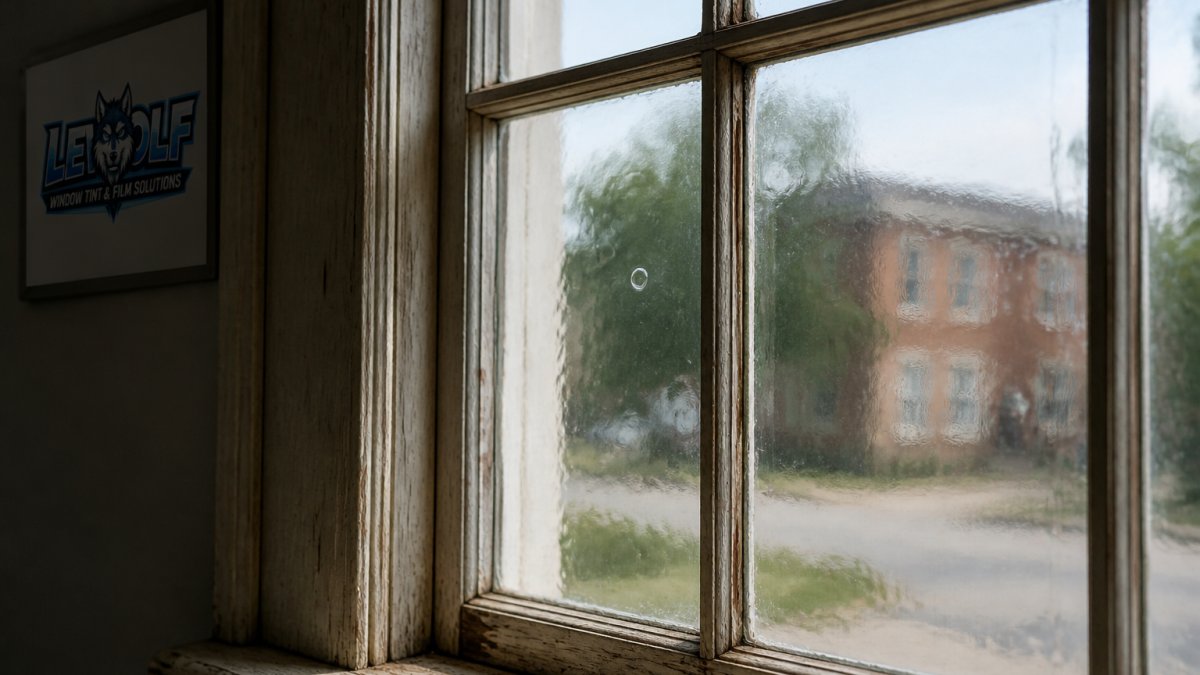
Historic homes often have single-pane windows made from older, more brittle glass. A dark film on a sunny side heats the glass unevenly, edges stay cooler while the center warms, and if the differential exceeds roughly 30-40 degrees Fahrenheit, the pane can crack.
Solar-absorbing films convert solar energy into heat at the pane, and the higher the solar absorptance, the greater the rise on an unshaded west-facing single pane.
Glass Type, Condition, and Glazing: What Changes the Risk
Before choosing a film, identify four things:
- Glass type. Cylinder, drawn, and early float glass from the 1800s and early 1900s is generally more brittle and more prone to thermal shock than mid-century glass. Annealed glass is the norm in historic homes; tempered glass is rare and should never be assumed.
- Condition. Existing cracks, chips, edge damage, or prior repairs concentrate stress and raise the risk of failure. A pane with a visible edge chip is a poor candidate for a dark film.
- Glazing and seals. Historic glazing compound, putty, and lead cames expand and contract differently from modern sealants. Film installation that disturbs glazing compound can create air and moisture paths that accelerate deterioration.
- Sun exposure and shading. South- and west-facing windows with full afternoon sun carry the highest thermal load. Windows shaded by porches, awnings, or mature trees carry less. Orientation and shading should drive film selection as much as aesthetics do.
Measurable Specifications to Compare
Broad claims like "blocks UV" or "reduces heat" don't tell you whether a film is safe for your glass. Ask for these specifications on the product data sheet:
- Visible light transmission (VLT). The percentage of visible light that passes through. Higher VLT preserves the daylight and view historic homeowners usually want; lower VLT means more glare and privacy but more heat absorption.
- Ultraviolet (UV) rejection. The percentage of UV radiation blocked. Most quality architectural films reject 99% of UV; budget films often claim less.
- Total solar energy rejected (TSER). The share of total solar energy kept out of the interior. This is the number that matters for heat control.
- Solar heat gain coefficient (SHGC). The fraction of solar heat that enters through the glazing. Lower is better for cooling load.
A film with high TSER and low solar absorptance is the ideal combination for historic glass: it rejects heat without cooking the pane. Films that achieve high TSER mainly through absorption are the ones to avoid on fragile single panes.
When a Professional Assessment Is Needed
A professional assessment is warranted when the glass is wavy, bubbled, chipped, or previously repaired; the window is single-pane facing south or west with little shade; glazing compound or lead cames are deteriorated; the home is in a historic district; or you want a dark, high-absorption film. A qualified installer can measure the glass, check for damage, review solar absorptance and SHGC, and test a single pane before committing to the full house, the cheapest insurance against a costly mistake.
Preservation Review and Reversibility
In many historic districts, altering the visible appearance of windows, including tinting, requires review by a preservation commission or architectural review board.
Reversibility is part of the preservation case. Static-cling films peel away cleanly with no adhesive residue, making them safer when approval is uncertain or you may sell. Adhesive films bond permanently and may require professional removal that can damage painted wood frames or historic sealants.
UV Protection Film for Historic Windows: Safeguarding Interiors
UV rays fade artwork, antiques, hardwood floors, and upholstery, and historic homes often contain irreplaceable collections. UV-blocking film stops 95-99% of ultraviolet radiation, depending on the product.
3M architectural film, with its 20+ year lifespan, provides consistent UV protection across decades, important for pieces you're protecting for the long term.
Placement is key.
LeWolf Window Tint & Film Solutions can assess which rooms need the most protection and recommend films that balance UV blocking with the light transmission your space requires.
Privacy Film for Original Glass: Maintaining Historic Aesthetics
Privacy film doesn't have to look modern. Decorative options like Artscape's Old English style mimic traditional leaded glass without replacing original panes.
Aesthetics matter in historic homes: a frosted or darkly tinted window can look out of place on a Victorian or Colonial facade.
For bathrooms and bedrooms, a frosted film mimicking acid-etched or sandblasted glass, a historic finishing technique, feels period-appropriate and provides complete privacy without compromising the original glass.
Removable Window Film for Historic Homes: Reversible Protection
Removable window film for historic homes is the smart choice when you're uncertain about permanence. Static-cling films require no adhesive, making removal simple and damage-free. They're ideal for rentals where you can't alter the structure, homes you may sell, seasonal use, and testing a film type before committing. The tradeoff is durability: static-cling films typically last 2-5 years before adhesion weakens, and they perform better indoors than outdoors, rarely a problem for interior windows in historic homes.
Decorative and Stained-Glass Effects: Adding Character Without Replacement
Historic homes benefit from visual continuity.
Decorative films offer styles evoking traditional leaded glass, including Old English designs with the geometric patterns and amber tones of period work.
Textured glass effects, frosted, rippled, or geometric patterns, add privacy while maintaining visual interest.
For homes with mixed window styles, decorative film on secondary windows unifies the look while preserving the character of primary windows.
Installation, Maintenance, and Long-Term Performance
Professional installation matters more for historic homes than standard residential work. Original glass is fragile, and frames are often painted or sealed with materials that can be damaged during installation. Poor technique can scratch glass, chip paint, or disturb historic glazing compound.
DIY Versus Professional Installation
DIY film installation is possible on modern dual-pane windows with clean, flat glass. On historic single-pane glass, the risks include trapped moisture and air bubbles, scratching or chipping fragile glass during squeegee work, disturbing glazing compound or paint, and choosing a high-absorptance film because the packaging didn't list it, the single biggest thermal-stress mistake. Professional installation costs more up front but includes glass assessment, film specification, and warranty coverage; for historic homes, the assessment is often worth more than the labor.
Realistic Cost Ranges
Costs vary by film type, window size, glass condition, and region, so treat any figure as a planning range rather than a quote.
For a whole-house project, the total is driven by window count and the mix of film types. Ask for a line-item quote separating film, labor, and any removal or glass-condition work.
Lifespan and Warranty
Long-term performance depends on film quality and installation. Premium architectural films are engineered for 15-20 years or more with a manufacturer warranty, while budget films may degrade, discolor, or lose adhesion within 5-10 years.
Warranty terms matter as much as the number. Look for coverage that addresses bubbling, peeling, discoloration, and adhesion failure, and confirm whether the warranty is prorated and whether it transfers to a new owner.
Cleaning and Maintenance
Maintenance is minimal: occasional cleaning with mild soap, water, and a soft cloth. Avoid abrasive cleaners, ammonia-based products on some films, and sharp tools. Check the manufacturer's cleaning guidance, it varies by product and is the fastest way to void a warranty.
Removal and Reversibility
Removal is part of long-term performance. Static-cling films peel away cleanly with no adhesive residue, making them safer for fragile original glass and uncertain approval. Adhesive films may require professional removal using heat and solvent, which can damage painted wood frames or historic sealants if done carelessly.
LeWolf Window Tint & Film Solutions brings 30 years of experience to precision installations, including historic properties. We assess glass type and sun exposure before recommending a film. Book Now for a free consultation.
Key Takeaways
- Original glass is worth protecting. Window film preserves historic character while adding UV, heat, and privacy benefits.
- Thermal stress is the main risk. Light-colored or low-absorption films prevent damage to single-pane historic glass.
- Reversibility matters. Static-cling films leave no residue and cause no damage.
- UV protection is essential. Irreplaceable artwork and antiques fade under ultraviolet exposure.
LeWolf Window Tint & Film Solutions specializes in the best window film for historic homes with original glass, helping homeowners protect their investment without compromising authenticity. Whether you're safeguarding artwork, reducing heat and glare, or adding privacy, we assess your glass type and recommend the best window film for your original windows. Book Now for a free consultation and let us help you preserve your home's character while adding modern protection.
Frequently Asked Questions
Can window film damage original or historic glass?
Most quality window films are safe for historic glass when installed correctly by professionals. However, single-pane or hand-blown historic glass can be vulnerable to thermal stress if dark films absorb excessive heat. Clear or light-tinted films minimize this risk. Static-cling and removable films pose no adhesive damage. Before installation, have a professional assess your specific glass type and recommend compatible film thickness and color. Proper installation and professional application significantly reduce any risk of damage.
What UV protection does window film provide for historic windows?
Quality UV-blocking films typically block 96-99% of harmful ultraviolet rays, protecting artwork, antiques, hardwood floors, and textiles from fading. This level of protection can extend the life of interior furnishings by decades. UV protection film for historic windows should be paired with clear or minimal-tint options to preserve the original appearance and character of your home while safeguarding what's inside.
Is removable window film a good option for historic homes?
Removable window film for historic homes is an excellent choice, especially for renters or those concerned about reversibility. Static-cling films require no adhesive and leave no residue. They provide privacy, heat reduction, and UV protection while maintaining full reversibility. These films work well on flat glass surfaces and can be reapplied if repositioned. They're ideal for testing film benefits before permanent installation or for temporary seasonal use.
Can I install window film myself, or should I hire a professional?
DIY installation is possible for static-cling and removable films on flat surfaces. However, professional installation is strongly recommended for historic homes due to the risk of thermal stress on fragile glass and the need for precise application. Professional installers understand historic glass vulnerabilities, ensure proper film selection for your specific windows, and provide warranties on workmanship. LeWolf Window Tint & Film Solutions offers professional installation with expertise in historic preservation requirements.
How long does quality window film last on historic windows?
Premium architectural window films typically last 15-20+ years on residential windows when properly installed and maintained. Removable films may need reapplication every 3-5 years depending on sun exposure and climate. Longevity depends on film quality, installation precision, window orientation, and local weather conditions. Professional-grade films from established manufacturers offer the best durability and UV-blocking performance for long-term interior protection in historic homes.