
14 min readBy Joshua Leleux
Table of Contents
- Paint Protection Film vs. Ceramic Coating: Which Protects Luxury Paint Better
- Ceramic Coating vs. Wax for Cars: Protection and Longevity
- How Long Does Paint Protection Film Last on a Luxury Vehicle
- Luxury Car Paint Protection Cost: Coverage Options and Investment
- Paint Condition, Color, and Finish Compatibility
- Professional Installation and Installer Selection
- Protection for Different Ownership Scenarios
- Frequently Asked Questions
Last Updated: October 13, 2026
Paint Protection Film vs. Ceramic Coating: Which Protects Luxury Paint Better
When determining the best paint protection for luxury cars, the choice between paint protection film and ceramic coating shapes everything that follows.
Paint protection film is a physical barrier: a semi-transparent urethane layer that absorbs impact from rock chips and road debris before they reach the clear coat.
The real question is which one, or combination of both, represents the best paint protection for luxury cars given your ownership scenario, budget, and finish preference.
How PPF Guards Against Rock Chips and Road Debris
Paint protection film excels at one job: stopping physical damage before it starts.
The trade-off is visibility. Quality PPF is nearly invisible, but seams where coverage ends are visible if you know where to look.
Thickness matters too. Thicker films (8-10 mil) absorb more impact but show seams more readily; thinner films (3-5 mil) hide better but protect less.
Self-healing PPF is now standard on premium films: swirl marks and light scratches disappear when the film is warmed by sun or a heat gun, keeping it flawless for years.
How Ceramic Coating Resists UV Exposure and Oxidation
Ceramic coating doesn't protect against rock chips, it locks in your paint's finish.
High-gloss finishes benefit most: hydrophobic water beading makes washing easier and keeps the finish cleaner between washes. Matte finishes are trickier, coating can make them look glossier or uneven, so always test compatibility before full coverage.
Durability depends on grade: consumer coatings last 1-2 years, professional-grade 3-5. Resin quality and application technique decide the outcome, a rushed install or poor prep cuts durability in half.
Ceramic Coating vs. Wax for Cars: Protection and Longevity
Ceramic coating outlasts wax by years: wax lasts 3-6 months, ceramic coating 3-5 years depending on quality and maintenance. The cost difference reflects that gap.
Wax is easier to apply yourself, while ceramic coating requires professional installation on luxury vehicles because one missed spot or contamination compromises the entire job.
Wax offers a warmer shine; ceramic coating produces a cooler, cleaner gloss.
Maintenance differs too: waxed paint needs monthly attention, while ceramic-coated paint needs quarterly care, typically a pH-neutral wash and occasional top-up spray.
How Long Does Paint Protection Film Last on a Luxury Vehicle
Quality PPF lasts 7-10 years under normal driving. The film itself holds up, but the adhesive bond can weaken over time, especially at edges stressed by UV exposure and temperature cycling.
Self-healing stays effective throughout the film's lifespan, but the response slows after 5-7 years as the resin ages; by year 8-10, minor scratches may not disappear completely.
Removal is straightforward: a skilled installer can peel off aged PPF without damaging the paint.
Self-Healing Properties and Scratch Resistance
Self-healing PPF uses thermoplastic urethane: heat makes the resin flow back into scratches and swirl marks. It works best on light scratches (under 0.5mm); deeper gouges won't heal completely.
The healing window matters: a mark from yesterday heals in minutes under sun exposure, while a scratch from last month may need deliberate heat from a heat gun. After several years, the response weakens but doesn't disappear.
Ceramic coating doesn't self-heal, scratches are permanent until it's reapplied. That's a significant PPF advantage for vehicles seeing daily use and minor contact.
Warranty Coverage and Durability Expectations
Premium PPF carries 10-year warranties against yellowing, peeling, and adhesive failure, meaningful only if the installer is manufacturer-authorized. A 3M Authorized Dealer like LeWolf Window Tint & Film Solutions backs the warranty.
Ceramic coating warranties typically cover 3-5 years against delamination and adhesive failure, but not scratches or gradual UV fading.
The warranty is only as good as the installer's credibility. A shop that disappears in two years can't honor a 10-year warranty. Choose an established installer with local reputation and certifications.
Luxury Car Paint Protection Cost: Coverage Options and Investment
The investment depends on coverage scope and film quality. A partial front-end PPF package (hood, fenders, bumper, mirrors) costs less than full-vehicle coverage, which protects every painted surface but requires far more material and labor. Pricing is available on our website.
Ceramic coating pricing depends on vehicle size and paint condition: a fresh luxury car with flawless paint costs less to coat than an older vehicle needing correction first, and correction is where costs escalate quickly.
Full-Front Coverage vs. Full-Vehicle Coverage
Full-front coverage protects the areas that take the most impact: hood, fenders, front bumper, mirrors, and headlight surrounds. For daily drivers on highways, this covers 80% of the rock-chip risk.
Full-vehicle coverage extends protection to doors, side panels, rear bumper, and trunk. This is overkill for most daily drivers but essential for show cars, high-value collectibles, or vehicles you plan to keep 10+ years.
The cost difference is substantial. Full-front coverage is the practical choice for luxury sedans and sports cars used for daily driving.
Installation Price Factors and Total Cost of Ownership
Installation cost depends on vehicle size, film quality, and surface condition. A pristine new luxury car with simple geometry costs less than an older vehicle with complex curves and existing paint damage.
Edge wrapping quality directly affects price. Sloppy edge work is cheap. Precision edge wrapping that's nearly invisible costs more because it requires skill and time.
Total cost of ownership favors PPF for high-mileage drivers. A full-front PPF installation lasts 7-10 years without maintenance. Ceramic coating lasts 3-5 years and requires quarterly maintenance.
Paint Condition, Color, and Finish Compatibility
Not all paint finishes accept protection equally. Matte paint, metallic paint, and special finishes (like Mercedes' Designo colors) require compatible protection methods. Mismatched protection can alter the finish or create adhesion issues.
Matte and High-Gloss Finishes: Which Protection Method Works Best
High-gloss finishes are the easiest to protect. Both PPF and ceramic coating work flawlessly on gloss paint.
Matte finishes are the challenge. Ceramic coating can make matte paint look glossy or uneven because the coating's reflectivity changes the finish appearance.
PPF on matte paint is safer. The film preserves the matte texture if the right matte-finish PPF is chosen.
Metallic and pearl finishes work with both methods, but ceramic coating can intensify the metallic effect, which some owners love and others find overdone.
Paint Correction Before Protection Installation
Paint correction removes swirl marks, light scratches, and oxidation. It's essential before ceramic coating because the coating locks in whatever condition the paint is in.
PPF doesn't require correction in the same way. The film covers imperfections, so minor swirls aren't a problem. However, deep scratches or oxidation should be corrected first because they'll be visible through the film.
Correction adds 2-4 hours to installation and increases cost, but the result is paint that looks showroom-fresh under protection. For luxury vehicles, this investment is worth it.
Professional Installation and Installer Selection
Installation quality determines whether protection lasts 3 years or 10 years. A skilled installer is the single most important factor in protection success. Certifications matter, but reputation and workmanship verification matter more.
Surface Preparation and Edge Wrapping Quality
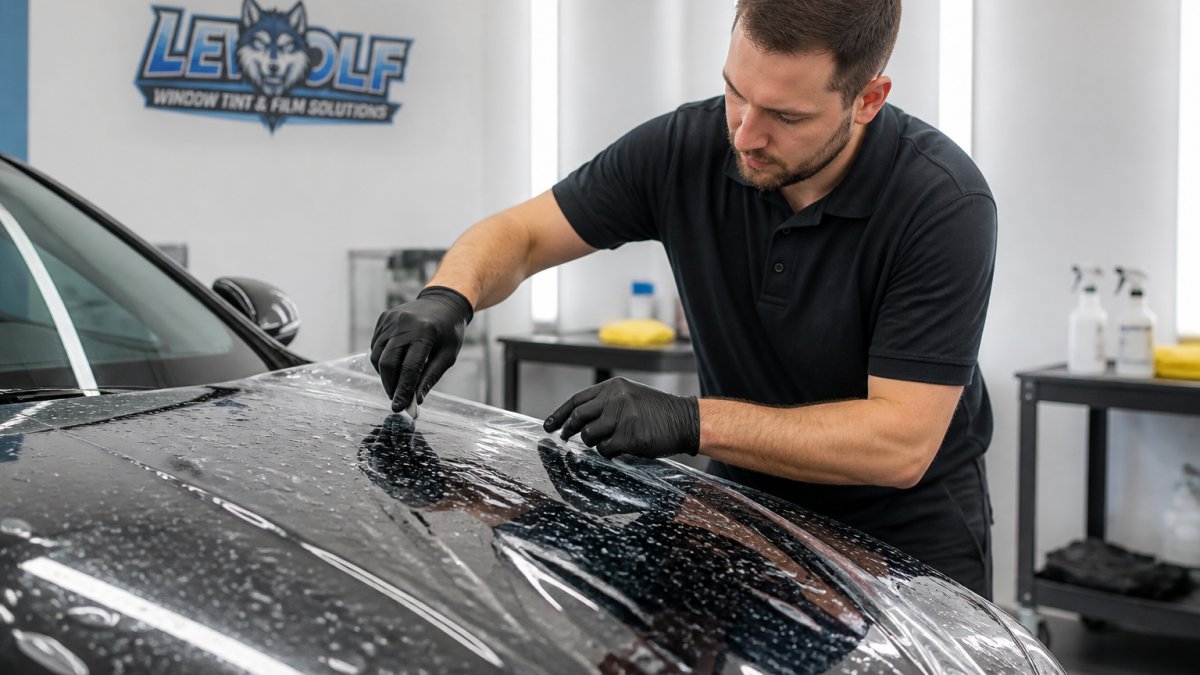
Surface preparation is where amateurs fail. The paint must be cleaned, decontaminated, and dried completely. Any dust, oil, or moisture under the film causes adhesion failure.
Edge wrapping is the art. The film must wrap around panel edges cleanly without visible seams or wrinkles. Poor edge wrapping is immediately obvious and permanent.
Seam visibility on high-quality work is nearly zero if you're not looking for it. On poor work, seams are visible from 10 feet away. Always ask to see the installer's previous work before committing.
Seam Visibility, Workmanship Verification, and Warranty Support
Seam visibility is the most common complaint about PPF. This happens when edge wrapping is rushed or the film is cut imprecisely.
Workmanship verification means inspecting the finished job in natural light from multiple angles. Seams should be nearly invisible. The film should sit flush with no bubbles, wrinkles, or lifting edges.
Warranty support is crucial. A reputable installer like LeWolf Window Tint & Film Solutions stands behind the work. If seams become visible or the film peels within the warranty period, we address it.
Protection for Different Ownership Scenarios
Your ownership horizon changes the protection strategy. A daily driver needs different protection than a weekend show car. A vehicle you're keeping for 10 years needs different planning than one you'll sell in 3 years.
Daily Driving and Long-Term Resale Value
Daily drivers face constant exposure to environmental contaminants, UV rays, and minor impacts. PPF on the front end plus ceramic coating on the entire vehicle is the comprehensive approach.
For long-term resale value, protected paint is a selling point. A 10-year-old luxury car with pristine paint commands a premium over one with faded, oxidized paint. Protection is an investment in future resale value.
A vehicle you plan to keep 5+ years justifies the full protection investment. The payoff comes in preserved paint condition and easier maintenance.
Protecting a luxury vehicle's paint is an investment in appearance, resale value, and peace of mind. Our 30 years of experience and 3M Authorized status ensure your protection is installed to professional standards with warranty backing. Book Now to discuss your luxury vehicle's protection needs with our certified team.
| Protection Method | Best For | Durability | Maintenance | Seam Visibility |
|---|---|---|---|---|
| Paint Protection Film | Rock chips, daily driving | 7-10 years | Minimal | Low if properly installed |
| Ceramic Coating | UV protection, gloss enhancement | 3-5 years | Quarterly washing | N/A (no seams) |
| Combined PPF + Ceramic | Maximum protection, resale value | 7-10 years PPF + 3-5 years coating | Quarterly | Low if properly installed |
| Wax | Budget-conscious, warm finish | 3-6 months | Monthly | N/A |
Frequently Asked Questions
What is the best paint protection for a luxury car?
The best paint protection depends on your priorities. Paint protection film (PPF) offers superior defense against rock chips and road debris, making it ideal for daily drivers. Ceramic coating provides excellent UV and oxidation resistance with a high-gloss finish, better for owners prioritizing appearance and ease of maintenance. Many luxury car owners combine both for maximum protection across different paint vulnerabilities. Professional installation ensures proper surface preparation and edge wrapping, critical for luxury finishes.
How long does paint protection film last on a luxury car?
Quality paint protection film typically lasts 5 to 10 years, depending on climate, maintenance, and film quality. Premium films with self-healing properties extend this lifespan by recovering minor scratches automatically. UV-resistant formulations resist yellowing and degradation in harsh sunlight. Proper maintenance, regular washing and avoiding abrasive cleaners, preserves film integrity. Warranty coverage from reputable installers often reflects expected lifespan, with many offering 5 to 7-year protection guarantees on professionally installed film.
Is ceramic coating or paint protection film better for luxury cars?
Both offer distinct advantages. Paint protection film excels at preventing rock chips, stone chips, and physical damage to the clear coat and paint. Ceramic coating provides superior chemical resistance, hydrophobic properties for water beading, and a high-gloss finish that enhances shine. For luxury cars, consider your primary concern: if you drive daily and face road debris exposure, PPF wins. If you prioritize appearance and UV protection with lower maintenance, ceramic coating is better. Many luxury owners apply PPF to high-impact areas and ceramic coating over the rest for comprehensive protection.
How much does paint protection cost for a luxury vehicle?
Paint protection film and ceramic coating pricing depends on vehicle size, coverage level (full-front or full-vehicle), film quality, and installer expertise. Luxury vehicles often require premium film grades and meticulous installation. Coverage choice significantly affects price: full-front coverage protects high-impact areas, while full-vehicle coverage provides comprehensive protection. Contact a certified installer for an accurate quote based on your specific vehicle and protection goals. Pricing is available on our website.