

16 min readBy Joshua Leleux
Table of Contents
- Why Luxury Car Paint Is More Vulnerable to Chips
- Step 1: Install Paint Protection Film on High-Impact Zones
- Step 2: Add a Ceramic Coating as a Second Layer
- Paint Protection Film vs Ceramic Coating: What Each One Does
- Step 3: Adjust Your Driving Habits to Avoid Road Debris
- Step 4: Handle Rock Chips and Contaminants Before They Spread
- How Long Does Paint Protection Film Last on a Luxury Car?
- Automotive Paint Protection Film Cost Guide: What Affects the Price
- Frequently Asked Questions
Last Updated: September 15, 2026
Why Luxury Car Paint Is More Vulnerable to Chips
Luxury vehicles carry softer, more complex clear coats than mass-market cars, so the finish chips more easily when road debris strikes at speed. The smartest way to prevent paint chips is to act long before they cost far more to correct than to prevent.
Modern water-based, multi-stage paint systems deliver deep gloss but resist impact less than the harder, thinner clear coats on economy models. Rock chips, road debris, bird droppings, and tree sap all attack that surface, and once the clear coat breaks, oxidation works underneath.
Prevention is a solved problem. Below are seven professional steps, from paint protection film and ceramic coating to driving habits that keep your front end out of harm's way.
Step 1: Install Paint Protection Film on High-Impact Zones
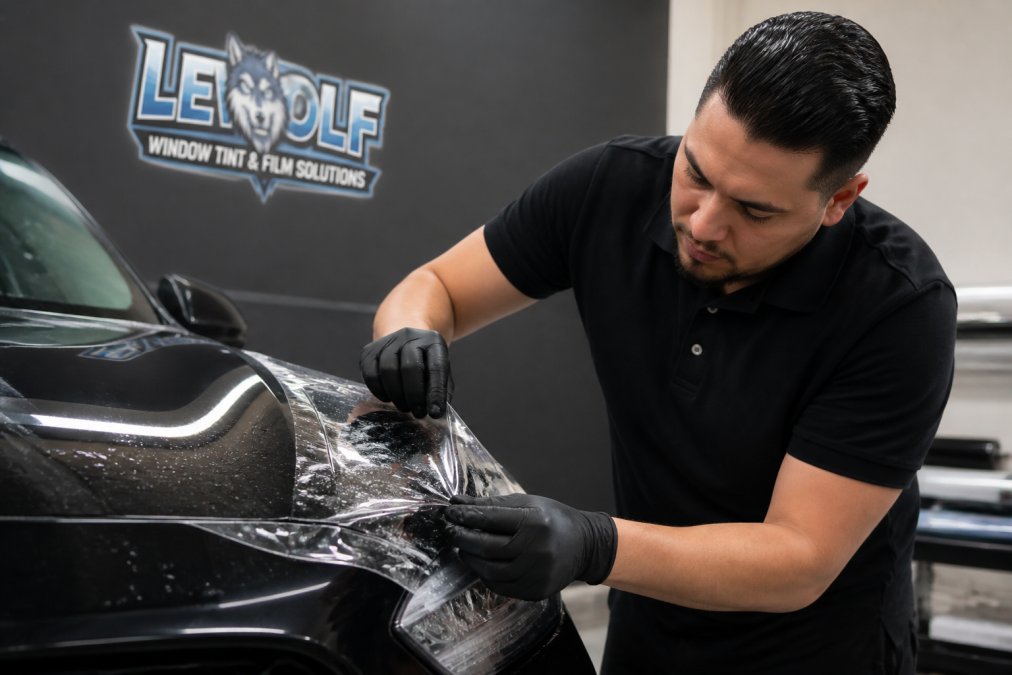
Paint protection film is the single most effective defense against rock chips. This transparent urethane layer absorbs impact before it reaches your clear coat, and quality film is self-healing, so light scratches vanish with heat.
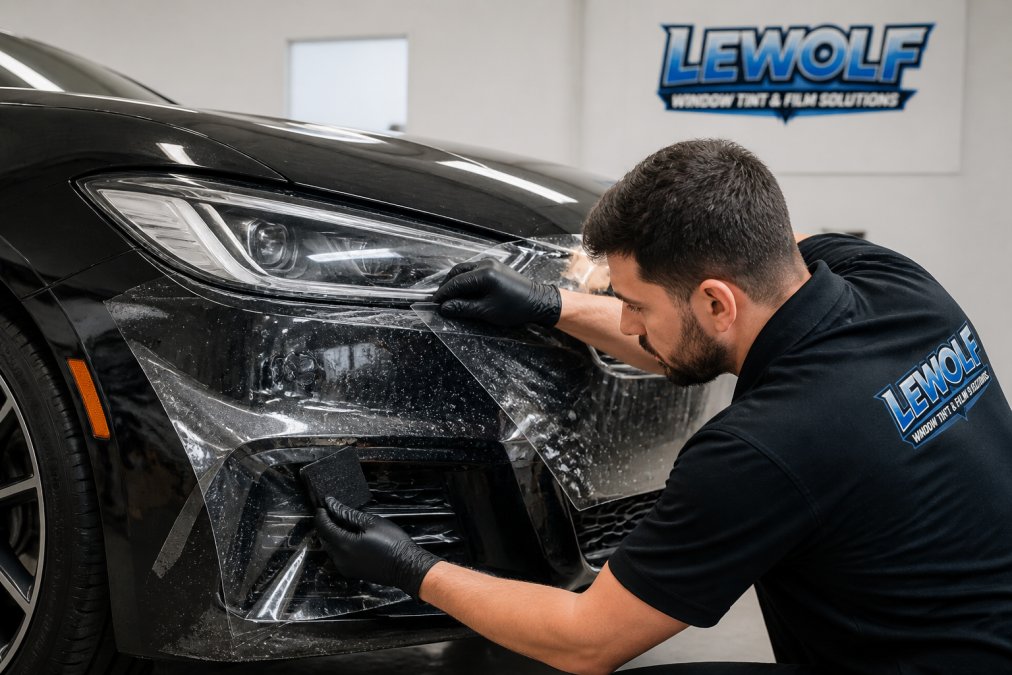
A common mistake is covering only the hood. The panels facing traffic take the worst punishment.
Which Panels Need Coverage First
Prioritize coverage in this order:
- Front bumper - the highest-impact zone on any daily driver
- Hood leading edge - catches debris kicked up by trucks and SUVs
- Fender edges and mirrors - narrow targets but frequent chip sites
- Headlights and A-pillars - protect expensive housings and trim
- Rocker panels - especially on low-slung, high-end vehicles
A partial front end wrap covers the first three. A full front end wrap adds the A-pillars, roof edge, and full hood.
Step 2: Add a Ceramic Coating as a Second Layer
Ceramic coating is a liquid polymer that bonds to your paint and forms a hydrophobic layer, and it works best as a complement to film, not a replacement. It won't stop a rock, but it makes the surface slick enough that water, bird droppings, and tree sap slide off before they etch.
Think of the two as a system. Film handles impact resistance. Coating handles chemical and environmental hazards. Together they reduce how often you need paint correction and detailing.
Coating over film also protects the film from UV degradation, extending its life, while on bare panels it slows oxidation and eases washing.
Paint Protection Film vs Ceramic Coating: What Each One Does
Paint protection film and ceramic coating solve different problems. Film is a physical barrier against rock chips and scratches; coating is a chemical barrier against UV, water spots, and contaminants.
| Feature | Paint Protection Film | Ceramic Coating |
|---|---|---|
| Primary job | Absorbs impact from debris | Repels water and contaminants |
| Stops rock chips | Yes | No |
| Self-healing | Yes | No |
| UV protection | Moderate | High |
| Best placement | Front end, high-impact zones | Full body, over film |
| Typical lifespan | 5-10 years | 2-5 years |
For most luxury owners: install film on the impact zones first, then coat the whole vehicle on top.
Step 3: Adjust Your Driving Habits to Avoid Road Debris
How you drive changes how much debris reaches your paint, and it's the only protection that costs nothing and works the instant you pull out of the driveway. Most guides stop at "follow farther back"; the tactics below go further, because on a luxury car the difference between a clean front end and a peppered one is measured in feet and seconds, not products.
Understand the Physics of a Chip
A rock chip is an energy-transfer event. Kinetic energy scales with the square of velocity, so the speed of debris relative to your paint matters far more than rock size: a pea-sized stone thrown from a truck tire at highway speed can punch through a soft luxury clear coat, while the same stone rolling across a parking lot does nothing (Physics Tutorial - Work and Energy - Forms of Energy). Reduce the relative velocity of debris hitting your front end, and you reduce chips disproportionately.
Two variables you control are following distance and lane position. Both change how much energy a stone still carries when it reaches you.
Following Distance: The Three-Second Floor
Use the three-second rule as a minimum, not a target (nhtsa.gov). Pick a fixed object ahead, an overpass, a sign, a shadow line, and count the seconds between when the car ahead passes it and when you do. Three seconds is the floor for normal traffic. Stretch it to four or five seconds behind the vehicles that actually throw debris:
- Dump trucks, gravel haulers, and flatbeds with exposed loads
- Box trucks and semis, whose rear tires kick up whatever the trailer drags loose
- Pickups with aggressive all-terrain tires and no mud flaps
- Any vehicle with a roof rack, ladder, or loose cargo
- Cars with visibly worn or misaligned tires
The farther back you are, the more time gravity and air drag have to pull a stone down and slow it. At three seconds, debris is still rising and moving fast; at five seconds, much of it has already fallen out of your path.
Lane Position: Where Debris Actually Lives
Debris concentrates in predictable bands across a highway:
- Shoulder lane: the worst offender. Gravel, sand, and tire fragments wash off the road surface and pile up along the edge, then get re-launched by every passing tire.
- Center median side: the second-worst band, for the same reason, debris accumulates against the median barrier and gets kicked back into the adjacent lane.
- Middle lanes: generally the cleanest, because traffic sweeps debris toward the edges over time.
On a three-lane highway, the center lane is usually best for paint; on a two-lane road, favor the lane away from the shoulder.
Construction Zones and Fresh Chip-Seal
Highway vs. City: Different Threats
What Driving Habits Cannot Fix
Step 4: Handle Rock Chips and Contaminants Before They Spread
How Long Does Paint Protection Film Last on a Luxury Car?
Automotive Paint Protection Film Cost Guide: What Affects the Price
What Actually Drives the Price
| Factor | Lower Cost | Higher Cost |
|---|---|---|
| Coverage | Partial front (bumper + partial hood + fenders + mirrors) | Full front, then full body wrap |
| Film type | Pre-cut kit, standard gloss | Custom bulk film, matte or satin finish |
| Vehicle | Standard sedan with simple curves | Wide body, complex curves, exotic panels |
| Installer | General shop, uncertified | Manufacturer-certified specialist |
| Edges | Exposed | Wrapped and tucked |
| Removal | Not included | Old film removal and adhesive cleanup |
DIY vs. Professional: The Real Cost-Benefit
Insurance and Warranty Implications
Getting an Accurate Quote
Frequently Asked Questions
Will ceramic coating prevent paint chips on luxury cars?
Ceramic coating adds a hydrophobic layer that repels water, bird droppings, and tree sap, and it provides UV protection that slows paint oxidation. It does not absorb impact from road debris, so it will not stop rock chips. For impact resistance, you need paint protection film, which uses a thick urethane layer to absorb strikes. Many luxury owners combine both: PPF on high-impact panels and ceramic coating over the whole vehicle for easier detailing and surface contamination control.
How long does paint protection film last on a high-end vehicle?
Quality paint protection film typically lasts 5 to 10 years depending on the product, installation quality, and how the car is stored and driven. Films with self-healing top coats resist yellowing and scratches longer. Daily drivers exposed to harsh sun and road debris may need replacement sooner than garage-kept vehicles. Professional installation and regular hand washing with pH-neutral products extend film life. Ask your installer about the specific warranty terms for the film brand they use.
What is the difference between PPF and ceramic coating for paint protection?
Paint protection film is a physical urethane layer that absorbs rock chips, scratches, and road debris. Ceramic coating is a liquid polymer that bonds to the paint or film surface, adding hydrophobic properties, UV protection, and gloss. PPF handles impact; ceramic coating handles chemical and environmental contaminants. They serve different purposes and work best together. PPF goes on first for impact zones, then ceramic coating goes over the entire vehicle, including the film, for easier maintenance.
How can I prevent car paint chips from getting worse?
Address chips as soon as you spot them. Clean the area with a degreaser, then apply touch-up paint using a paint pen or precision brush to seal exposed metal or primer. If the chip has started to rust, a professional may need to sand, prime, and repaint the area. For larger areas or multiple chips, paint correction and a new layer of PPF or ceramic coating can stop further damage. Leaving chips untreated allows moisture to reach bare metal, which speeds corrosion and reduces resale value.
Luxury paint is expensive to correct and nearly impossible to match perfectly after a respray, which is why prevention beats repair every time. LeWolf Window Tint & Film Solutions installs paint protection film and ceramic coatings using 3M certified products, backed by 30 years of experience and a veteran-owned team that treats every high-end finish like it's our own. Get started with LeWolf Window Tint & Film Solutions and protect your investment before the first chip lands.