

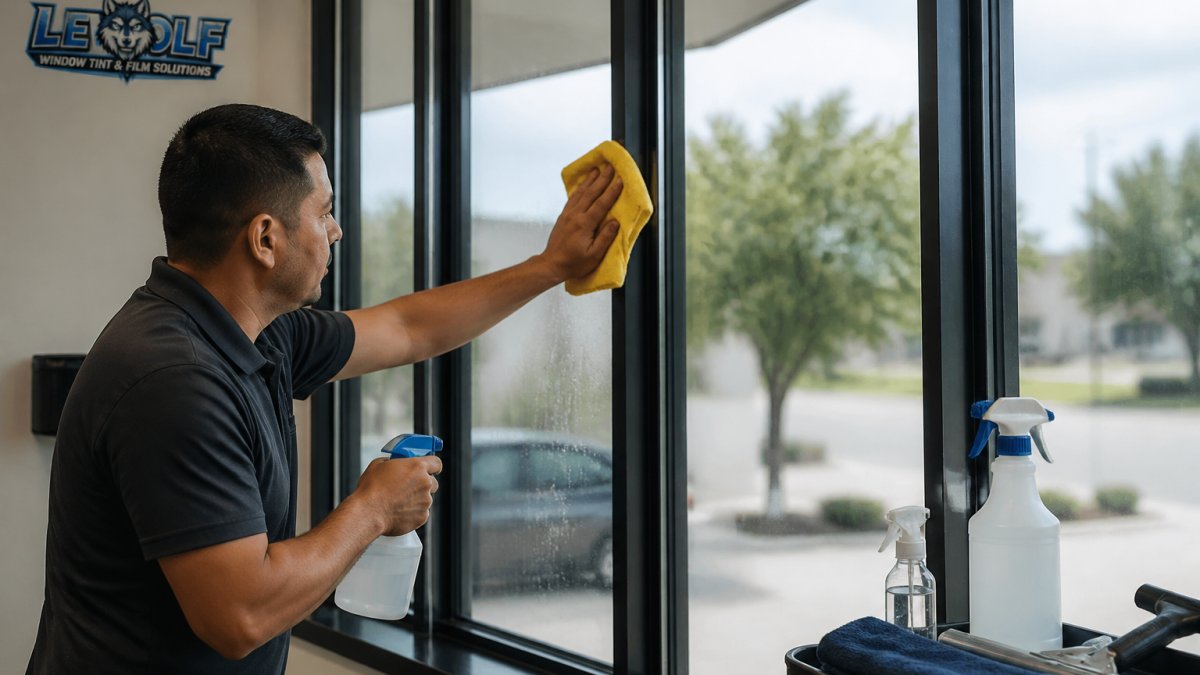
16 min readBy Joshua Leleux
Last Updated: October 23, 2026
Quick Summary
To maintain security window film for longevity, clean it safely every 4-6 weeks with soft cloths and ammonia-free cleaners, inspect it monthly for damage, and perform a thorough annual maintenance check. Proper care helps security film last 15-20 years and protects its adhesive and clarity.
- Allow 30 days for full cure after installation before resuming normal window use and cleaning
- Never use ammonia-based cleaners, abrasive scrubbers, or pressure washers as they damage the adhesive and cause edge peeling
- Perform monthly visual inspections for bubbles and edge peeling, plus quarterly deep inspections with good lighting
- Interior-applied film typically lasts 15-20 years while exterior-applied film lasts 10-15 years due to weather exposure
- Keep a maintenance log with dates and photos to document care and preserve warranty coverage
Table of Contents
- Why Proper Maintenance Matters for Security Window Film
- Understanding Window Film Curing Time and Post-Installation Care
- How to Clean Security Window Film Safely and Effectively
- Factors That Affect Film Longevity and Durability
- Establishing a Regular Maintenance Schedule
- Signs Window Film Needs Replacement
- What to Do After Impact, Attempted Entry, or Accidental Damage
- Warranty Maintenance and Documentation
- Frequently Asked Questions
Why Proper Maintenance Matters for Security Window Film
Security window film is a protective layer bonded to glass that delays forced entry and contains glass shards during impact, protecting homes, businesses, and schools from break-ins and weather damage.
At LeWolf Window Tint & Film Solutions, we've installed security film for homeowners, business owners, and school districts. Proper maintenance is essential to prevent issues like lifting edges, fading clarity, and weakened film integrity.
Understanding Window Film Curing Time and Post-Installation Care
After installation, your security window film needs time to fully cure and bond to the glass. Rushing this phase can cause permanent damage.
The Critical First 30 Days
The first month is when the adhesive reaches full strength, and the film is vulnerable to moisture, temperature swings, and physical stress.
For the first 30 days:
- Keep windows closed and avoid opening them unless absolutely necessary
- Do not clean the film or touch it more than required
- Avoid direct sunlight exposure if possible (close blinds or curtains)
The adhesive cures from the center outward. Disturbing the film risks trapping moisture or creating air bubbles that may never resolve, and small scratches can become permanent defects.
When You Can Resume Normal Use
Most security film reaches 80% cure strength within 7-10 days, when you can resume normal window operation, gently. Full cure takes about 30 days, after which the film handles regular cleaning and temperature changes without curing-related damage. Cold, dry climates may extend cure time; warm, humid climates may shorten it.
How to Clean Security Window Film Safely and Effectively
Cleaning your security window film correctly keeps it clear and prevents damage to the film or adhesive.
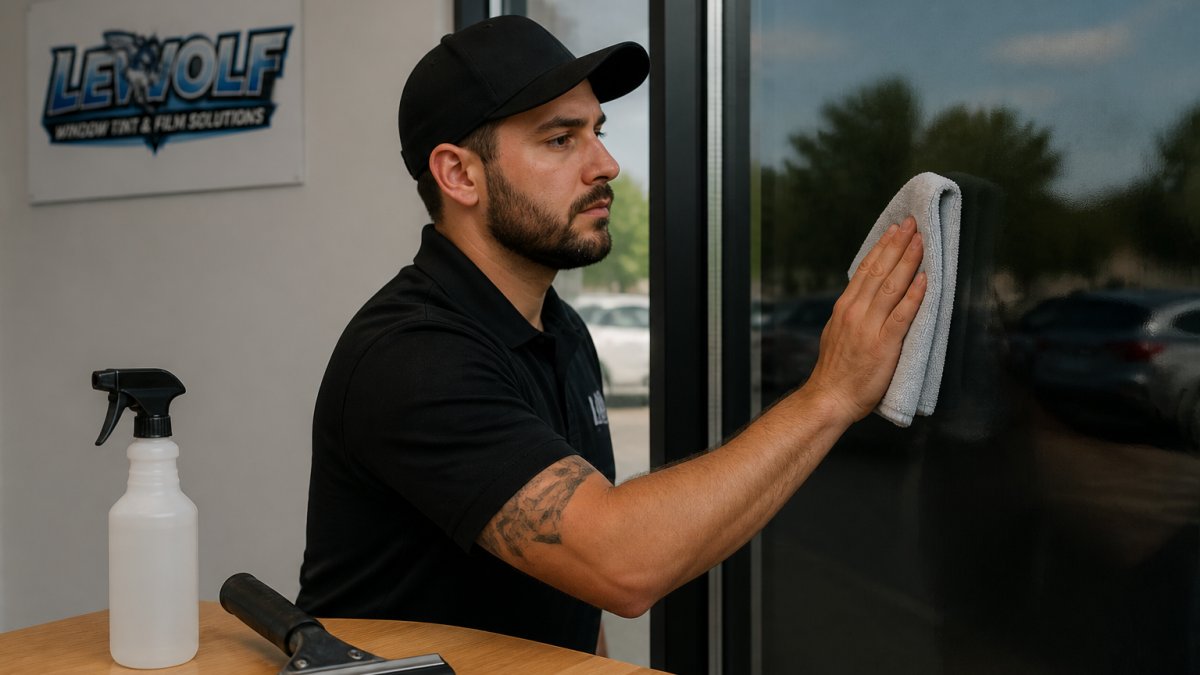
Approved Cleaning Tools and Materials
Use only soft, non-abrasive materials, the surface is tough but can still be scratched by the wrong approach.
Safe cleaning tools:
- Soft lint-free cloths (microfiber cloths work well)
- Rubber squeegees with soft edges
- Soft-bristle brushes (natural bristle, not synthetic)
Safe cleaning solutions:
- Distilled water mixed with a few drops of dish soap
- Commercial window cleaners that are ammonia-free
- Specialized film-safe cleaners (ask your installer for recommendations)
Mix your cleaner first and test any new product on a small, inconspicuous area. If the film looks fine after a minute, use it on the rest of the window.
Step-by-Step Cleaning Procedure
Step 1: Prepare your materials Gather your soft cloth, squeegee, and cleaner.
Step 5: Dry with a clean cloth Buff the film dry with a fresh, lint-free cloth.
Step 6: Inspect edges and seams Check where the film meets the frame for pooled moisture and gently wipe away any water.
Repeat this process every 4-6 weeks, or more often if your windows are exposed to dust, salt spray, or heavy use.
Products and Chemicals to Avoid
Some common cleaning products can damage your security film or its adhesive.
Never use:
- Ammonia-based cleaners (Windex, most commercial window cleaners)
- Abrasive scrubbers or steel wool
- Razor blades or sharp objects
Ammonia breaks down the adhesive and causes edge peeling or lifting. Sharp objects create weak points where peeling starts, and high-pressure spray forces water under the edges, causing bubbling.
Factors That Affect Film Longevity and Durability
Security window film can last 10-20 years or more, but several factors influence how long your specific installation performs.
Environmental Conditions and Extreme Weather
Extreme heat, UV exposure, humidity, and temperature swings all stress the adhesive and film material.
Heat and UV exposure: Constant direct sunlight accelerates adhesive breakdown, and south and west-facing windows get more UV than north-facing ones.
Temperature swings: Rapid changes (opening a window in winter, turning on AC in summer) stress the adhesive.
Freeze-thaw cycles: Repeated freezing and thawing weakens adhesive bonds. Where winter temperatures drop below freezing, expect replacement slightly sooner.
Interior vs. Exterior Application Impact
Interior or exterior application affects how long your film lasts and what maintenance it needs.
Interior-applied film is more common for residential and commercial use.
Exterior-applied film is used in high-security and some commercial settings.
Interior application is often recommended for most residential and commercial properties because it offers a good balance of longevity, performance, and ease of maintenance.
Establishing a Regular Maintenance Schedule
Consistent maintenance is the single best way to extend your security film's life, catching problems early before they become serious. To maintain security window film and maximize its protective lifespan, follow a structured inspection and cleaning schedule.
Monthly and Quarterly Inspection Checklist
Check your security film monthly for basic signs of damage or wear. Every three months, do a more thorough inspection.
Monthly inspection (takes 5 minutes):
- Look for visible bubbles, wrinkles, or areas where the film appears lifted
- Check corners and edges for peeling or separation
- Wipe away any visible dust or debris
Quarterly inspection (takes 15 minutes):
- Inspect all edges and seams closely with good lighting
- Check the seal where the film meets the frame
- Look for any moisture trapped between film and glass
Annual Deep Inspection and Maintenance
Once per year, do a comprehensive inspection and maintenance session, 30-45 minutes essential for long-term durability.
Annual maintenance:
- Clean the entire window and film thoroughly with approved cleaner
- Inspect every edge and seam under bright light or with a flashlight
- Check for hairline cracks in the glass (separate issue, but important to catch)
Keep a maintenance log with dates and notes. This record helps you spot patterns (like seasonal edge lifting in spring) and proves you've maintained the film properly if you ever need to file a claim or warranty service.
If you notice anything unusual during your annual inspection, contact LeWolf Window Tint & Film Solutions for a professional assessment.
Signs Window Film Needs Replacement
Most security window film lasts 10-20 years with proper maintenance. Some signs tell you it's time to replace it.
Visual Damage and Deterioration
Visible damage that affects appearance or function means the film should be replaced.
Signs of visual damage:
- Persistent bubbles or wrinkles that don't flatten out
- Peeling or lifting at edges that continues despite repair attempts
- Cracks, tears, or punctures in the film
Minor scratches or small water spots don't require replacement. Forced Entry Film: How It Works & What to Expect provides details on how security film performs over time and when failure typically occurs.
Forced Entry Film: How It Works & What to Expect provides details on how security film performs over time and when failure typically occurs.
Performance Failure and Loss of Protection
The most important reason to replace security film is loss of protective performance. If the film can no longer do its job, it's time for new installation.
Signs of performance failure:
- Glass retention test fails (glass shatters and falls away instead of staying bonded to film)
- Adhesive has lost strength and film peels away easily
- Film no longer delays forced entry as expected
These signs are less visible than cosmetic damage. If you suspect performance failure, contact a professional for testing. LeWolf Window Tint & Film Solutions can assess whether your film still meets security standards.
What to Do After Impact, Attempted Entry, or Accidental Damage
Security window film is designed to protect your glass during impact and attempted entry. But even the best film can be damaged. Here's what to do if your film is struck, breached, or accidentally damaged.
Immediately after impact:
- Check for personal safety first. If glass has broken or the window is compromised, move away and call emergency services if needed.
- Do not touch broken glass or the film if it's torn or unstable.
- Take photos of the damage for insurance and warranty documentation.
For attempted entry or break-in:
- Call police and file a report. Get a case number for your insurance claim.
- Do not disturb the scene. Police may need to collect evidence.
- Contact your insurance company and provide photos and the police report.
For accidental damage (scratches, small tears, or punctures):
- Small damage doesn't require immediate replacement if the film is still bonded and clear.
- If the damage is cosmetic only, you can leave it or request a repair estimate.
- If the damage compromises the film's integrity or clarity significantly, replacement is recommended.
For edge lifting or adhesive failure after damage:
- Minor edge lifting can sometimes be re-sealed by a professional.
- If lifting is extensive or the adhesive has failed, the film should be replaced.
- Do not attempt to re-glue or repair the film yourself. Professional installation ensures proper bonding and performance.
Contact LeWolf Window Tint & Film Solutions for a professional assessment after any significant damage. We can evaluate whether repair is possible or replacement is necessary.
After a break-in attempt or impact damage, do not wait to assess your film's condition. Damage that looks minor may have compromised the adhesive or film integrity. A professional inspection ensures your security film is still protecting your property as designed.
Warranty Maintenance and Documentation
Most security window film comes with a manufacturer warranty covering defects in materials and workmanship.
Typical warranty coverage:
- Adhesive failure due to manufacturing defects (usually 5-10 years)
- Film material defects like bubbling or peeling caused by manufacturing (usually 5-10 years)
- Performance guarantees for impact resistance and glass retention (usually 5-10 years)
What voids most warranties:
- Using unapproved cleaners (especially ammonia-based products)
- Improper maintenance or neglect
- Damage from abuse, accidents, or attempted entry (sometimes covered separately)
To maintain warranty coverage:
- Follow the cleaning and maintenance guidelines provided by your installer
- Keep all documentation from your installation (receipt, warranty card, maintenance records)
- Document your maintenance with photos and dates
Get A Free Quote from LeWolf Window Tint & Film Solutions to discuss warranty options and maintenance requirements for your specific film.
Maintaining security window film is straightforward when you follow a consistent routine.
At LeWolf Window Tint & Film Solutions, we stand behind every installation with professional-grade materials and expert guidance.
| Maintenance Task | Frequency | Time Required |
|---|---|---|
| Visual inspection | Monthly | 5 minutes |
| Gentle cleaning | Every 4-6 weeks | 10 minutes |
| Quarterly deep inspection | Every 3 months | 15 minutes |
| Annual comprehensive maintenance | Once per year | 30-45 minutes |
| Professional assessment (if damage occurs) | As needed | Varies |
Frequently Asked Questions
How long does security window film typically last?
Security window film lifespan depends on application type, environmental conditions, and maintenance. Interior-applied film generally offers a long lifespan, while exterior-applied film may have a shorter life expectancy due to UV exposure and weather stress. Professional installation and consistent maintenance extend durability significantly. Always check your manufacturer warranty period for specific expectations and coverage details.
How soon after installation can you clean security window film?
Wait at least 30 days before cleaning newly installed security window film. During this curing time, the adhesive bonds fully to the glass. Cleaning too early can introduce moisture under the film, causing bubbling, peeling, or edge lifting. After 30 days, use only soft cloths, lint-free materials, and ammonia-free cleaners to avoid damaging the film integrity and adhesive seal.
What are the main signs that security window film needs replacement?
Watch for discoloration, loss of clarity, visible bubbling, peeling edges, or edge lifting. If the film no longer provides impact resistance or glass retention during attempted entry, replacement is necessary. Scratches that expose the adhesive layer, failure of the attachment system, or compromised seal around edges indicate the film has reached end of life. Annual inspections help catch these issues early.
What cleaning products should you avoid on security window film?
Never use ammonia-based cleaners, abrasive cleaning agents, or products containing harsh chemicals that degrade the adhesive and film material. Avoid sharp objects, scrapers, or rough cloths that scratch the surface. Do not use extreme pressure or steam cleaners. Stick to non-abrasive, ammonia-free solutions and soft cloths to preserve film integrity and maintain your warranty coverage.
