

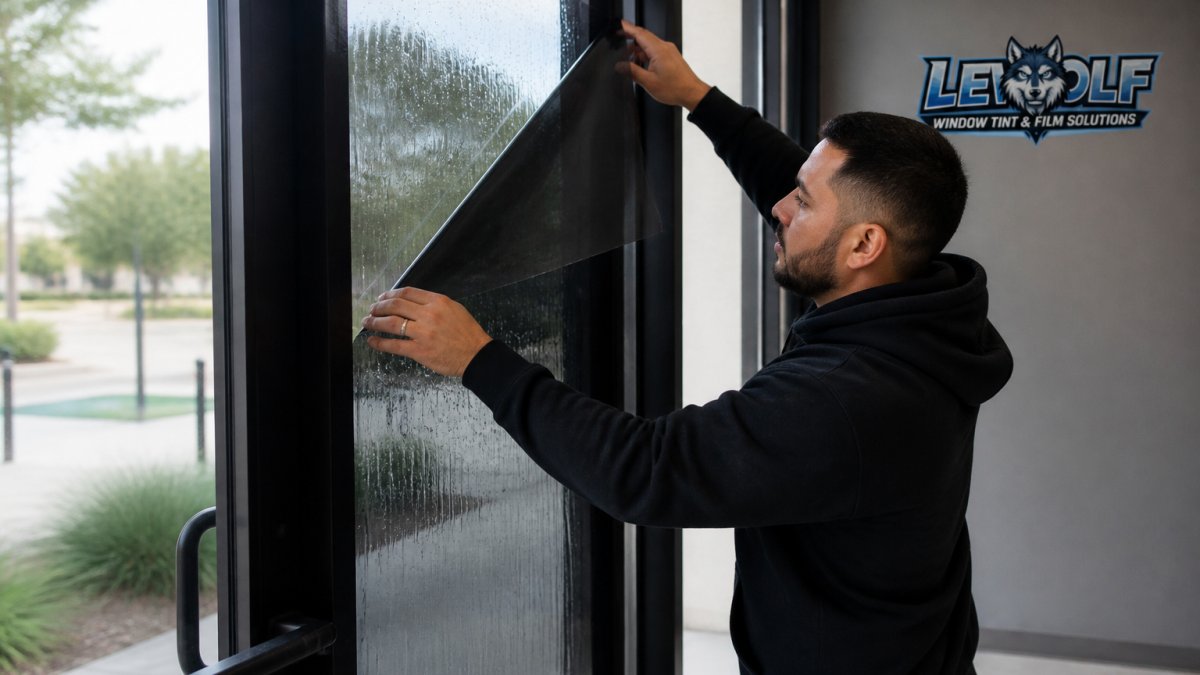
14 min readBy Joshua Leleux
Table of Contents
- What Is Forced Entry Film and Why It Matters
- How Security Window Film Works When Glass Is Struck
- Understanding the Security Film Attachment System
- Forced Entry Film Performance and Testing Standards
- Security Film Limitations and Realistic Expectations
- Window Film for Schools and Commercial Properties
- Installation, Maintenance, and Getting Started
- Frequently Asked Questions
Last Updated: October 19, 2026
What Is Forced Entry Film and Why It Matters
Forced entry film is a transparent protective layer applied to windows and glass surfaces to resist impact and prevent glass from shattering during break-in attempts.
At LeWolf Window Tint & Film Solutions, we install security film for homeowners, schools, and businesses.
Security film also reduces glare, blocks UV rays, and improves energy efficiency, but for schools, government buildings, and high-risk commercial properties, security is the primary reason for installation.
How Security Window Film Works When Glass Is Struck
Unprotected glass shatters and falls away in seconds, letting an attacker reach through. With security film, the same impact cracks the glass, but the film grips the broken pieces and holds them in the frame.
The film doesn't make glass unbreakable; it makes glass harder to clear. An attacker must strike repeatedly or use tools to enlarge the opening, and each action takes time and draws attention.
The Role of Glass Retention
Glass retention is the film's core function: when the pane fractures, the adhesive bond between film and frame keeps broken pieces attached.
Without film, broken glass becomes a clear pathway; with film, pieces stay in place, creating sharp edges and a smaller opening an intruder must work to clear.
The film's thickness affects retention: thicker film holds larger pieces longer.
Film Attachment and Impact Resistance
The bond between film and frame matters as much as the film itself; if the film peels away from the glass edge during impact, retention fails.
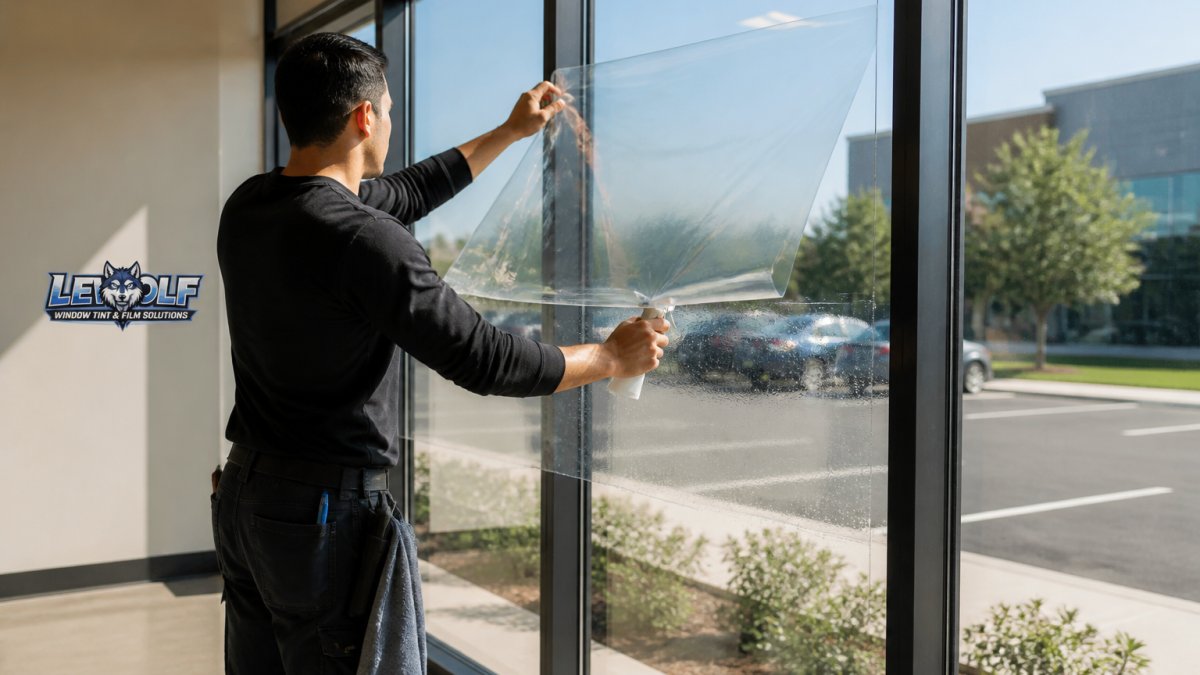
Professional installation ensures the film adheres evenly and wraps around the frame edge; gaps, bubbles, or incomplete coverage create weak points.
Impact resistance is measured in testing, where standards define how long a sample must resist repeated strikes before an entry-sized opening appears.
Understanding the Security Film Attachment System
The attachment system is the adhesive layer between film and glass, and it determines whether the film stays bonded when struck.
A pressure-sensitive adhesive coats one side of the film and creates a chemical bond that strengthens over 24-48 hours and hardens for several weeks.
Proper installation also means removing air bubbles, which create weak points; skilled installers use specialized tools to ensure uniform contact.
Forced Entry Film Performance and Testing Standards
Security film performance is only as meaningful as the test behind it. A product's numbers mean little until you know which test produced them, what it simulates, and whether the result was independently verified.
The Core Standard: ASTM F1233
ASTM F1233, Standard Test Method for Security Glazing Materials and Systems, is the most commonly cited standard for forced-entry-resistant glazing in the United States. It defines a lab procedure in which a specimen is struck repeatedly until an opening of a defined size appears, with results expressed as the number of impacts (or elapsed time) required.
Two details matter when you see an F1233 claim:
- The opening size. F1233 results are tied to a defined clear opening. A product that resists many strikes before a small crack appears is not the same as one that resists the same number of strikes before a full body-sized opening forms. Ask which opening dimension the reported number corresponds to.
- The test configuration. Film performance depends heavily on how the film is attached to the frame. A film tested as a free-standing pane will not perform the same way as a film mechanically anchored to a frame with a structural attachment system. A credible report states the attachment method used.
Treat any strike count as valid only for the exact combination tested.
Other Standards You Will See
- UL 972 (Burglary-Resistant Glazing Material). A UL standard focused on resistance to burglary attempts. Products that pass are listed in UL's online directory, which you can check independently, a useful signal because it is third-party verified rather than self-reported.
- ASTM F3561. A newer ASTM test method for forced-entry-resistant fenestration systems. It is system-level rather than film-level, evaluating the window assembly, glass, film, frame, and anchors together, which is closer to real-world performance.
- GSA and Interagency Security Committee (ISC) guidance. For federal facilities and many schools and public buildings, the ISC's Security Glazing guidance and GSA performance criteria define how glazing should be specified for different threat levels. Even if your building is not federally regulated, these documents are a useful reference.
How to Read a Test Report
When an installer or manufacturer claims a performance level, ask for the underlying documentation and check these items:
- Who performed the test. An independent laboratory (UL, Intertek, a recognized test lab) carries more weight than an in-house test.
- What was tested. Film alone, film on glass, or a complete window system with attachment. The more complete the assembly, the more relevant the result.
- The glass substrate. Film performance depends on the glass it is bonded to. A result on 1/4-inch annealed glass does not transfer to tempered or laminated glass.
- The attachment method. Edge wrap, structural silicone, or mechanical retention each produce different results.
- The pass/fail criterion. Which opening size, and over what duration.
A strike count without the test standard, glass type, and attachment method is not a performance claim, it is a marketing number. Ask for the report.
What Testing Can and Cannot Tell You
Testing demonstrates relative performance under controlled conditions; it does not predict how a specific window will perform against a specific attacker. Frame condition, glass age, installation quality, attacker skill, and time available all shift the outcome. Use test data to compare products like-for-like, not to promise a guaranteed delay time.
Learn more about security glazing standards from ASTM International
Security Film Limitations and Realistic Expectations
Security film is a delay layer, not a force field. Understanding where the delay comes from, where it stops, and how film compares with other glazing protections helps you decide whether it's right for your building.
First, a Quick Disambiguation
The phrase forced entry film is used in two unrelated ways. In film criticism and horror cinema, Forced Entry refers to a 1973 exploitation film directed by Fred Lincoln, a Vietnam-veteran protagonist, stalking, and violence, and readers searching for that title will find plot summaries and cast information elsewhere. This article is about the security product: a transparent film applied to glass to resist forced-entry attempts.
What Film Actually Does
- Holds broken glass in the frame. The film's adhesive bonds shards to the pane and, when properly anchored, to the frame, so a struck window becomes a jagged barrier rather than an open hole.
- Adds time. An attacker must strike repeatedly, pry, or cut to enlarge an opening. That added time is the product's real value, time for occupants to move, for alarms to trigger, and for response to arrive.
- Works as one layer. Film performs best alongside locks, alarm sensors, exterior lighting, and access control. It is not a substitute for any of them.
What Film Does Not Do
- It does not make glass unbreakable. A determined attacker with the right tools and enough time can eventually breach film-protected glazing. The question is how long, not whether.
- It does not stop bullets. Ballistic glazing is a different product category, far heavier and more expensive, and requires structural reinforcement.
- It does not compensate for poor installation. Film that is not properly anchored to the frame can peel away on impact and provide little delay.
How Security Film Compares With Other Glazing Protections
| Measure | How it works | Strengths | Trade-offs |
|---|---|---|---|
| Security window film | Adhesive film bonded to existing glass, anchored to frame | Retrofit-friendly, relatively low cost, preserves visibility, can be applied to existing windows | Delay only; performance depends on installation and attachment; service life |
| Laminated glass | Two glass layers bonded to a plastic interlayer | Holds together when broken; integral to the pane, no separate film to peel | Requires replacing glazing; higher material and labor cost; heavier |
| Security screens / window guards | Metal mesh or bar systems mounted over the opening | Strong physical barrier; highly visible deterrent | Alters appearance; egress and fire-code considerations; visibility and airflow impact |
| Polycarbonate glazing | Replace glass with impact-resistant plastic | Very high impact resistance | Scratches, UV degradation, appearance, and code considerations |
| Window security film plus attachment system | Film with structural edge anchoring | Best film-based performance; retrofit-compatible | Higher cost than film alone; requires skilled installation |
Film is typically chosen to upgrade existing glazing without replacing it, while laminated glass or polycarbonate suits new construction or full renovation where glazing can be specified from the start. Many security assessments recommend a mix, film on high-risk existing windows, guards or screens on the most exposed openings, and laminated glass in new construction.
Security film is best understood as a cost-effective delay layer for existing glass. It is not a replacement for laminated glass, guards, or an alarm system, and it should be specified as part of a layered security plan.
Setting Realistic Expectations
Before specifying film, ask three questions: What is the threat (opportunistic burglary, targeted intrusion, civil disturbance)? How long does response take? And what is the consequence of breach? The answers determine whether film alone suffices or should be combined with other measures. A professional assessment should give you a written scope stating the film, attachment method, glass substrate, and test standard, not just a strike count.
Review security glazing guidance from the Interagency Security Committee
Window Film for Schools and Commercial Properties
Schools and government buildings face specific security challenges.
Many school districts have installed security film on ground-floor windows, windows near entry points, and high-traffic areas to delay forced entry long enough for occupants to reach a secure location or for law enforcement to respond.
Commercial properties use security film for similar reasons.
The decision should be based on a security assessment: a professional evaluator examines entry points, identifies vulnerabilities, and recommends which windows to protect.
LeWolf Window Tint & Film Solutions works with school districts and commercial property managers to assess needs and design security film systems.
Cost varies based on the number of windows, film thickness, and property size. Contact us for a free assessment and quote.
Installation, Maintenance, and Getting Started
Professional installation is essential for security film to perform as intended. The process takes time depending on window count and property size, and we work around your schedule.
Installation steps include:
- Clean all glass surfaces thoroughly to remove dust and contaminants
- Measure each window and cut film to size with precise overlap on the frame
- Apply adhesive-coated film to the glass surface
If the film is damaged, scratched, peeling, or delaminating, replacement is straightforward. The old film is removed and new film is applied to the same window.
To get started, schedule a free security assessment with LeWolf Window Tint & Film Solutions.
Security film is a practical, proven tool for improving building security and delaying forced entry. We're 3M Certified and work with you to design a system that meets your security goals. Learn more about security film standards from ASTM International.
Frequently Asked Questions
What is forced-entry window film?
Forced entry film is a transparent protective layer applied to glass that holds shattered pieces together during impact or intrusion attempts. Unlike standard window film used for privacy or UV protection, forced entry film is engineered specifically to resist breach. When glass breaks, the film clings to the frame and broken fragments, creating a barrier that delays and deters forced entry. It's commonly used in schools, banks, retail storefronts, and high-security residential applications where glass breakage poses a safety or security risk.
How does security window film work when glass is struck?
Security film bonds tightly to the glass surface and frame through a specialized adhesive system. When impact occurs, the glass fractures, but the film holds the pieces in place rather than allowing them to scatter or create an opening. This glass retention slows forced-entry attempts significantly. The film's elasticity and thickness absorb energy from the impact, reducing the likelihood of complete breach. Testing standards measure how long a film can withstand repeated strikes before penetration occurs.
What are the main limitations of security film?
Forced entry film is not burglar-proof. Determined attackers with proper tools can eventually breach it, though the delay provides time for alarm response or occupant escape. Film performance depends on proper installation, poor application reduces effectiveness significantly. Environmental factors like extreme temperature fluctuations can affect adhesive performance over time. Additionally, security film only protects the glazing itself; it does not secure frames, doors, or other entry points. It's most effective as part of a comprehensive security strategy that includes alarms, locks, and proper maintenance rather than as a standalone solution.
Is forced entry film suitable for schools and commercial properties?
Yes. Schools and commercial facilities increasingly use security film to protect occupants during active-threat situations and to meet safety compliance requirements. For schools, security film on classroom and office windows delays intruder access and protects students from flying glass during incidents. Commercial properties use it to protect high-value inventory, reduce liability from accidental glass breakage, and enhance overall facility security. Installation should be performed by certified professionals to ensure proper adhesion and performance. Many school districts and businesses work with experienced installation providers to assess their specific needs and select appropriate film thickness and coverage.