
12 min readBy Joshua Leleux
Table of Contents
- Why Verifying a 3M Authorized Dealer Matters
- Step 1: Check the Official 3M Dealer Locator Tool
- Step 2: Request a Letter of Authorization
- Step 3: Verify 3M Window Film Warranty Requirements
- How to Spot Fake 3M Window Film
- Additional Verification Steps for B2B Procurement
- Red Flags: What to Watch For
- Conclusion
- Frequently Asked Questions
Last Updated: September 28, 2026
Why Verifying a 3M Authorized Dealer Matters
Buying window film from an unauthorized source puts you at serious risk, which is why you should verify 3M authorized dealer status before making any purchase. Counterfeit products flood the market, and they don't perform the way genuine 3M films do. You could end up with film that yellows, peels, or fails to block UV rays entirely, defeating the whole purpose of the investment.
Verifying a 3M authorized dealer ensures you get genuine products with real warranties, professional installation, and lasting performance.
LeWolf Window Tint & Film Solutions works exclusively with authentic 3M products. Below are the exact steps to verify any 3M authorized dealer before purchasing.
Step 1: Check the Official 3M Dealer Locator Tool
Use 3M's official dealer locator tool to verify 3M authorized dealer status in your area. If a dealer doesn't appear in the database, they're not authorized.
Enter your location and search for the dealer by name. Verify they're listed for your product type (residential, commercial, or automotive). A missing listing means they're not authorized.
Step 2: Request a Letter of Authorization
Request the dealer's letter of authorization from 3M. It should list their business name, authorized product lines, valid dates, and 3M contact information. Legitimate dealers provide this immediately; hesitation is a red flag.
Verify the letter's authenticity by contacting 3M directly with the dealer's name and authorization document number.
Step 3: Verify 3M Window Film Warranty Requirements
Genuine 3M film includes a warranty requiring certified dealer installation. If a seller doesn't mention installation requirements or warranty terms, the product is likely counterfeit.
Ask about warranty coverage, duration, what's covered, transferability, and maintenance requirements. Authorized dealers provide written warranty documentation with specific terms. Counterfeit products have vague or unlimited claims.
How to Spot Fake 3M Window Film
Counterfeit film resembles genuine 3M products, but specific visual and tactile markers distinguish them.
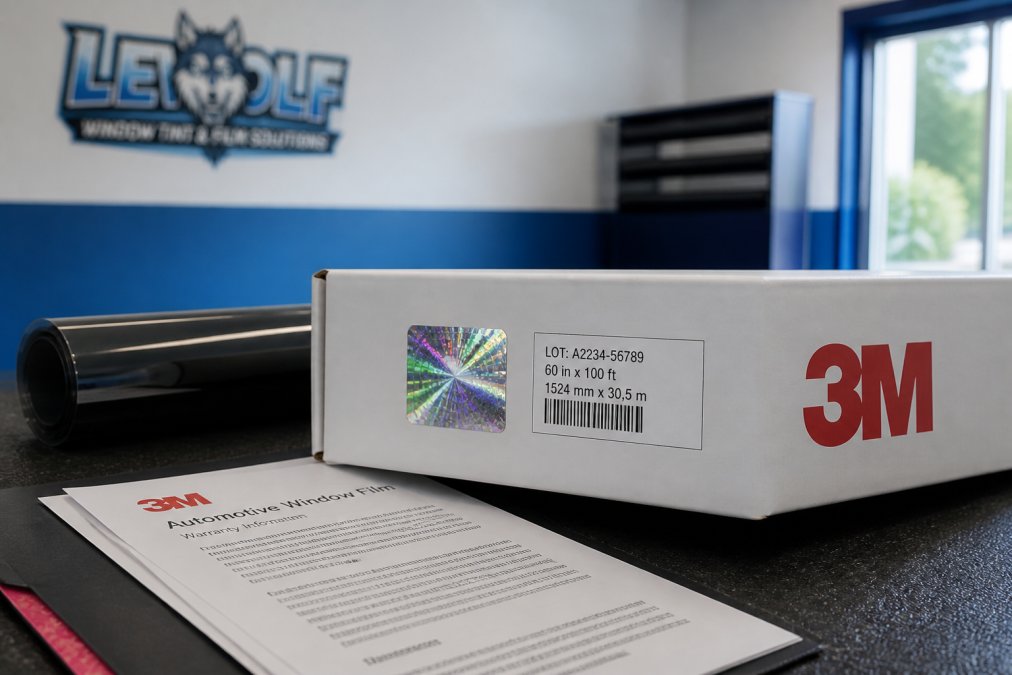
Genuine 3M packaging has crisp, sharp printing with consistent colors and alignment. Counterfeit packaging shows blurry text, spelling errors, inconsistent fonts, color variations, and poor barcode printing. Genuine packaging feels smooth; counterfeits feel rough with uneven ink coverage.
Every genuine 3M product has a unique secure code in a holographic or color-shifting feature. Verify it on the official 3M verification portal. A code that fails validation is a red flag. Genuine codes use security printing that shifts color when tilted; flat printing indicates counterfeits.
Genuine lot numbers follow a specific format (letter + year/week, e.g., "A2401") and are pre-printed clearly on packaging. Counterfeit products have random lot numbers, different fonts, hand-written or sticker-applied numbers, or multiple lot numbers. Verify lot numbers with 3M customer service.
Genuine 3M film feels smooth, uniform, and substantial with clean edges. Counterfeit film feels thin, fragile, inconsistent in thickness, or brittle. Ask to handle a sample; genuine film feels professional-grade and durable.
Genuine 3M products include complete documentation: technical data sheets, installation guides, warranty cards, and care instructions on quality paper with professional formatting, no errors, and consistent branding. Counterfeit products lack documentation or provide poorly printed copies with pixelated images, inconsistent formatting, and missing information.
Compare the product side-by-side with a known genuine sample. Check packaging color, print quality, logo alignment, film texture, weight, secure codes, and lot numbers. Small differences indicate counterfeits.
Additional Verification Steps for B2B Procurement
Commercial and bulk purchases require additional verification steps to ensure supply chain integrity and product authenticity at scale.
Request a formal quote on official letterhead including the dealer's legal name, address, 3M dealer number, authorization status, and contact information. The quote should list specific product SKUs, lot numbers, pricing aligned with authorized rates, lead times, warranty terms, and payment terms. Verify the dealer number independently with 3M.
Conduct reference checks with past commercial clients. Authorized dealers have completed installations for other businesses. Request at least three references from projects completed in the past 12-24 months. When you contact those references, ask:
- Did the film arrive on time and in the condition promised?
- Was the product genuine 3M, and did it perform as specified?
- Did the installation meet professional standards?
- Were there any quality issues, warranty claims, or disputes?
- Would you work with this dealer again?
- Did the dealer provide proper documentation (invoices, warranty cards, technical specs)?
Be wary of dealers who refuse to provide references or who only offer references from personal contacts. Legitimate commercial dealers have a track record and are willing to stand behind it.
Verify insurance, bonding, and licensing. Commercial dealers should carry:
- General liability insurance (minimum $1 million coverage is standard)
- Workers' compensation insurance (required in most states if they employ installers)
- A performance bond or surety bond (for large projects, this protects you if the dealer fails to complete work)
- Current business licenses and contractor licenses (if they perform installation)
Ask the dealer to provide certificates of insurance showing current coverage.
Request supply chain documentation and traceability. For large orders, ask the dealer to provide documentation showing where they source their 3M products. This should trace back to an authorized 3M distributor, not a third-party reseller or grey-market supplier. The chain should include:
- The name and authorization status of their direct supplier
- Invoices or purchase orders showing the products came from an authorized source
- Lot numbers and manufacturing dates for the products being quoted
- Any certificates of authenticity or origin documents
Check for compliance certifications and regulatory knowledge. Depending on your project type, window film may need to meet specific standards:
- Building codes: Commercial buildings may require film that meets ASTM standards for safety or energy efficiency
- Automotive regulations: Vehicle window film must comply with state tinting laws (visible light transmission limits vary by state)
- Energy codes: Some jurisdictions require window film to meet ENERGY STAR or similar efficiency standards
- Safety standards: Certain applications (schools, government buildings) may require safety film that meets ANSI standards
A real authorized dealer will know these requirements for your jurisdiction and can provide documentation proving compliance. They should be able to:
- Recommend the correct product for your specific application and local codes
- Provide technical data sheets showing compliance certifications
- Explain any installation requirements needed to maintain compliance
- Offer written assurance that the product meets applicable regulations
Establish a formal purchase agreement with clear terms. Before placing a large order, have a written agreement that specifies:
- Exact products, quantities, and lot numbers
- Delivery date and location
- Pricing, payment terms, and any volume discounts
- Warranty coverage and duration
- Return and replacement policy (what happens if products arrive damaged or defective)
- Confidentiality and non-disclosure terms (if applicable)
- Dispute resolution process
- Cancellation terms and penalties (if any)
Conduct a sample inspection before accepting full delivery. For bulk orders, request that a sample shipment or first batch arrive before the full order. Inspect the sample for:
- Packaging integrity and professional appearance
- Secure codes and lot numbers that validate correctly
- Documentation completeness and quality
- Film quality and consistency
- Correct product SKUs and quantities
Red Flags: What to Watch For
Certain warning signs indicate a dealer is not authorized or is selling counterfeit products. Learn to spot these red flags before you buy.
Conclusion
Verifying a 3M authorized dealer takes just a few minutes, and it protects your investment completely. Use the official locator, request a letter of authorization, and check for secure codes and lot numbers. These steps eliminate almost all risk of buying counterfeit film.
Frequently Asked Questions
How can I confirm if a window film installer is a 3M authorized dealer?
Use the official 3M dealer locator tool on their website to search by location and product category. Contact 3M customer service directly with the installer's business name and address. Request a letter of authorization or 3M certificate of partnership. Verify the dealer's reseller status through 3M's distribution network. Ask to see documentation of their 3M certification and check that their business registration matches the name listed in the official directory.
What are the risks of using non-authorized window film installers?
Non-authorized installers may use counterfeit or substandard film that fails to meet safety standards and regulatory compliance requirements. You lose access to genuine 3M warranties and technical support. The product integrity cannot be verified, and there's no guarantee the film meets UV protection or security standards. You have no recourse if installation fails or the film degrades prematurely. Non-authorized dealers often source from third-party sellers without proper supply chain verification, increasing fraud risk.
What documentation should a 3M authorized dealer provide?
A legitimate authorized dealer provides a letter of authorization from 3M, current 3M certification credentials, warranty documentation for products installed, product invoices showing 3M as the source, lot numbers and secure codes for verification, and technical bulletins relevant to your installation. They should supply proof of their reseller status and authorized agent designation. Ask for references from previous customers and documentation of their compliance with 3M's safety standards and installation protocols.
How do I report a company falsely claiming to be a 3M authorized dealer?
Contact 3M customer service directly with the company's name, location, and specific claims they made. File a fraud prevention report through 3M's official channels. Report the false claim to your state's attorney general office or consumer protection agency. If the company is operating online, report them to the Federal Trade Commission. Document all communications and screenshots of their false claims. Notify the Better Business Bureau in their jurisdiction. Provide any purchase documentation or invoices showing counterfeit products.