

12 min readBy Joshua Leleux
Table of Contents
- Why Standard Window Tint Falls Short for Heat Management
- Ceramic Window Tint for Heat Rejection
- Clear Heat Rejection Window Film: Visibility Without the Darkness
- Carbon Window Tint vs Ceramic: Which Performs Better
- Residential Window Film for Heat Reduction and Energy Savings
- Comparing Heat Rejection Performance Across Film Types
- Choosing the Right Heat-Reducing Film for Your Needs
- Frequently Asked Questions
Last Updated: October 12, 2026
Why Standard Window Tint Falls Short for Heat Management
Standard window tint has long been the go-to solution for reducing heat and glare, but it comes with real limitations that homeowners and business owners often discover too late. Traditional dyed window film absorbs solar energy rather than rejecting it, which means the film itself heats up and transfers that warmth into your space. Over time, this approach also tends to fade, bubble, or peel, especially in intense sunlight or fluctuating temperatures.
At LeWolf Window Tint & Film Solutions, we've worked with property owners who realized their standard tint wasn't delivering the energy savings or durability they expected. The real problem isn't the concept of window tinting, it's that one-size-fits-all solutions don't account for modern performance demands. Whether you're managing cooling costs for a commercial building or protecting artwork in your home, alternatives to standard window tint for heat reduction offer measurable improvements in both function and longevity. Integrating these advanced films alongside various home cooling alternatives creates a comprehensive strategy for maintaining interior comfort without relying solely on traditional glass treatments.
The market has evolved significantly. Newer film technologies reject heat rather than absorb it, maintain optical clarity without the dark appearance, and last two to three times longer than conventional dyed films. Understanding these alternatives isn't just about upgrading, it's about matching the right solution to your specific needs.
Ceramic Window Tint for Heat Rejection
Ceramic window tint represents a major leap forward in heat rejection technology. Unlike dyed films that absorb solar energy, ceramic films use microscopic ceramic particles suspended in the film to reflect and dissipate heat before it enters your space. This approach keeps the film cooler and prevents heat transfer into your interior.
The performance difference is substantial. Ceramic films block a significant portion of infrared radiation, the primary source of solar heat gain, while maintaining excellent visible light transmission. This means you get superior cooling efficiency without sacrificing natural light or creating an overly dark appearance. For residential applications, this translates to lower air conditioning costs during hot months and better temperature consistency throughout the day.
Durability is another critical advantage. Ceramic particles don't degrade under UV exposure the way dye molecules do, so the film resists fading, discoloration, and deterioration. Most quality ceramic films maintain their performance characteristics for many years with minimal maintenance. The installation process requires precision, improper application can create bubbles or streaking, which is why professional installation matters significantly.
One consideration: ceramic films typically cost more upfront than standard dyed tint. However, the extended lifespan, superior heat rejection, and reduced energy consumption offset the initial investment over time. For businesses and homeowners serious about long-term energy efficiency, ceramic tint delivers measurable returns.
Clear Heat Rejection Window Film: Visibility Without the Darkness
Clear heat rejection window film solves a problem many property owners face: they want heat reduction without the darkened appearance that comes with traditional tint. This film type uses advanced optical technology to reject infrared radiation while remaining nearly invisible to the naked eye.
The appeal is immediate. Your windows maintain their natural appearance, allowing unobstructed views and natural light penetration while still blocking solar heat. This makes clear heat rejection film particularly valuable for retail storefronts, office buildings, and residential applications where aesthetics matter. You don't sacrifice the visual character of your space to gain climate control benefits.
Performance-wise, clear films excel at selective filtering. They target infrared wavelengths, which carry heat but don't affect visible light, and reject them before they cross the glass barrier. The result is meaningful heat reduction (often 40-50% of solar heat gain) without the aesthetic compromise of darker films.
The trade-off exists in cost and installation precision. Clear heat rejection films are more expensive than standard tint and require meticulous application to avoid visible imperfections. Even minor installation errors become apparent on clear film in ways they wouldn't on darker tint. This is why choosing a certified installer matters, improper application can create distortion or optical inconsistencies that undermine the film's primary advantage: invisibility.
Carbon Window Tint vs Ceramic: Which Performs Better
Carbon window tint sits between dyed and ceramic films in terms of performance and cost. Carbon films use carbon particles to block heat and UV radiation, offering better durability than dyed films while costing less than ceramic alternatives. Understanding the trade-offs helps you choose the right solution for your situation.
Heat Rejection Performance: Ceramic films outperform carbon films in raw heat rejection capacity. Ceramic particles are more effective at reflecting infrared radiation, which means ceramic film blocks more solar heat than carbon film. For maximum cooling efficiency, ceramic wins. Carbon film still delivers meaningful heat reduction, typically 40-50% rejection, but not at the level ceramic achieves.
Durability and Longevity: Both carbon and ceramic films resist fading and UV degradation far better than dyed tint. Carbon films last for many years in typical conditions, while ceramic films often reach even longer lifespans. The difference comes down to particle stability under prolonged UV exposure. Ceramic particles maintain their optical properties longer, while carbon particles can gradually lose effectiveness over time.
Cost and Installation: Carbon film costs less than ceramic but more than standard dyed tint. Installation difficulty is comparable between the two, both require precision work to avoid bubbles and imperfections. For budget-conscious property owners willing to accept slightly lower performance, carbon film represents a practical middle ground.
Best Use Cases: Choose ceramic film if heat rejection is your primary concern and budget allows. Choose carbon film if you want meaningful improvement over standard tint without the premium cost of ceramic. The choice often depends on your specific climate, window orientation, and budget constraints.
Residential Window Film for Heat Reduction and Energy Savings
Residential properties face unique heat management challenges. Unlike commercial buildings with sophisticated HVAC systems, homes rely on air conditioning efficiency to maintain comfort and manage energy costs. Window film designed for residential use addresses these challenges while accounting for the aesthetic and privacy concerns homeowners have.
Residential heat-reducing films come in multiple performance tiers. Entry-level films provide basic heat rejection and UV protection. Mid-range options like ceramic films deliver superior performance and longevity. Premium films combine heat rejection with privacy features, frosted or decorative patterns that obscure interior views while still blocking heat.
The energy savings calculation depends on several factors: window size and orientation, climate zone, current air conditioning efficiency, and how much of your home's glass area you treat. South-facing and west-facing windows typically generate the most heat gain, making them prime candidates for film installation. A professional assessment can identify which windows will deliver the greatest return on investment.
Installation in residential settings requires attention to detail and understanding of different window types. Single-pane, double-pane, and specialty glass all require slightly different approaches. Improper installation can affect window operation, create thermal stress on the glass, or damage window seals. This is why working with experienced professionals, not DIY installation, matters for residential applications.
Beyond cooling costs, residential film provides secondary benefits: UV protection for furniture and artwork, glare reduction for screen viewing, and enhanced privacy without blocking natural light. These combined benefits often justify the investment even before calculating direct energy savings.
Comparing Heat Rejection Performance Across Film Types
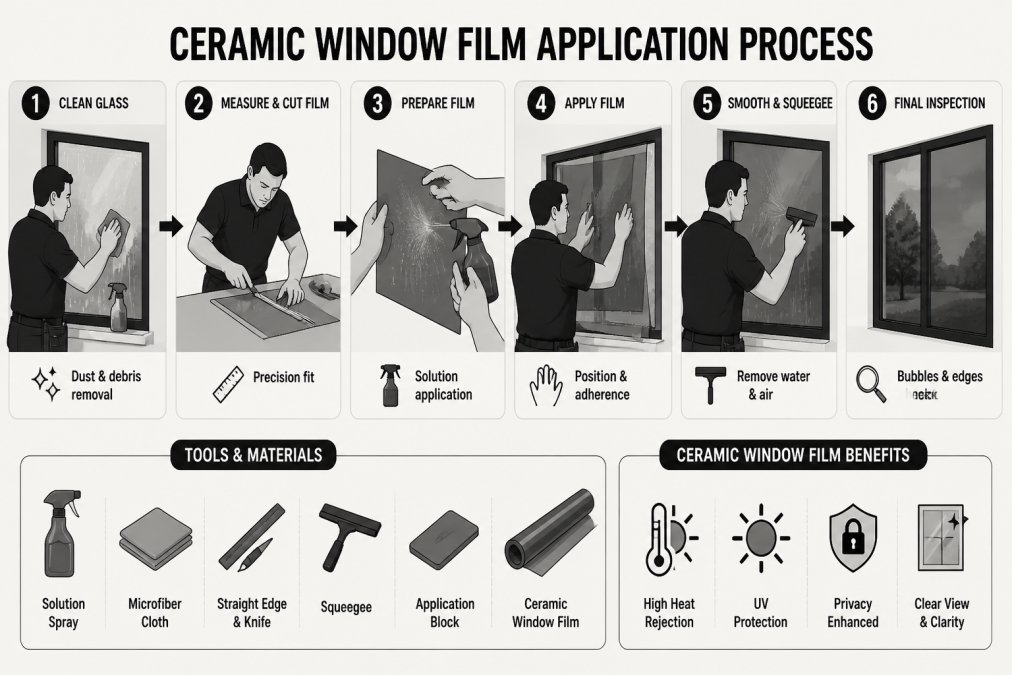
Different film types deliver different levels of heat rejection. Understanding these performance differences helps you match the right solution to your specific needs and climate conditions.
| Film Type | Heat Rejection Rate | Lifespan | Cost Level | Best For |
|---|---|---|---|---|
| Standard Dyed | 30-40% | 3-5 years | Low | Budget-conscious, temporary solutions |
| Carbon | 40-50% | 7-10 years | Medium | Balance of performance and cost |
| Ceramic | 50-70% | 10-15 years | High | Maximum efficiency, long-term investment |
| Clear Heat Rejection | 40-50% | 8-12 years | High | Aesthetic preservation with heat control |
Heat rejection rates represent the percentage of solar heat blocked before it enters your space. Higher percentages mean greater cooling efficiency and lower air conditioning costs. However, heat rejection alone doesn't tell the complete story. You also need to consider visible light transmission (how much natural light passes through), UV protection, durability, and installation quality.
Ceramic films consistently rank highest in heat rejection because their particle structure is optimized for infrared reflection. Clear films sacrifice some heat rejection capacity to maintain optical invisibility. Carbon films occupy the practical middle ground. Standard dyed films, despite their low cost, provide the least effective heat management and deteriorate quickly in intense sunlight.
The real-world impact of these differences becomes apparent over time. A ceramic film installation might cost more upfront than standard tint, but the superior heat rejection can reduce cooling costs annually (depending on climate and window area). Over its lifespan, those cumulative savings can often exceed the initial cost difference (Purchasing Energy-Efficient Residential Windows, Doors, and Skylights).
Choosing the Right Heat-Reducing Film for Your Needs
Selecting the optimal film type requires honest assessment of your priorities. Are you maximizing energy efficiency? Protecting interior furnishings? Maintaining aesthetic appeal? Managing a commercial property's appearance? Your answer shapes the right choice.
Start with your primary objective. If energy savings is the main goal and budget allows, ceramic film delivers the best return. If you need heat reduction without darkening your space, clear heat rejection film solves that specific problem. If you want meaningful improvement over standard tint at a reasonable cost, carbon film bridges that gap.
Climate matters significantly. Properties in hot, sunny regions benefit more from premium films because the heat rejection savings accumulate year-round. In moderate climates, the energy savings from ceramic film might justify the cost less clearly than in intense heat zones.
Window orientation affects ROI dramatically. West-facing windows receive afternoon sun and generate substantial heat gain. South-facing windows (in the Northern Hemisphere) receive consistent solar exposure. North-facing windows generate minimal heat gain. Prioritizing high-exposure windows maximizes your return on investment.
Professional assessment provides clarity. Experienced installers can evaluate your specific situation, window types, building orientation, current cooling costs, climate data, and recommend the solution that delivers the best value. This consultation often reveals that treating specific windows strategically delivers better results than treating all windows uniformly.
Installation quality determines whether you realize the performance benefits films promise. Poor installation creates bubbles, streaking, and optical distortion that undermine the film's effectiveness.
The alternatives to standard window tint for heat reduction have matured significantly. Ceramic films, clear heat rejection options, and carbon films each solve different problems and deliver measurable performance improvements. The right choice depends on your specific climate, budget, and aesthetic requirements.
Frequently Asked Questions
What are the best alternatives to standard window tint for reducing heat?
The most effective alternatives include ceramic window tint, carbon window tint, and clear heat rejection window film. Ceramic films excel at blocking infrared heat while maintaining clarity and preventing signal interference. Carbon films offer a balance of heat rejection and darkness without the metallic appearance. Clear heat rejection films provide superior heat reduction while preserving natural light and visibility, ideal for situations where dark tint isn't desired. Each option outperforms standard dyed tint in heat management and durability.
Can window film reduce heat without making windows look dark?
Yes. Clear heat rejection window film is specifically designed to block infrared radiation and reduce heat transmission while remaining virtually invisible. These films reject a significant amount of solar heat without the darkness of traditional tint. Ceramic films also maintain excellent clarity while providing superior heat rejection. Both options allow natural light through while significantly reducing the solar heat gain that increases cooling costs, making them ideal for homeowners who want energy efficiency without sacrificing views.
Is ceramic window tint better than standard dyed tint for heat rejection?
Ceramic window tint significantly outperforms standard dyed tint. Ceramic films block infrared heat more effectively, reject a significant amount of solar heat, and resist fading and discoloration over time. Dyed tints rely on absorbing heat, which causes them to deteriorate and fade within a few years. Ceramic films also eliminate signal interference issues common with metallic and dyed options. While ceramic costs more upfront, the superior heat rejection, longevity, and maintained clarity make it a better long-term investment for both residential and commercial applications.
How much can residential window film reduce my cooling costs?
The savings depend on your climate, window size, orientation, and the type of film installed. Heat rejection films can reduce solar heat gain significantly, which typically translates to lower cooling costs during warm months. South and west-facing windows see the greatest impact. For specific numbers based on your home's size, current energy usage, and local utility rates, contact a professional installer who can assess your windows and provide a personalized estimate. Professional installation ensures maximum performance and durability.